For Dental Practices

Dental Recall Postcards:
3-Wave Reactivation Campaigns

A focused, sequenced postcard plus call playbook designed for one job: turning lapsed dental patients into rebooked appointments.

Start Free — No Credit Card
4.4%
Direct mail response rate
—up to 9% on house lists1
3–5%
Typical reactivation rate
on 3-wave campaigns
$1.05
Per 4x6 card all-in
(printing + USPS postage)

Lapsed Dental Patients Don't Need Marketing — They Need a Reminder

Most patients who haven't been in for 12+ months didn't leave for a competitor. They moved, got busy, lost insurance, or simply forgot. A single postcard fades. A single call goes to voicemail. The win is in the sequence.

What Doesn't Work

  • × Holiday card with no offer and no follow-up
  • × Front-desk batch-calling 50 patients in an afternoon
  • × Generic email blasts patients never opened in the first place
  • × Waiting for them to "come around" on their own

What Does Work

  • ✓ Wave 1 postcard with a real offer and QR to booking
  • ✓ A call 10–21 days after the card lands
  • ✓ Wave 2 with a different design and a deadline
  • ✓ Wave 3 final reminder, postcard only, then a 90-day rest

The Lapsed Patient Reactivation Playbook

3 waves over 10 weeks, then a 90-day rest before the cycle repeats. Below is exactly what mails when, and why.

W1
Day 1 · Postcard + Call Day 10–21

Wave 1 — "We Miss Your Smile"

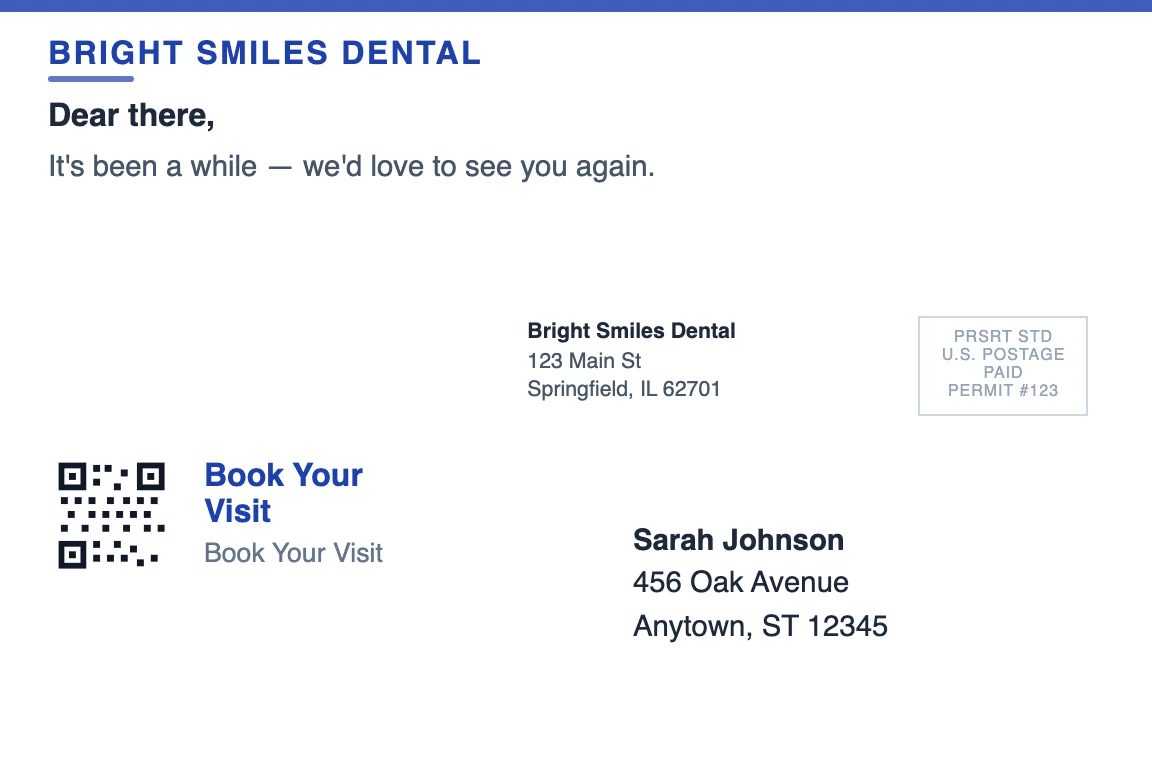
Headline: "We Miss Your Smile" · Offer: Free exam & cleaning for returning patients · QR to online booking.

Wave 1 is the warmest touch. Tone is personal: "Dr. Smith asked us to reach out personally." It does the heavy lifting of getting the patient's attention. The follow-up call lands 10–21 days later — long enough that the postcard is remembered, short enough that intent is still warm. About 60–70% of total reactivations come from this wave alone.

W2
Day 29 · Postcard + Call Day 7–14

Wave 2 — "Time Is Running Out"

Headline: "Time Is Running Out" · Offer: Free exam + x-rays, extended to family members · deadline-driven CTA.

Mailed 28 days after Wave 1, only to non-responders. Different design, different angle. The hook shifts from "we care" to "use your benefits before they reset" or "schedule by [date]." Adding family members to the offer doubles its perceived value without doubling cost. The Wave 2 call is shorter and more direct — "I wanted to follow up on the offer we sent."

W3
Day 50 · Postcard only (no call)

Wave 3 — "Keep Your Smile Healthy"

Headline: "Keep Your Smile Healthy" · Offer: Free exam or cleaning — final reminder · "before your file goes inactive" framing.

21 days after Wave 2. Postcard only — no call. Two calls is enough; a third feels like pestering. The framing softens to "we'd love to keep your records active" and a final deadline. After Wave 3, the contact rests for 90 days before re-entering the cycle. That rest period is what keeps response rates high — over-mailing is the fastest way to train people to ignore you.

How It Works

1

Pick the Lapsed Patient Reactivation Playbook

All three waves, the call timing, and copy direction are pre-configured. You only customize the offer and your practice branding.

2

Export Lapsed Patients From Your PMS

Filter by "last visit date older than 12 months" in Dentrix, Eaglesoft, Open Dental, Curve, or Denticon. Export as CSV. Our import wizard auto-maps the columns.

3

Launch — Postcards Mail Within 2 Business Days

Wave 1 postcards print and drop into USPS within 1–2 business days. Your call queue populates 10 days after delivery. Wave 2 schedules itself 28 days later.

4

Front Desk Works the Call Queue

Each call has a pre-loaded script. Staff log the outcome (booked, voicemail, wrong number, do-not-contact). Booked patients drop out of the sequence automatically.

The Math on a 500-Patient Recall Campaign

Most general dental practices have 400–700 patients inactive 12+ months. Here's the math on a 500-patient run through this exact playbook:

  • Wave 1: 500 cards mailed · Wave 2: ~430 cards (non-responders) · Wave 3: ~390 cards
  • Total: ~1,320 postcards × $0.79 (Pro) = $1,043 in postcard spend
  • Reactivation rate at 4.5% → 22 patients return
  • Average reactivated patient = $1,200/year in production
  • 22 patients × $1,200 = $26,400 in annual revenue

25:1 ROI on the first cycle — and the rest period means most reactivated patients re-enter the cycle if they lapse again.

Run your own numbers in the ROI calculator.

Simple, Transparent Pricing

Free to explore — you only pay when you're ready to send. 30-day money-back guarantee.

Free

$0/forever

Single-wave postcard campaigns · Unlimited contacts · From $1.05/piece

Most Popular

Pro

$99/mo

Everything in Free + calls, sequencing · From $0.79/piece

Per-piece pricing includes printing + USPS First-Class postage. No hidden fees.

What You'll Actually Send

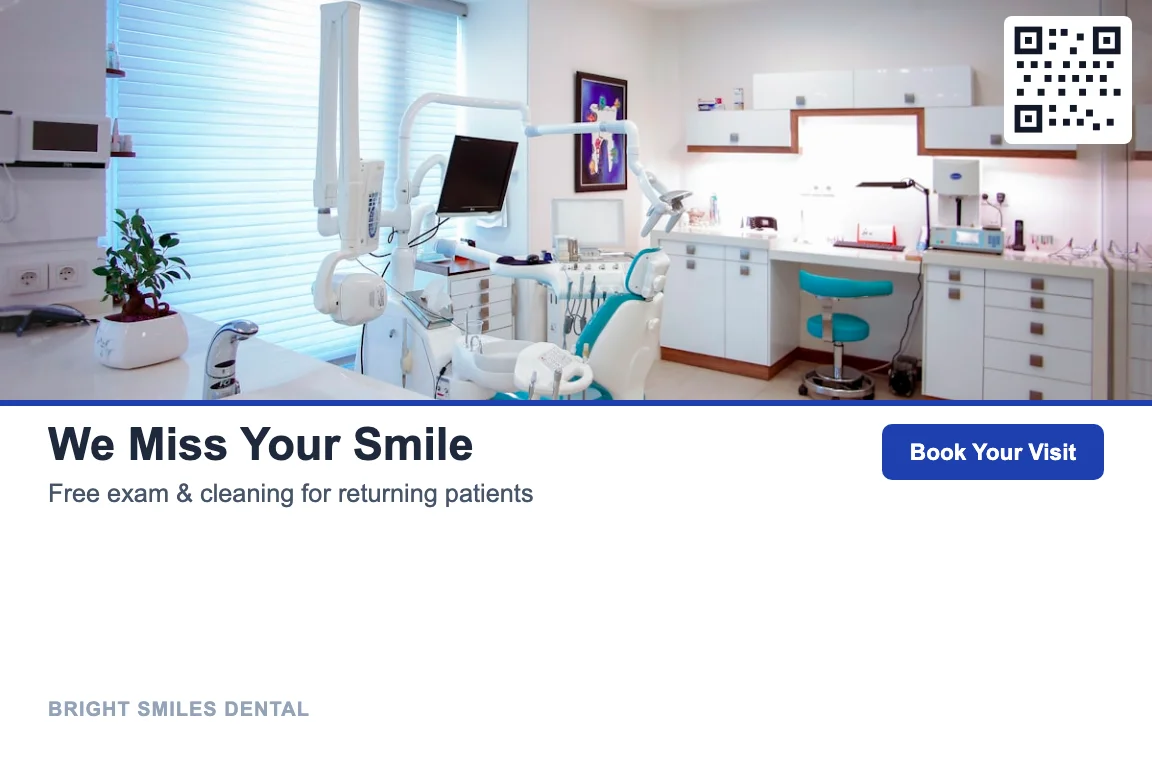
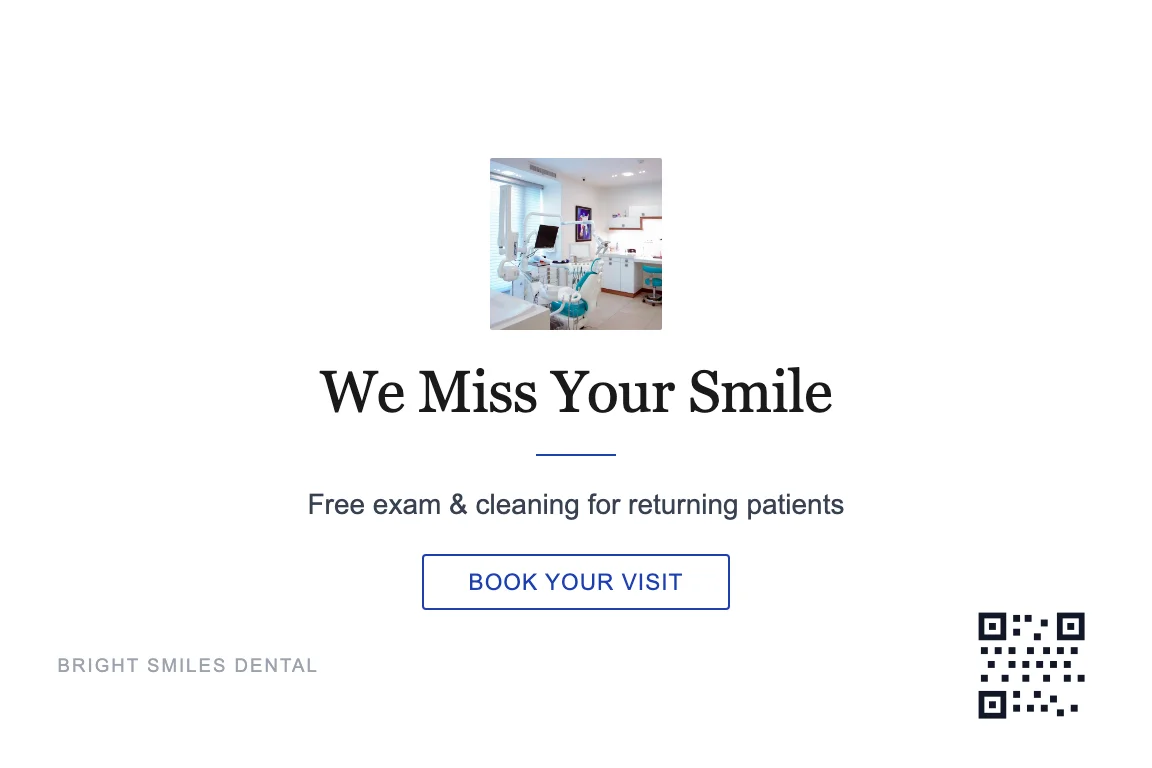
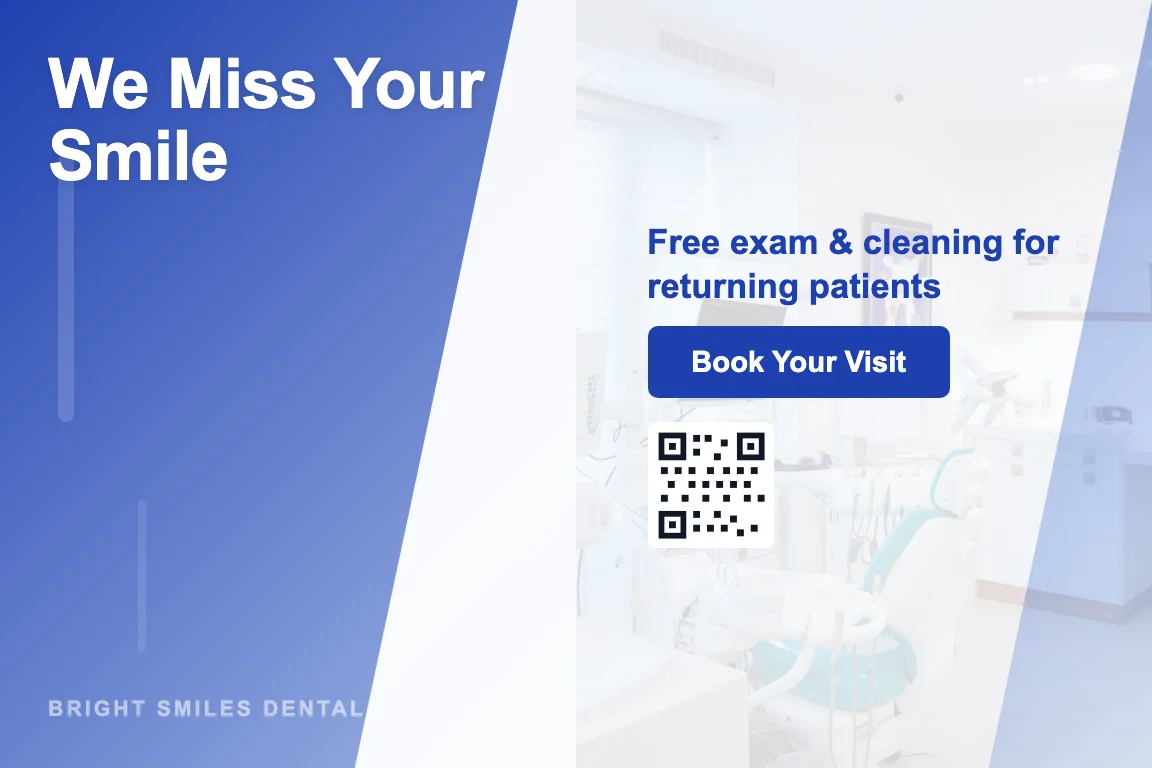
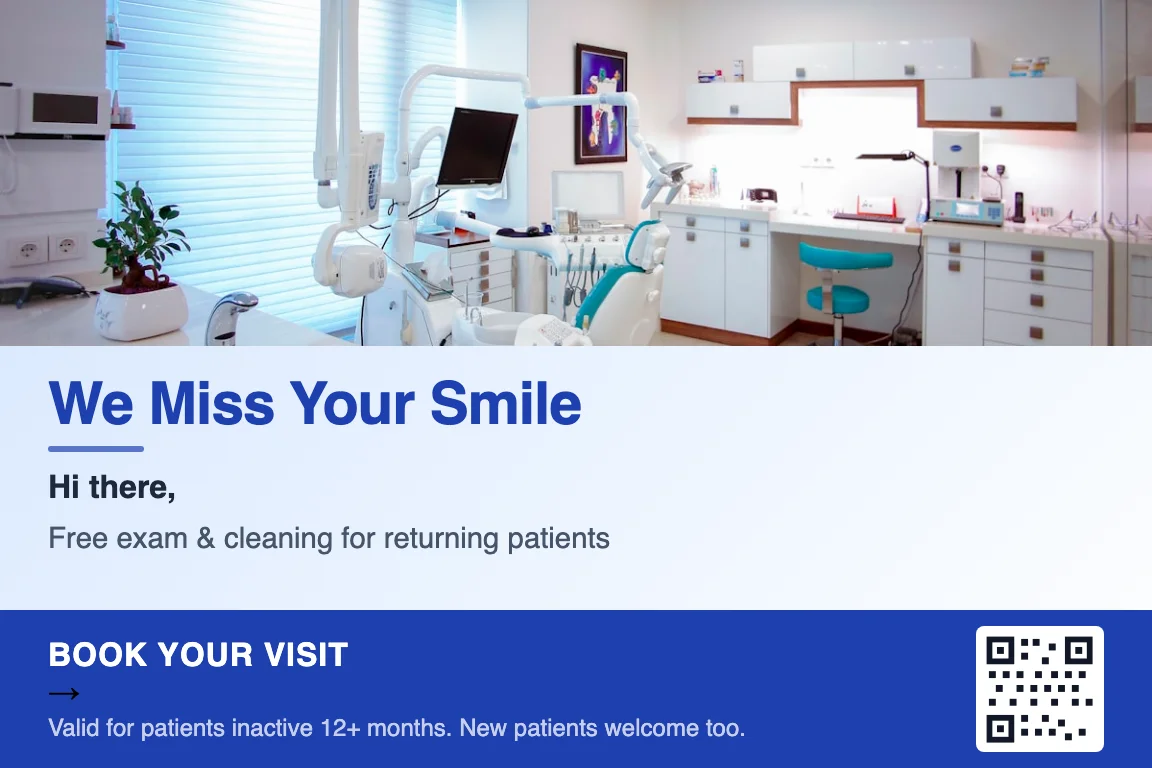
Four design styles, all themed for your dental practice and ready to customize. Same offer, same call follow-up — just pick the look that fits your brand.

Bold
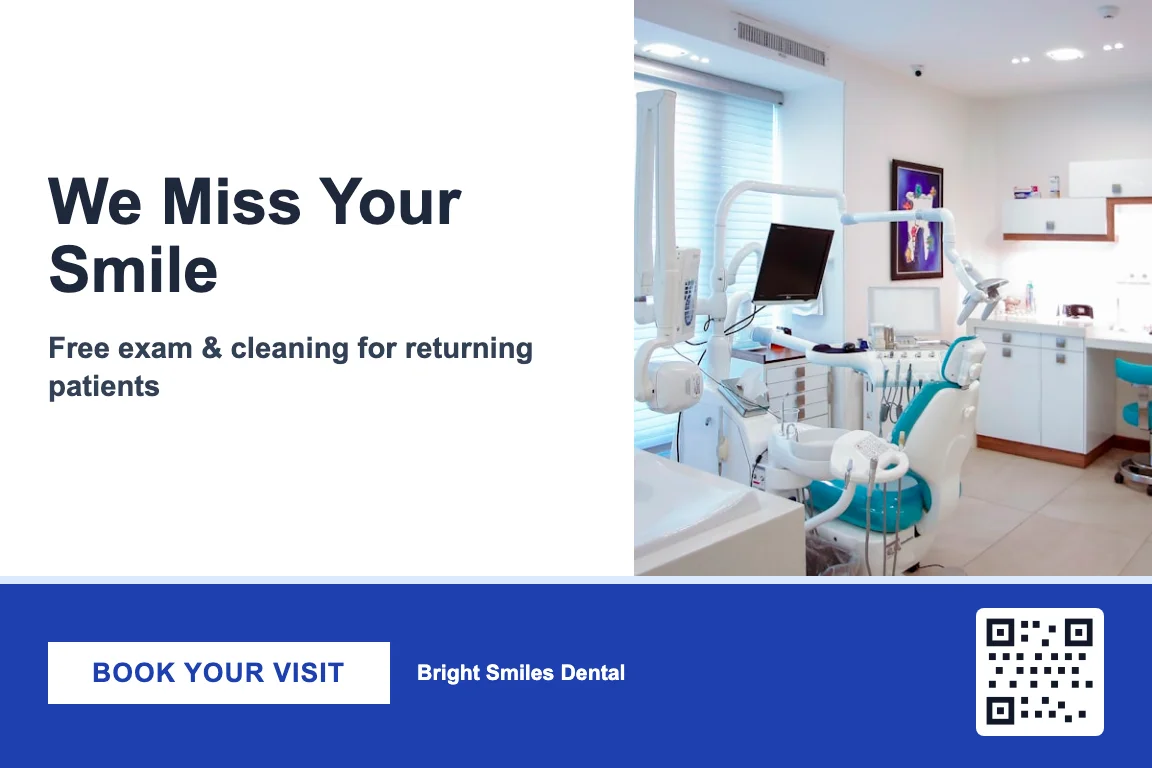
Bold dental practice postcard design — Lapsed Patient Reactivation

Photo

Photo-led dental practice postcard design — Lapsed Patient Reactivation

Minimal

Minimal dental practice postcard design — Lapsed Patient Reactivation

Gradient

Gradient dental practice postcard design — Lapsed Patient Reactivation

Front Detail

Detailed view of dental practice postcard front — Lapsed Patient Reactivation

Back (Address Side)

dental practice postcard back showing return address and recipient zone — Lapsed Patient Reactivation

PostKnock recall campaigns also work for

More Dental Campaigns

Recall is the highest-ROI dental playbook, but PostKnock also runs new patient acquisition, hygiene reminders, and seasonal promos. See the full lineup on the dental hub.

See all dental campaigns →

Dental Recall Postcard FAQs

How many lapsed patients should I include in my first campaign?

We recommend 200–800 patients for the first run. Smaller than 200 and the per-card economics get harder to justify against your monthly subscription; larger than 800 and your front desk will struggle to handle the call queue once Wave 1 generates booking activity. If you have a list of 1,500+ inactive patients, split it into two cohorts and stagger them by 30 days.

What offer works best on a dental recall postcard?

For Wave 1, a free comprehensive exam (or free exam + cleaning for returning patients) consistently outperforms percentage discounts. The reason: lapsed patients aren't price-shopping — they're inertia-shopping. A free exam removes the "what will it cost me" objection entirely. Save percentage discounts and bundled offers for Wave 2 to add a fresh angle.

How long after the postcard mails should we make the follow-up call?

10–21 days after delivery is the sweet spot. USPS First-Class typically delivers in 3–5 business days, so calling on day 10–14 means the patient has likely seen the card and may even have it on the fridge. Calling earlier (day 5) feels pushy. Calling later than day 21 means they've forgotten the card and you're starting cold. PostKnock's call queue auto-populates in this window for you.

Should I personalize each postcard with the patient's name?

Yes — first-name personalization on the front of the card lifts response rates by an additional 0.5–1%. PostKnock pulls each patient's name from your CSV via a <pk-var> tag in the template, so personalization happens automatically without manual edits. Don't try to personalize the offer copy itself though — over-personalization on a postcard reads as creepy rather than thoughtful.

How do I export my lapsed patient list from my PMS?

In Dentrix: Reports → Patient Lists → "Inactive Patients" with last-visit filter. In Eaglesoft: Lists → Patient List → filter by Last Visit Date. In Open Dental: Reports → Lists → Inactive Patient list. In Curve and Denticon: similar inactive-patient queries are built in. Export as CSV with first name, last name, address, city, state, zip, phone, and last visit date. PostKnock's import wizard auto-detects each column.

Ready to Get Started?

Stop sending one-off recall cards and hoping. Start running the 3-wave sequence that actually fills your hygiene chair.

Start Free — No Credit Card

1 ANA (Association of National Advertisers), Response Rate Report 2023, published February 2024.

2 IBISWorld, “Dentists in the US — Number of Businesses,” 2024.