What You'll Actually Send
Four design styles, all themed for orthodontics practices and ready to customize. Recall front, booking offer back, just pick the look that matches your practice.
Bold
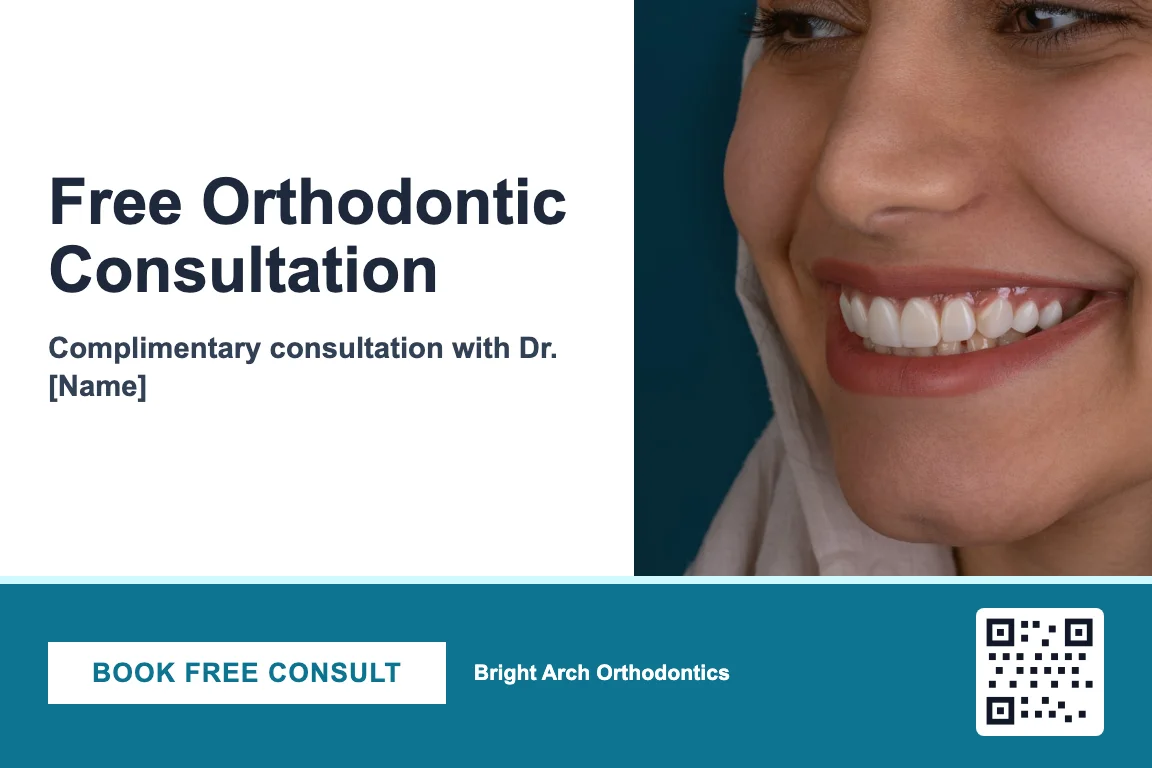
Photo
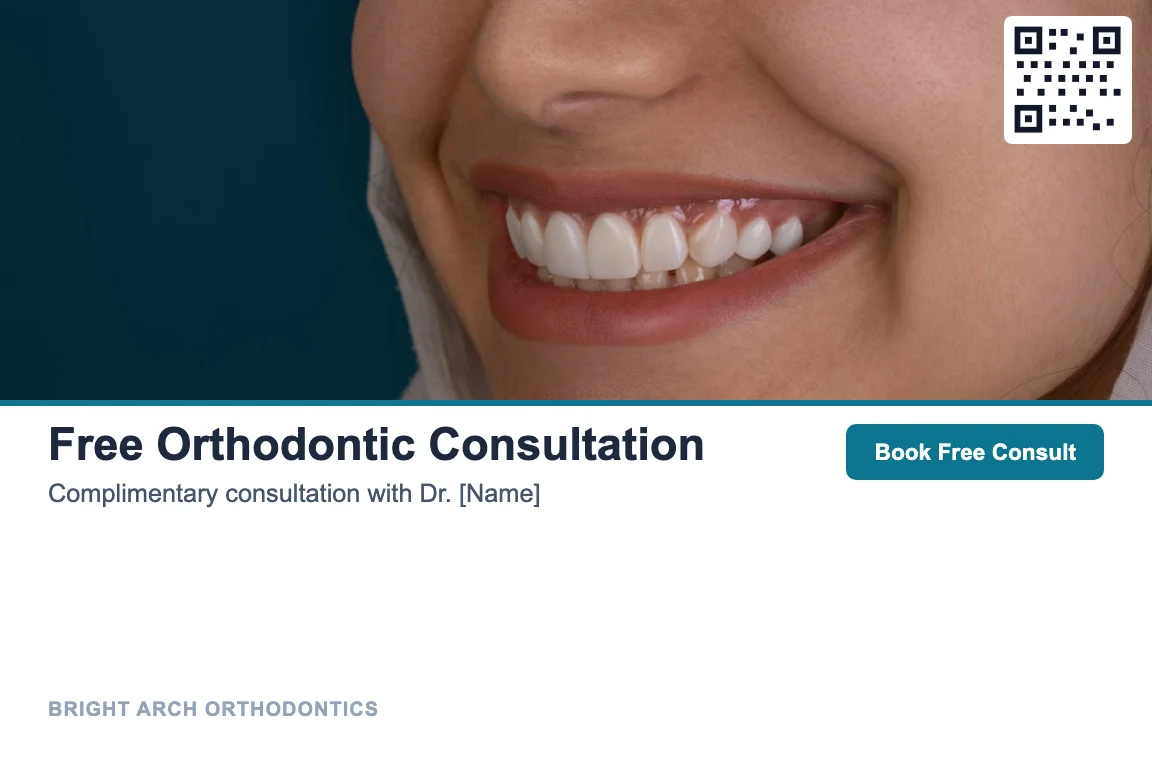
Minimal
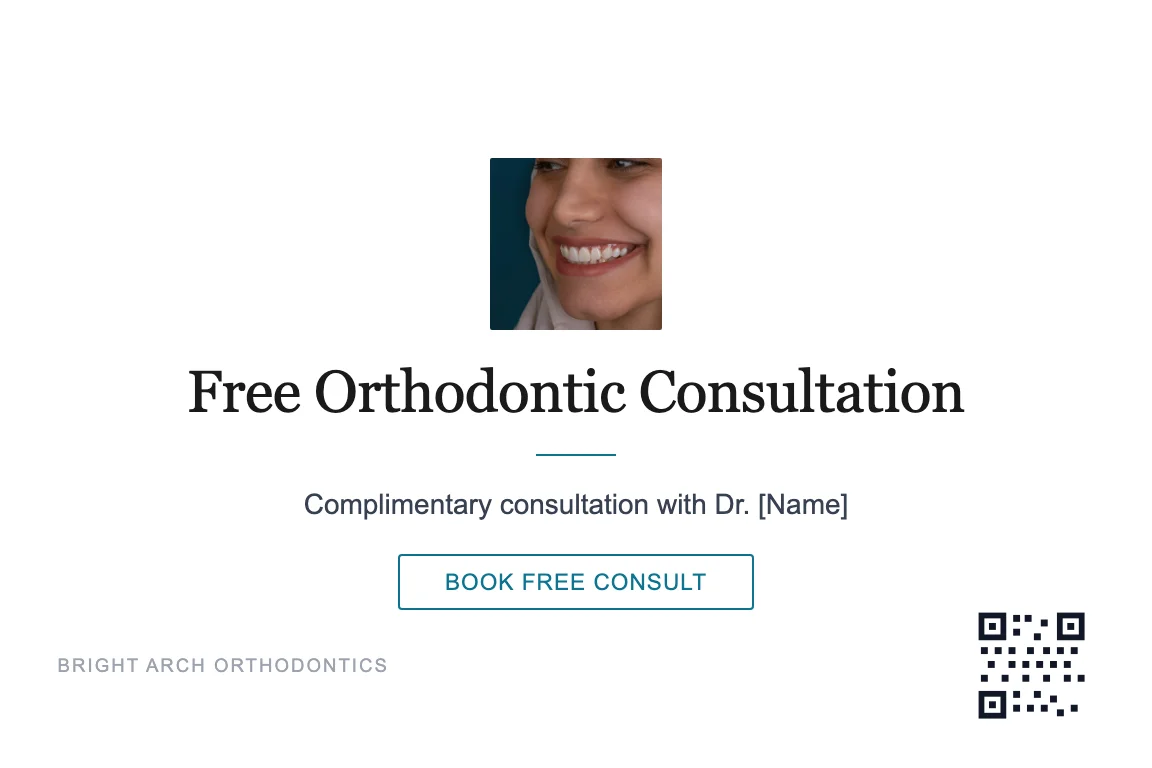
Gradient
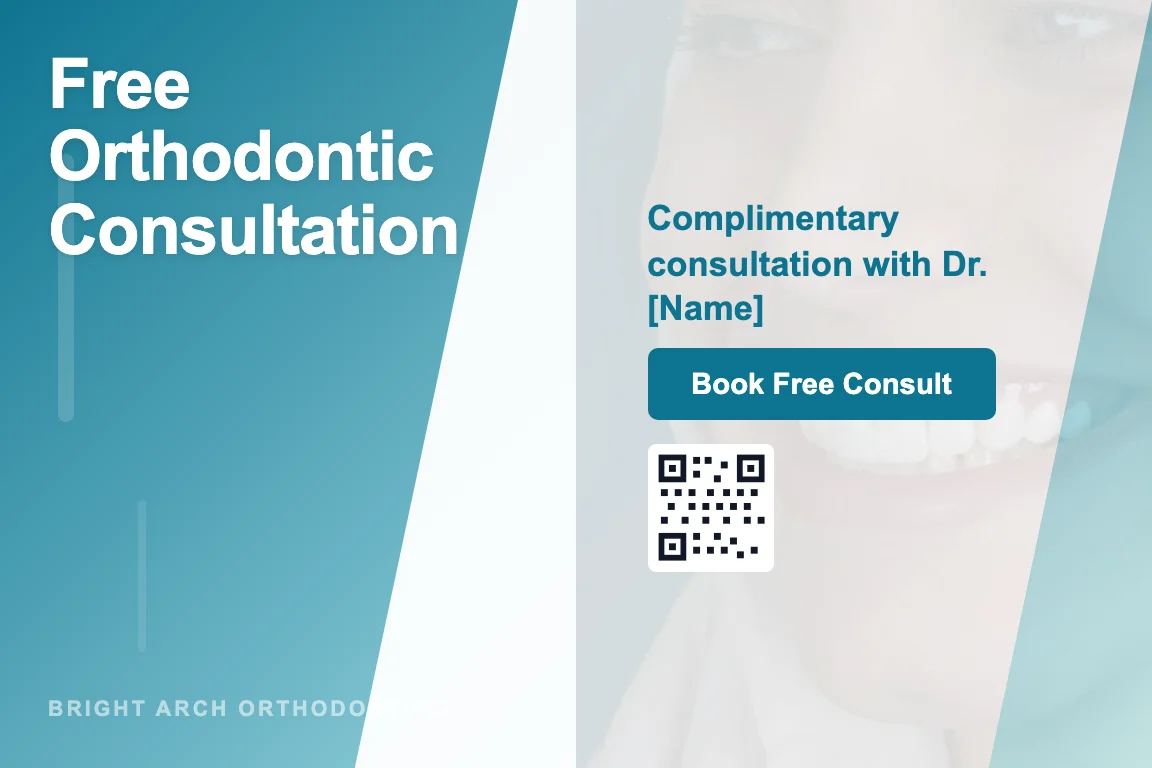
Free consultation acquisition, retainer replacement reminders, and treatment-completion follow-up cards. Pre-built playbooks for orthodontic practices.
Start Free Mail a free sample to yourselfParents and self-conscious adults research orthodontic treatment for months before scheduling a consult, then choose the first practice that lands a credible piece of mail in their hand. A 3-wave neighborhood postcard campaign puts your practice in the consideration set when the decision finally tips. The free consult is the wedge, the case start is the close.
Free Consultation Acquisition: 3-Wave Postcard Campaign: 3 waves over 60 days
"Wondering if it's time for braces?" Photo of recent results, clear benefit (straighter smile, confidence, oral health), QR straight to a 30-second consult booking flow. Friendly tone. You're inviting, not selling.
Front desk calls anyone who scanned but didn't book. Pre-loaded script: "Saw you scanned our card: want to grab a complimentary 30-minute consult with Dr. Patel? She has Thursday at 4 open."
"Clear aligners, traditional braces, or accelerated treatment. We'll walk you through your options." Different angle, more concrete. Surfaces prospects who saw Wave 1 but weren't sure what kind of treatment fit.
Four design styles, all themed for orthodontics practices and ready to customize. Recall front, booking offer back, just pick the look that matches your practice.
Bold
Photo
Minimal
Gradient
Wave timing, copy direction, and front-desk call scripts come pre-configured. You only customize the photo, doctor name, and practice branding.
Two paths: USPS Every Door Direct Mail by ZIP code with a family-age filter, or upload a referral list (existing patients' friends and family). PostKnock supports both. CSV upload auto-maps the columns.
Postcards print and drop into USPS within 1–2 business days. QR scans feed the call queue. Wave 2 phone follow-up schedules itself 3 days after Wave 1 lands.
Pre-loaded scripts handle parents' common objections (timing, cost, treatment type, age of child). Booked consults drop back into your practice software and the campaign retires the contact through Wave 3.
Neighborhood drops aimed at families with kids 7–12 (or self-conscious adults 35–55). The single biggest growth lever for orthodontic practices. The consult is the wedge, the case start is the close.
Patients in retention with retainers older than 3–5 years get a replacement reminder card. Small per-piece revenue but consistent recurring billable visits and protects the case investment.
Patients who finished comprehensive treatment 6 months ago get a check-in card with retainer-care messaging. Builds long-term relationship, generates referrals, and surfaces relapse cases.
Younger patients who completed Phase 1 (early-phase treatment) get a card 18–24 months later announcing Phase 2 timing. Locks in the second case before parents shop around.
A typical orthodontic practice running a 1,500-prospect neighborhood campaign. Here's the math on a 3-wave consult-acquisition campaign:
~38:1 ROI on the first cycle alone, before referrals from converted families.
Run your own numbers in the ROI calculator.
See a worked example: Orthodontics Free-Consult Blitz: 18 Started Cases From 800 Postcards
Free to explore. You only pay when you're ready to send. 30-day money-back guarantee on annual plans.
Single-wave postcard campaigns · Unlimited contacts · From $1.04/piece
Everything in Free + calls, sequencing · From $0.91/piece
Per-piece pricing includes printing + USPS First-Class postage. Full pricing details →
PostKnock also works for
Specific orthodontics campaigns
PostKnock keeps PHI off the postcard by default. Marketing communications to your own patients are typically permitted under HIPAA without a BAA. We don't sign Business Associate Agreements and we don't ask you to upload PHI. Read our healthcare compliance approach →
PostKnock orthodontic postcards start at $1.04 per 4x6 postcard on the Free plan and drop to $0.91 on Pro. There are no setup fees, no minimums, and no contracts. You only pay for what you send. Pricing includes printing and USPS First-Class postage.
Run two campaigns a year: late summer ahead of back-to-school decisions, and mid-winter after holiday spending settles. Each campaign should run 3 waves over 60 days to maximize consult bookings without saturating the neighborhood.
The complimentary consultation itself is the offer. Avoid stacking "$500 off braces" on top. It cheapens the consult and trains parents to chase deals. "Complimentary 30-minute consult, no obligation" paired with a clean photo of recent results converts best.
Two paths. (1) USPS Every Door Direct Mail by ZIP code with a family-age filter for kids 7–12. (2) Upload a referral list of friends and family from your existing patients. PostKnock supports both flows. CSV upload auto-maps the columns.
Yes. Parents researching braces or aligners often spend months in the consideration phase before scheduling a consult. Postcards put your practice in the consideration set in a way that ads and email can't. Physical mail in the kitchen survives the daily filter.
Three days after each postcard mails, the front desk gets a queue of QR scanners who didn't book. Pre-loaded scripts handle the common parent objections (timing, cost, treatment age, kid's resistance). Booked consults drop back into your practice software.
Yes. Many ortho practices run two parallel campaigns: one targeting families with kids 7–12 (early-phase, Phase 1), another targeting self-conscious adults 35–55 (Invisalign, accelerated treatment). Different photos, different copy, different mailing zones.
Yes. Orthodontic case values average $5,000–$7,000, which means even a 1–3% consult booking rate from a 1,500-piece neighborhood drop pays for itself many times over after a 60% consult-to-start conversion. The math works because the case value is high, not because the response rate is.
Stop competing on price with the chains. Start the acquisition cadence that puts your practice in the consideration set before parents shop around.
Start Free1 ANA (Association of National Advertisers), Response Rate Report 2023, published February 2024.