What You'll Actually Send
Four design styles, all themed for audiology practices and ready to customize. Recall front, booking offer back, just pick the look that matches your practice.
Bold
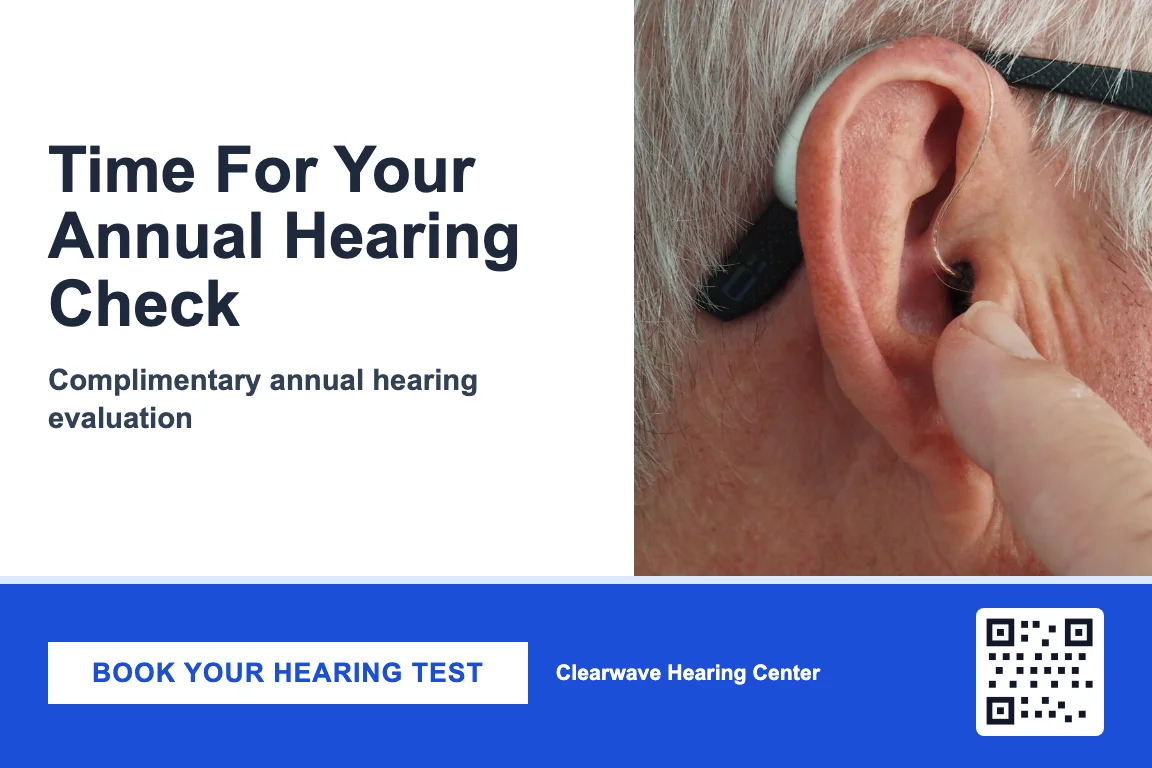
Photo
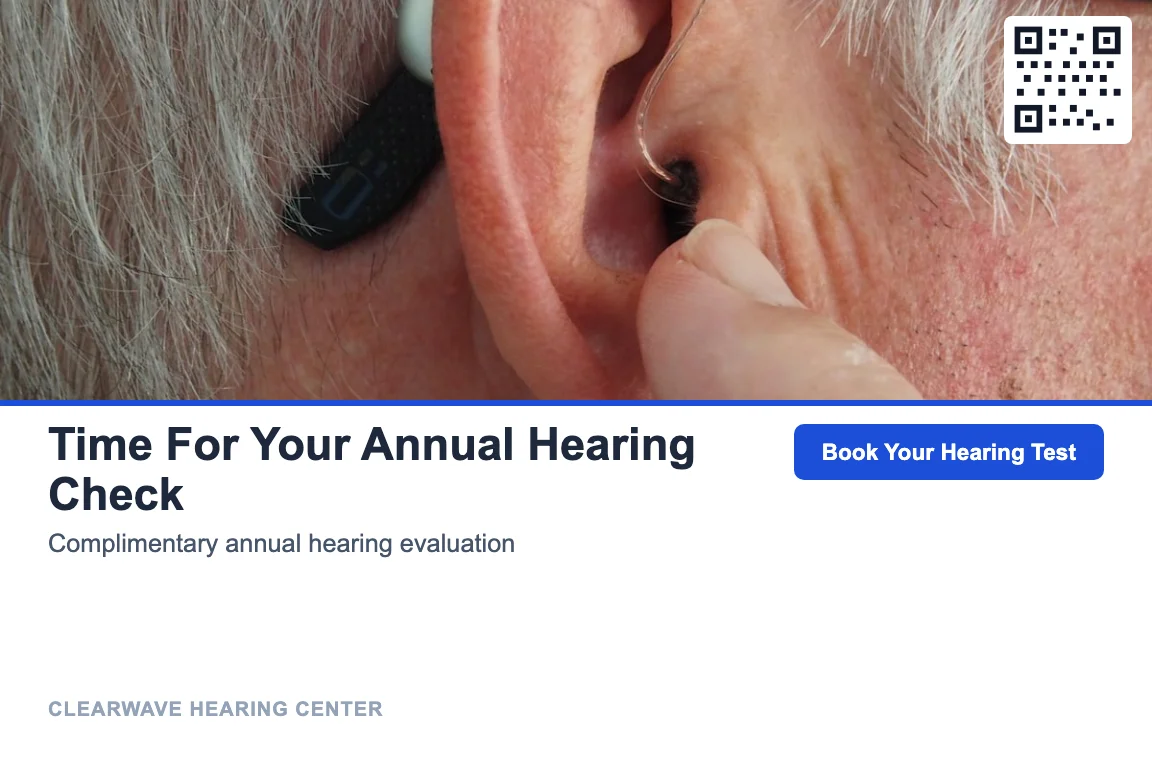
Minimal
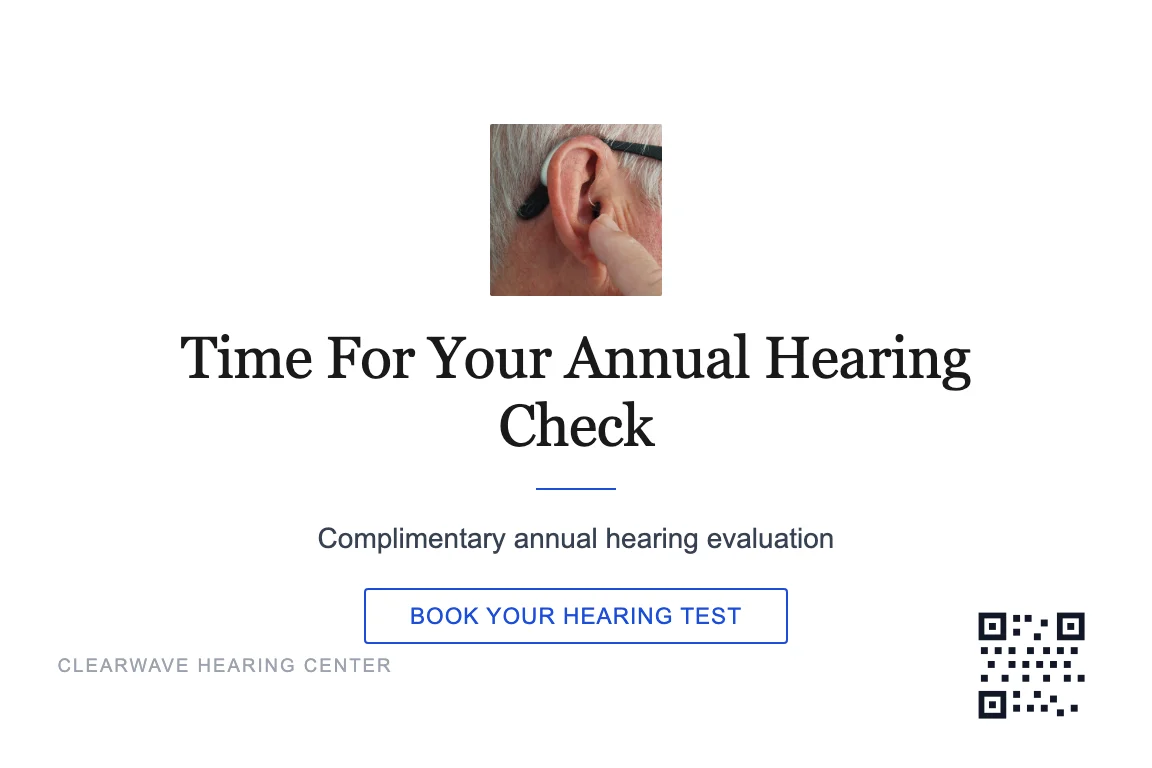
Gradient
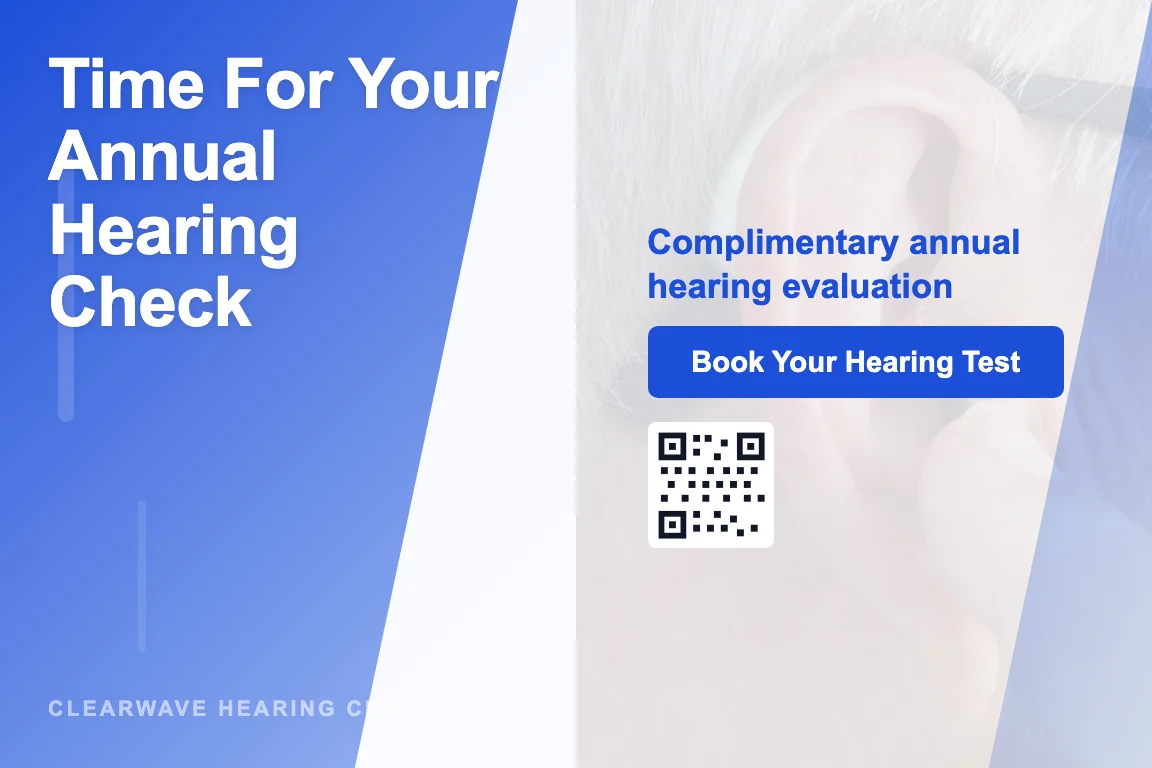
Annual hearing test recall, hearing aid upgrade eligibility, and reactivation cards for patients past their last visit. Pre-built playbooks for audiology practices.
Start Free Mail a free sample to yourselfMost audiology patients don't deliberately leave a practice. They tell themselves their hearing is fine, miss the annual test window, and slowly drift. Eighteen months later they buy hearing aids from whoever mails them first. A clinical-tone recall card 60 days before the anniversary, paired with a call from the front desk, brings most of them back.
Annual Hearing Test: 60-Day Recall: 3 waves over 60 days
"It's been a year: time for your annual hearing check." Clinical tone, photo of the audiologist, QR straight to the booking page. Establishes legitimacy before the call lands.
Front desk calls anyone who scanned but didn't book. Pre-loaded script: "Saw you got our reminder: want me to grab your usual Tuesday morning slot with Dr. Chen?"
"Your insurance benefit resets January 1. Don't lose it." Concrete reason to act now, not next quarter. Drives a clean 30-day push to schedule.
Four design styles, all themed for audiology practices and ready to customize. Recall front, booking offer back, just pick the look that matches your practice.
Bold
Photo
Minimal
Gradient
Wave timing, clinical-tone copy, and front-desk call scripts come pre-configured. You only customize the practice photo, audiologist name, and branding.
Pull from Blueprint OMS, Sycle, CounselEAR, NOAH, or Otobase. Filter for patients with last test 10–14 months ago. Upload the CSV.
Postcards print and drop into USPS within 1–2 business days. The Wave 2 phone calls schedule themselves 3 days later.
Pre-loaded recall scripts handle the common objections (hearing's fine, insurance reset, just tested last year). Booked patients drop back into your practice software.
Patients past their 12-month anniversary get a clinical-tone card 60 days before the date. The single highest-ROI campaign for most practices: renews the clinical relationship and surfaces new hearing aid candidates.
Patients with devices past their 3-year warranty get a card timed to the manufacturer's platform refresh cycle. Pairs with a 30-day in-office trial to convert. Highest revenue per response of any audiology campaign.
Patients past 18 months get a softer-toned card with a complimentary hearing screening offer. They've likely tried somewhere else. You need a real reason to come back, not a price drop.
Battery refills, dome and wax filter resupply, TV streamer accessories. Smaller per-piece revenue but high response rates and consistent cash flow between major fitting cycles.
A typical audiology practice with 500 patients past their 12-month recall window. Here's the math on a 3-wave campaign:
~20:1 ROI on the first cycle alone, before lifetime accessory and follow-up revenue.
Run your own numbers in the ROI calculator.
See a worked example: Audiology Annual Hearing Test Recall: 4.1% Response on 480 Patients
Free to explore. You only pay when you're ready to send. 30-day money-back guarantee on annual plans.
Single-wave postcard campaigns · Unlimited contacts · From $1.04/piece
Everything in Free + calls, sequencing · From $0.91/piece
Per-piece pricing includes printing + USPS First-Class postage. Full pricing details →
PostKnock also works for
Specific audiology campaigns
PostKnock keeps PHI off the postcard by default. Marketing communications to your own patients are typically permitted under HIPAA without a BAA. We don't sign Business Associate Agreements and we don't ask you to upload PHI. Read our healthcare compliance approach →
PostKnock audiology postcards start at $1.04 per 4x6 postcard on the Free plan and drop to $0.91 on Pro. There are no setup fees, no minimums, and no contracts. You only pay for what you send. Pricing includes printing and USPS First-Class postage.
Mail the first recall card 60 days before the patient's annual hearing test anniversary. That gives time for them to schedule before benefits reset and lands ahead of competitors. PostKnock auto-schedules the mailing from the last test date in your CSV.
Lead with the clinical benefit, not the discount. "Free annual hearing screening" or "Complimentary 15-minute hearing check" outperform "$50 off." Audiology patients respond to clinical legitimacy, not promotional pricing. Save the discount tone for hearing aid accessory campaigns.
Most hearing aids are warrantied for 3-5 years. Pull patients whose devices are past 3 years old from your practice management software (Blueprint OMS, Sycle, CounselEAR, NOAH, Otobase). PostKnock's import wizard auto-maps the columns. We also segment by insurance benefit reset date if your software exports that field.
Yes, better than most channels for the demographic. Audiology patients skew 65+, where email open rates collapse and social ads underperform. Physical mail still consistently delivers 4–6% response rates for hearing aid upgrade and trial campaigns when paired with phone follow-up.
Three days after each postcard mails, the front desk gets a queue of warm leads to call. Pre-loaded scripts cover common objections: "My hearing's fine," "Insurance won't cover it," "I just got tested last year." Each call logs an outcome so subsequent waves know whether to retire the patient, push the offer, or wait.
Yes. Upload a CSV with manufacturer and model columns and PostKnock will let you target by Phonak, Oticon, ReSound, Starkey, Widex, or any other brand. Useful when you want to mail upgrade campaigns timed to specific platform refresh cycles or to cross-sell accessories.
Yes. Audiology patients are 65+ on average and respond to physical mail far better than to email or social. A 500-patient annual recall campaign at typical 4–5% response rates books 20–25 hearing tests, and even at modest hearing aid attach rates the campaign pays for itself many times over.
Stop letting patients drift past their annual anniversary. Start the recall cadence that consistently rebooks hearing tests and surfaces upgrade candidates.
Start Free1 ANA (Association of National Advertisers), Response Rate Report 2023, published February 2024.