How much do pest control postcards cost?▼
PostKnock postcards start at $1.04 per card on the Free plan and $0.91 per card on Pro ($99/mo). That includes printing and USPS First-Class postage. No minimums, no contracts, no hidden fees.
What should I put on a pest control postcard?▼
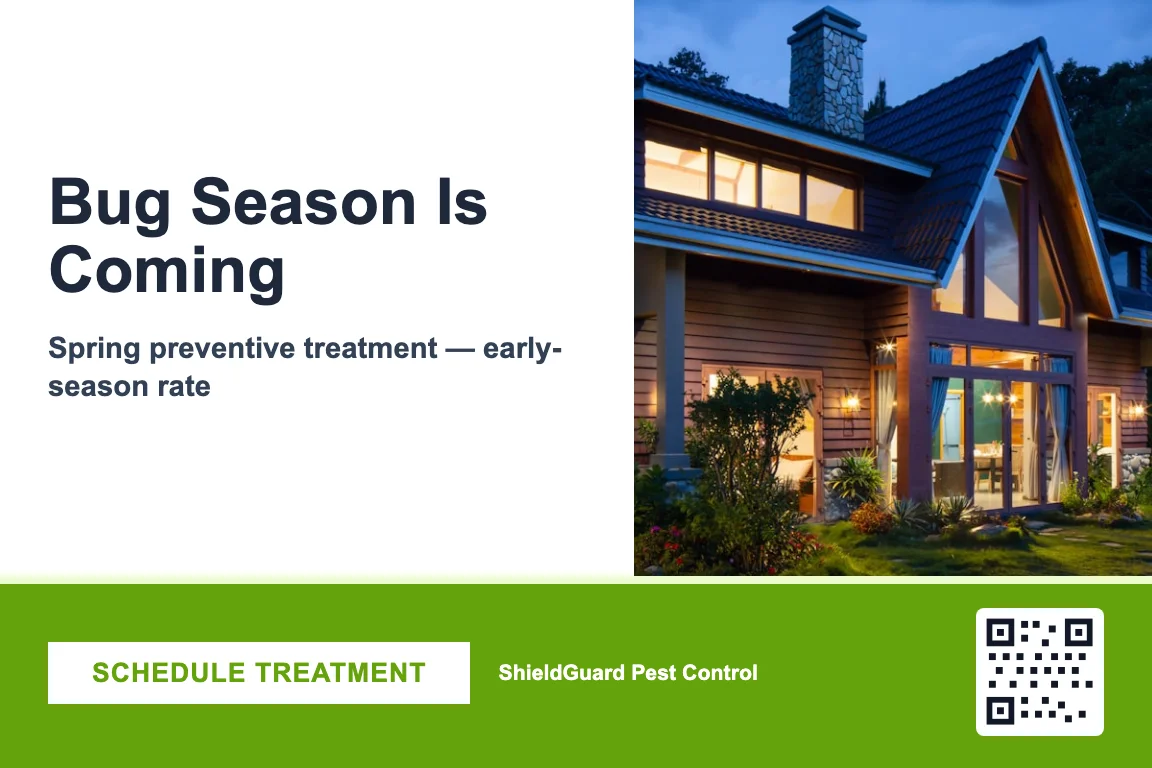
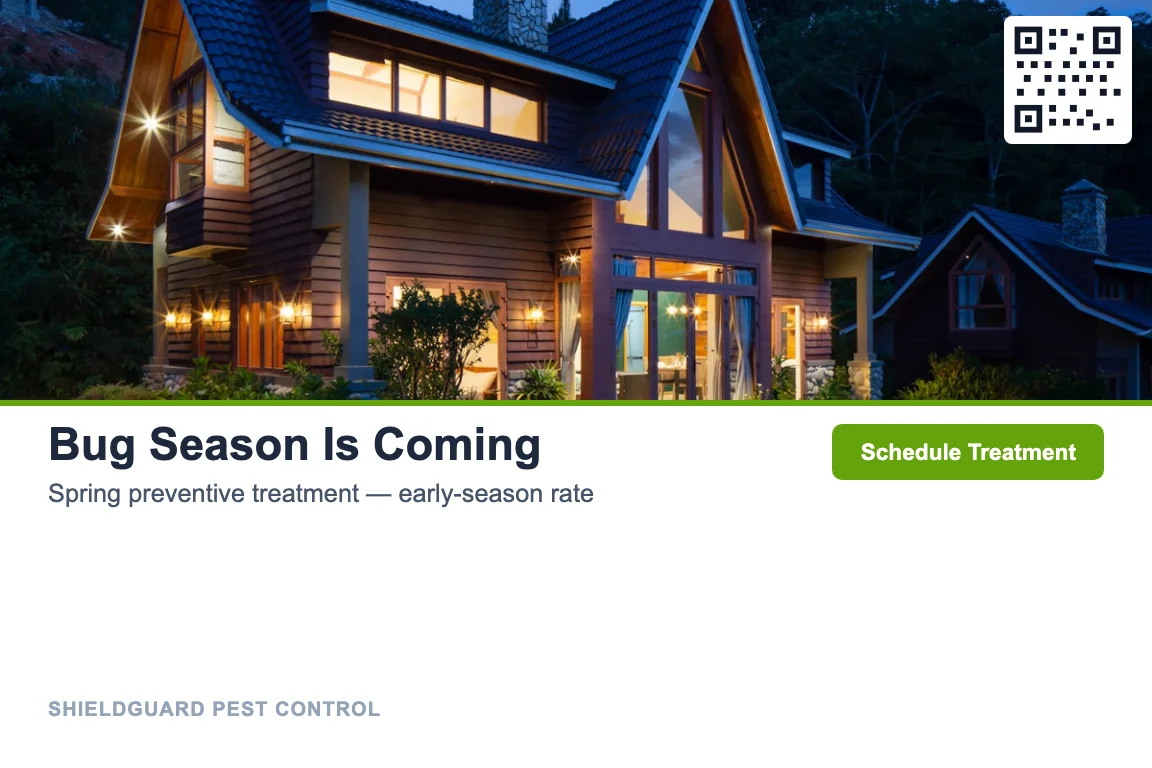
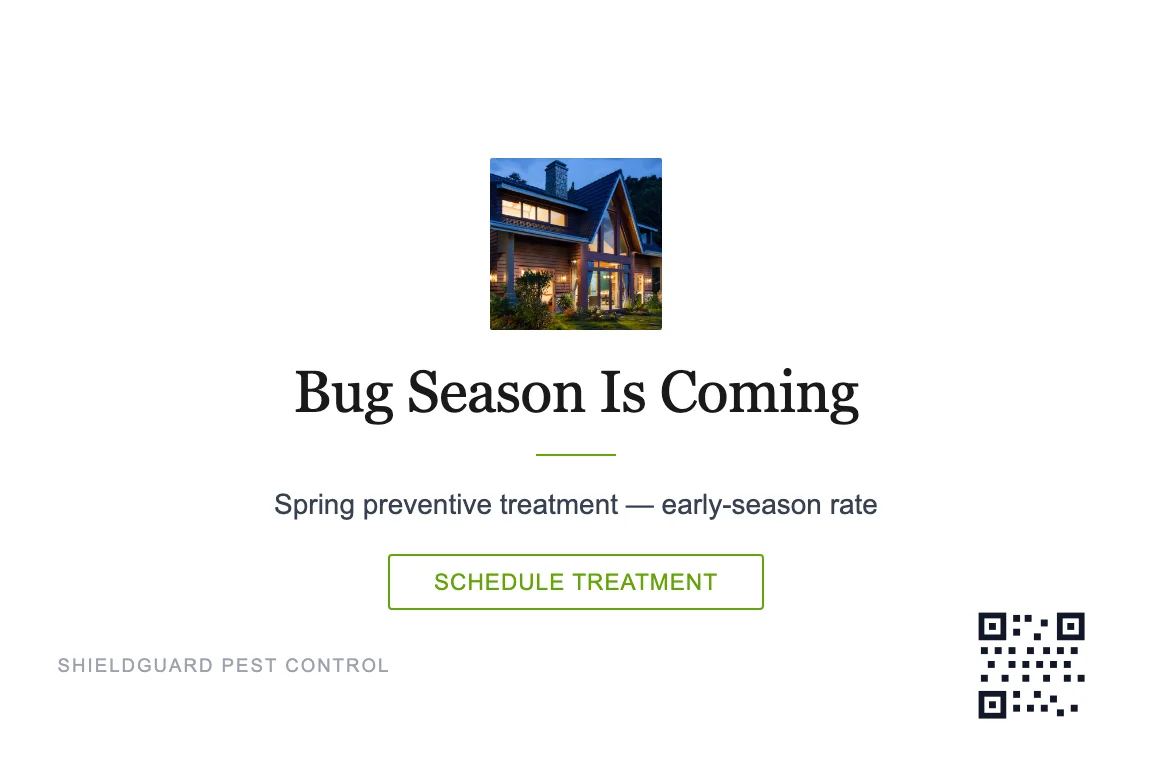
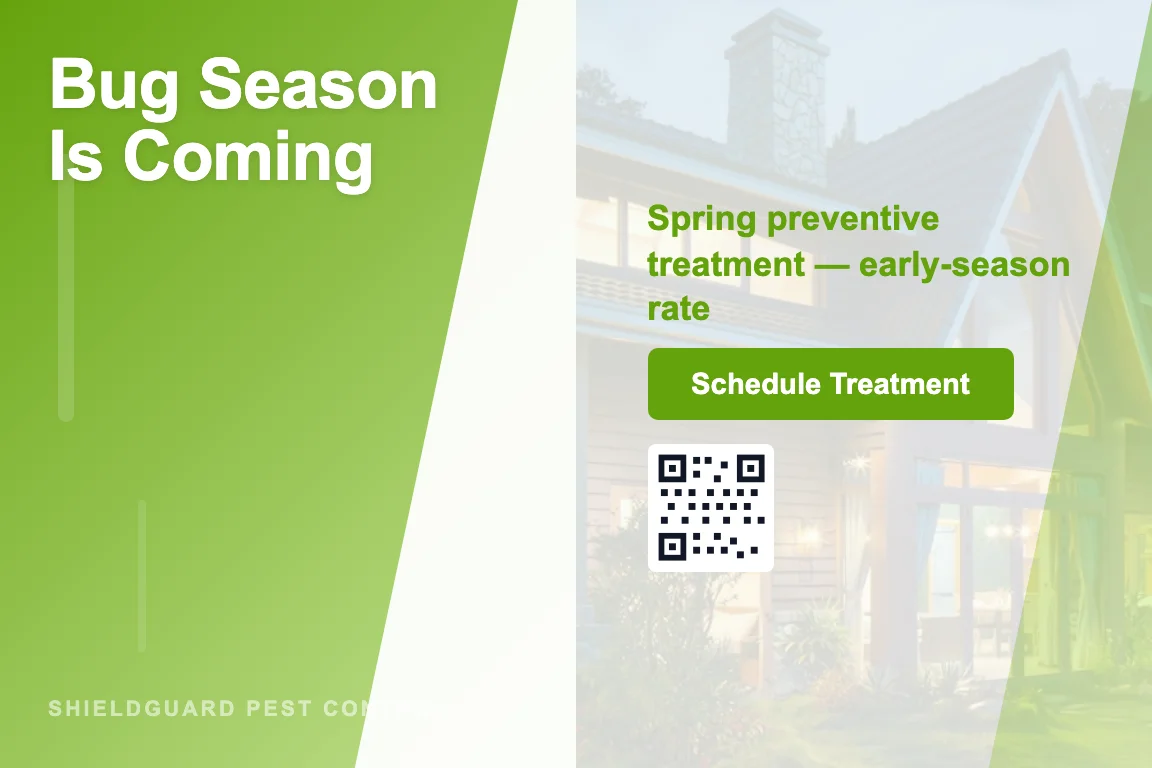
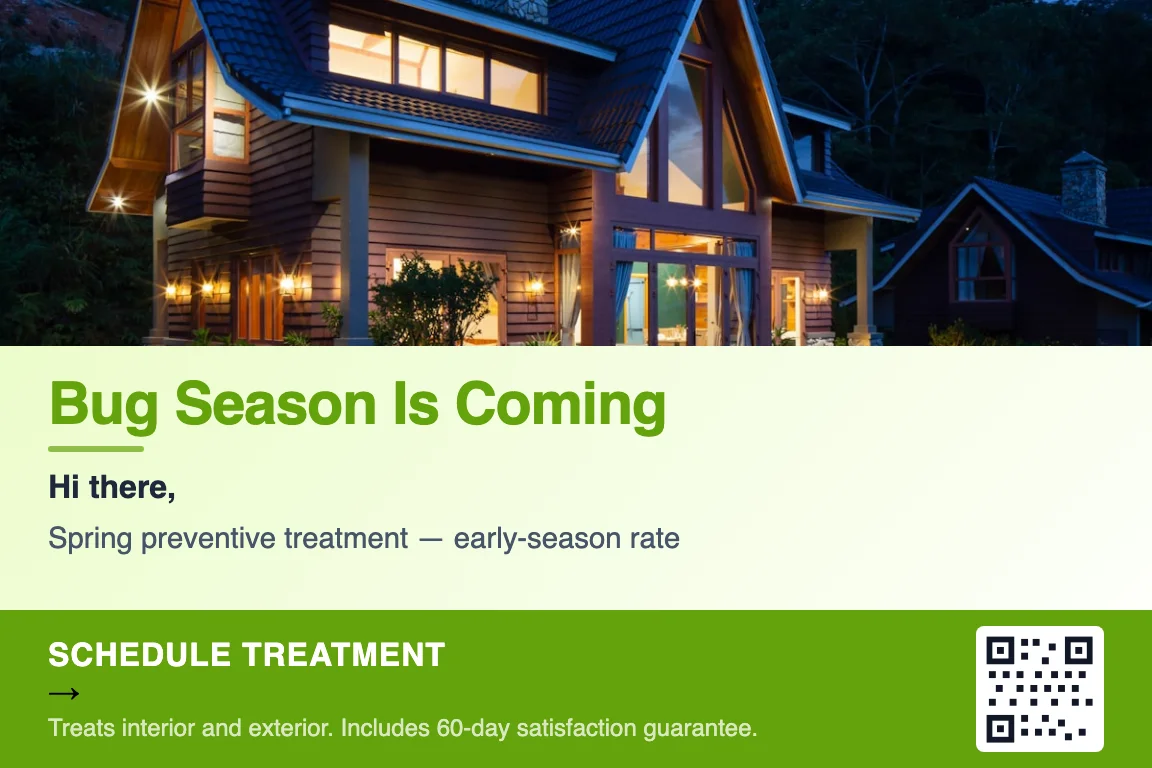
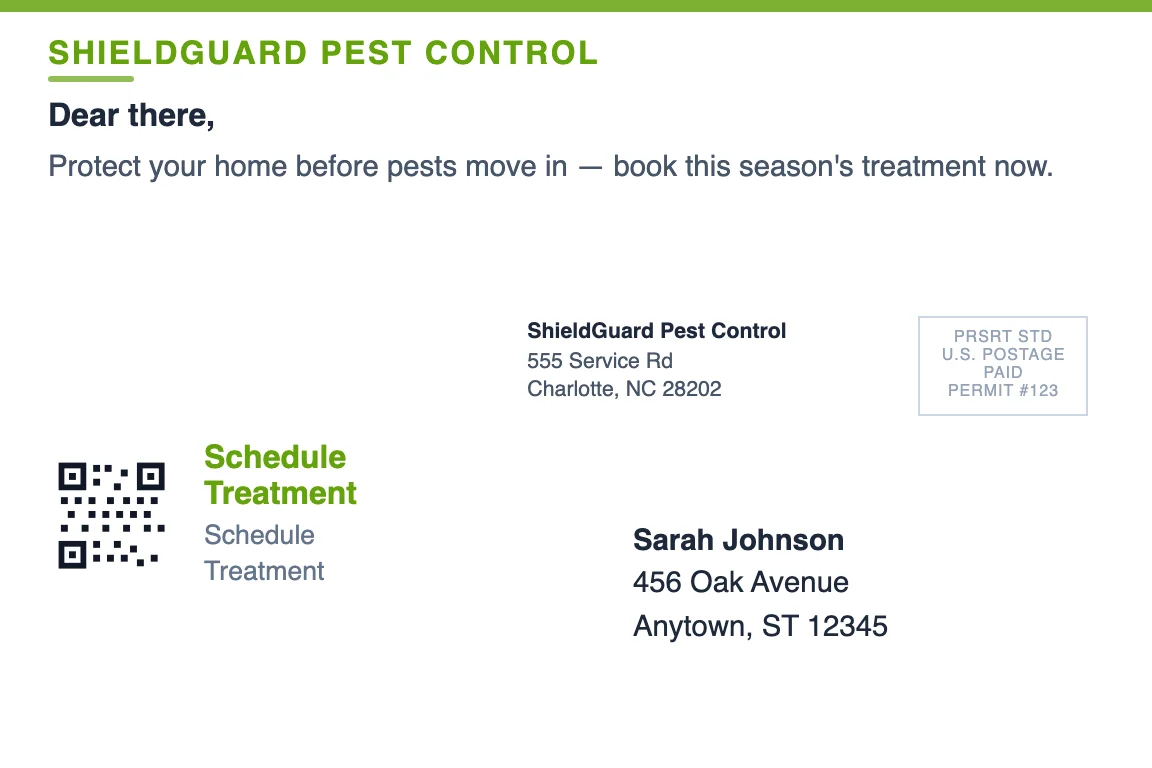
The best-performing pest control postcards include a seasonal treatment special with a clear dollar amount, urgency tied to the season ("Ant season is here, book before we're full"), your phone number in large type, and a QR code linking to an online booking page. Keep the message short: one offer, one call to action.
When should I send pest control postcards?▼
Time your postcards to land before peak pest seasons. For spring pests (ants, termites), send in February–March. For summer pests (mosquitoes, wasps), send in May–June. This catches customers before they start searching for help, so you book treatments before the rush.
Should I run seasonal or annual service campaigns?▼
Both. Seasonal campaigns bring in one-time treatments during peak demand. Annual renewal campaigns lock in recurring revenue from existing contract customers. Run seasonal campaigns to win new business and renewal campaigns to retain your base. PostKnock handles both with separate playbooks.
Are postcards better than digital ads for pest control?▼
They serve different purposes. Digital ads capture people actively searching ("pest control near me"), while postcards generate demand before the problem is urgent: filling your schedule with planned treatments instead of competing for emergency calls. Postcards to your existing customer list typically convert at 2–5% vs. 1–3% for cold digital leads. Smart pest control businesses use both.
Can I export my list from PestRoutes or FieldRoutes?▼
Yes. Export your past customer list as a CSV from PestRoutes, FieldRoutes, or any CRM. Include name, address, last service date, and service type. Upload to PostKnock and the system handles the rest: address verification, postcard printing, and call queue generation.
How fast can I launch a seasonal pest campaign?▼
30 minutes from signup to first card mailed: important because seasonal pest campaigns only have a 2–3 week window before customers start calling competitors. Cards mail via USPS First-Class within 1–2 business days of launch.
Can I cancel my subscription anytime?▼
Yes. Pro is $99/mo (or $799/yr, save $389). Cancel anytime from Settings → Billing. After cancellation you keep Pro features until your billing period ends, then revert to the Free plan automatically. No contracts, no cancellation fees, no exit calls. Annual plans include a 30-day money-back guarantee.
Does PostKnock integrate with PestRoutes or FieldRoutes?▼
Both PestRoutes and FieldRoutes support CSV export of past customers: upload that list and the PostKnock import wizard auto-maps the columns (name, address, phone, last service date, service type). Zapier is live too: if an app you use connects to Zapier, new customers can flow into PostKnock as contacts automatically, no repeat export. It just adds or matches the contact record; you still choose when to launch a campaign. Native connectors for specific pest-control software are not available yet.