A 2-wave postcard plus call sequence for one job: filling your spring schedule with preventive treatments before homeowners see the first ant.
Start Free — No Credit CardOnce a homeowner sees the first ant, they call your competitors too. Emergency treatments cost 3x more to deliver and customers compare prices. Selling preventive treatment in February is a different business than selling reactive treatment in May.
2 waves over 3 weeks, deployed late February through April. Below is exactly what mails when, and why each wave's hook is sharper than the last.
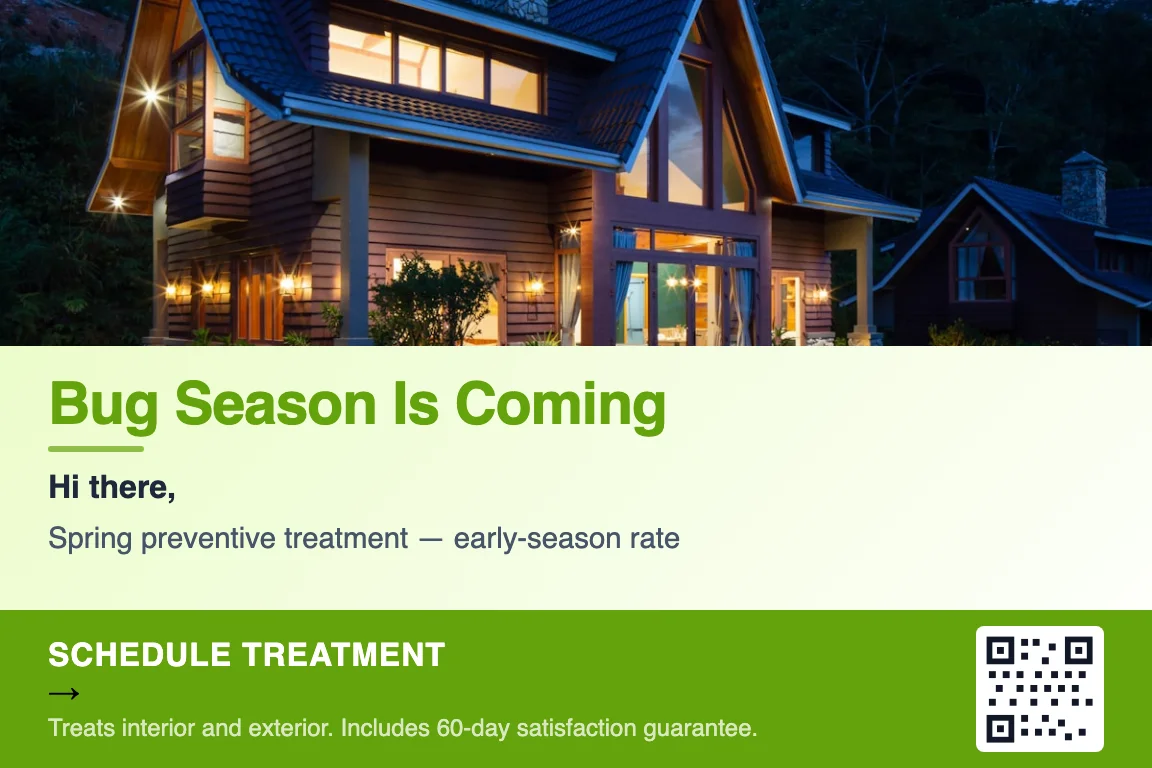
Headline: "Bug Season Is Coming" · Offer: Spring preventive treatment at early-season rate · 60-day satisfaction guarantee.
Direct, practical, with bold pricing. Mention regional pests by name (ants, spiders, wasps, mosquitoes) so the homeowner sees themselves in the message. Highlight licensed/insured/family-safe and the satisfaction guarantee. Phone is the primary CTA — pest control customers prefer to call rather than book online. The follow-up call lands 7–14 days after delivery: "We're scheduling preventive treatments now at an early-season rate. Treating before bugs nest is way more effective."
Headline: "Last Call Before Bug Season" · Offer: Spring treatment + free re-treatment guarantee — ends [date].
14 days after Wave 1, only to non-responders. Tighter deadline ("early-season pricing ends [date]") and a real stat: emergency pest calls cost 3x more than preventive treatment. That stat is genuine and gives the homeowner a financial reason to act now. Postcard only, no call — the deadline does the work. After Wave 2, the contact rests for 90 days before re-entering the cycle, which lets you run summer follow-up without overlap.
Both waves, call timing, and copy direction are pre-configured. You set the price, the regional pests, and your branding.
From PestPac, FieldRoutes, Briostack, GorillaDesk, or PestRoutes: export past customers and active subscribers. Or layer in radius-purchased lists for new acquisition in your service area.
Wave 1 mails within 1–2 business days. Your call queue auto-populates 7 days after delivery, capped at 35 calls per day so the office isn't overloaded.
Pre-loaded call scripts. Office books appointments into your existing field service software. Booked customers drop out of Wave 2 automatically.
A typical residential pest control company mails to 800–1,500 past customers and warm radius prospects for the spring push. Here's the math on a 1,000-home run:
14:1 first-year ROI — quarterly subscribers stay for 3+ years on average, multiplying the lifetime value.
Run your own numbers in the ROI calculator.
Free to explore — you only pay when you're ready to send. 30-day money-back guarantee.
Single-wave postcard campaigns · Unlimited contacts · From $1.05/piece
Everything in Free + calls, sequencing · From $0.79/piece
Per-piece pricing includes printing + USPS First-Class postage. No hidden fees.
Four design styles, all themed for your pest control business and ready to customize. Same offer, same call follow-up — just pick the look that fits your brand.
Bold
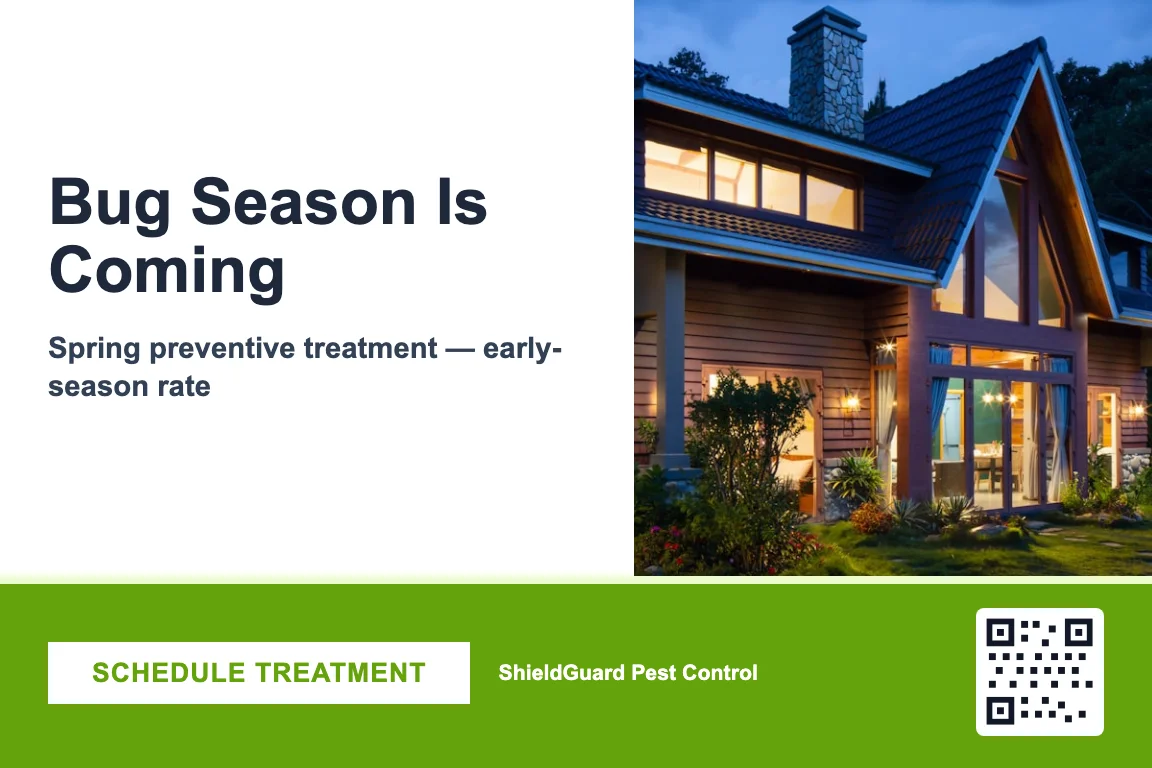
Photo
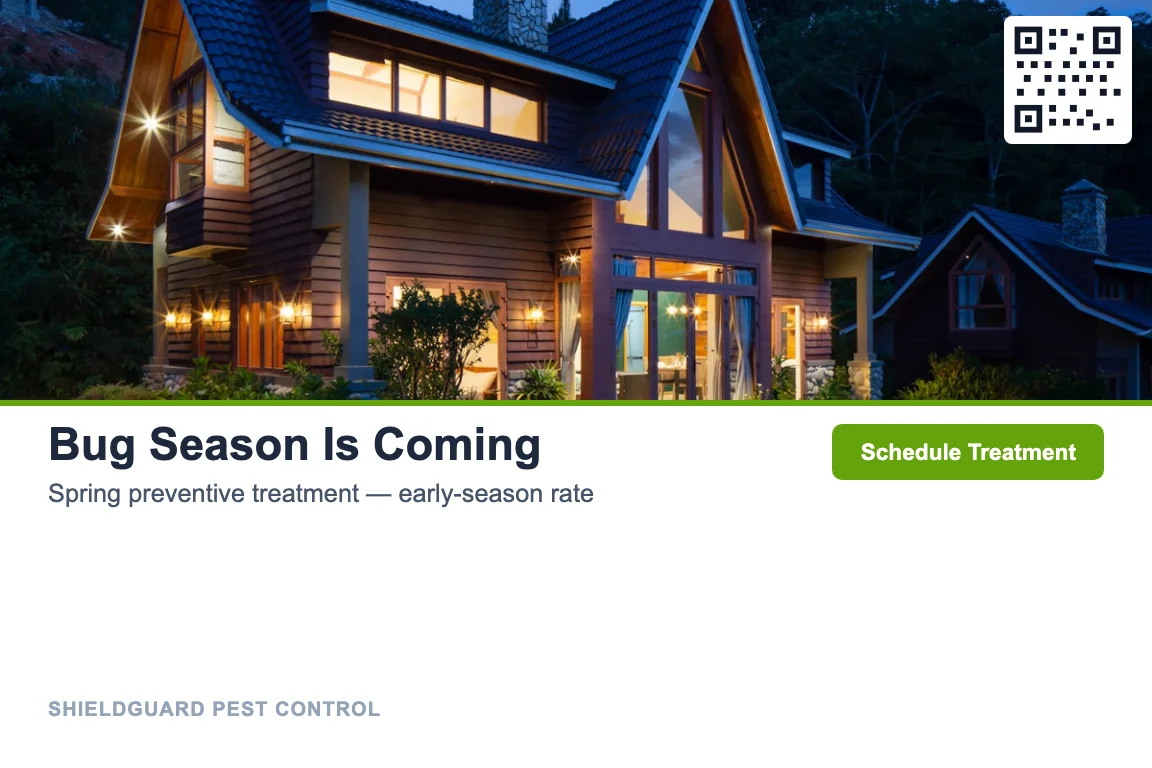
Minimal
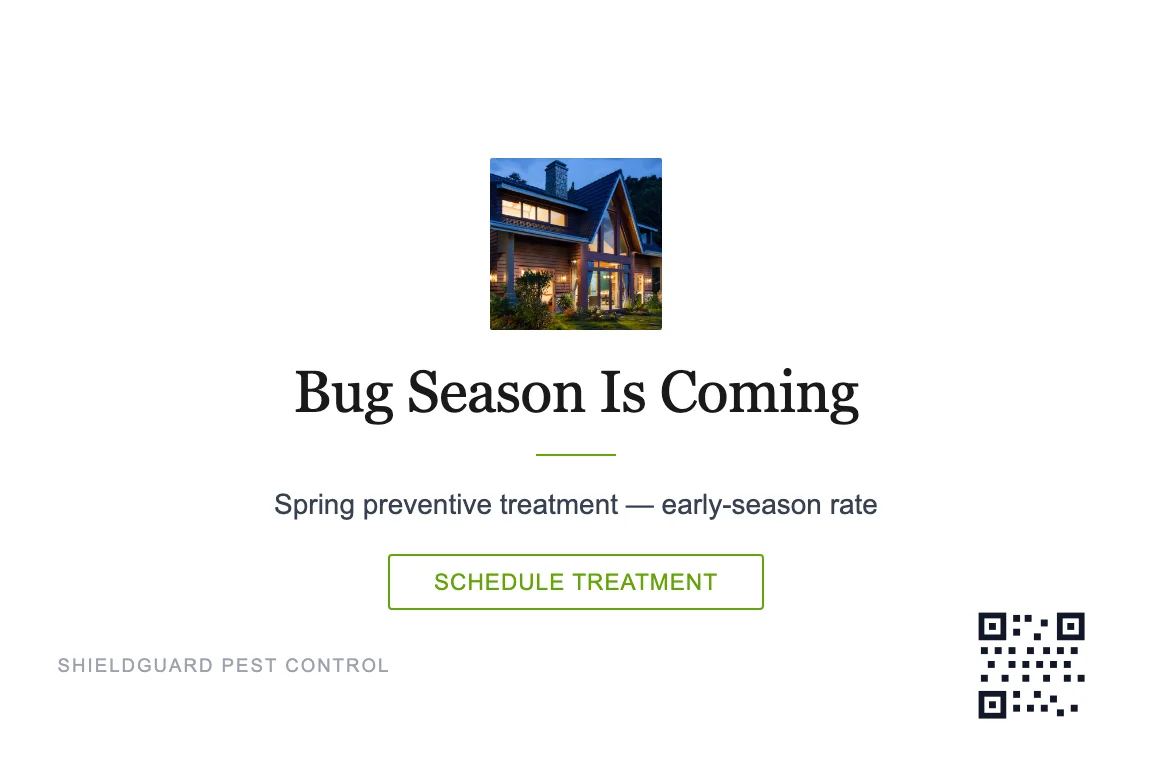
Gradient
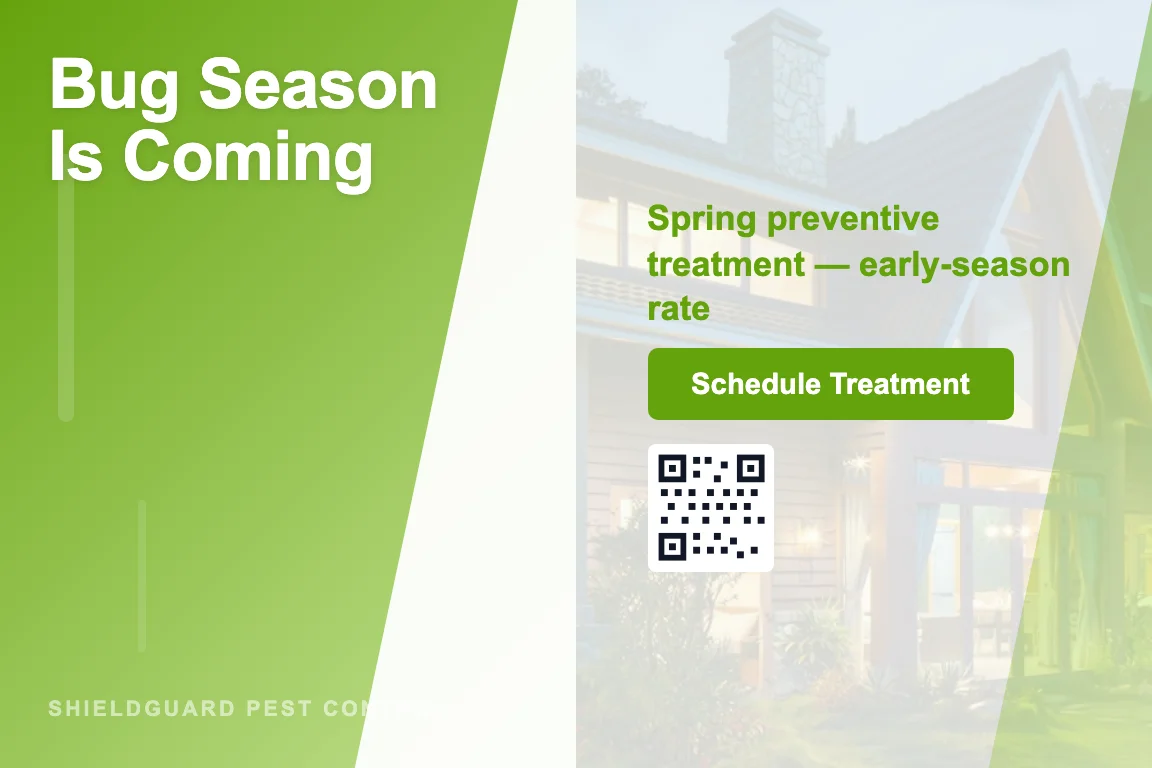
Front Detail
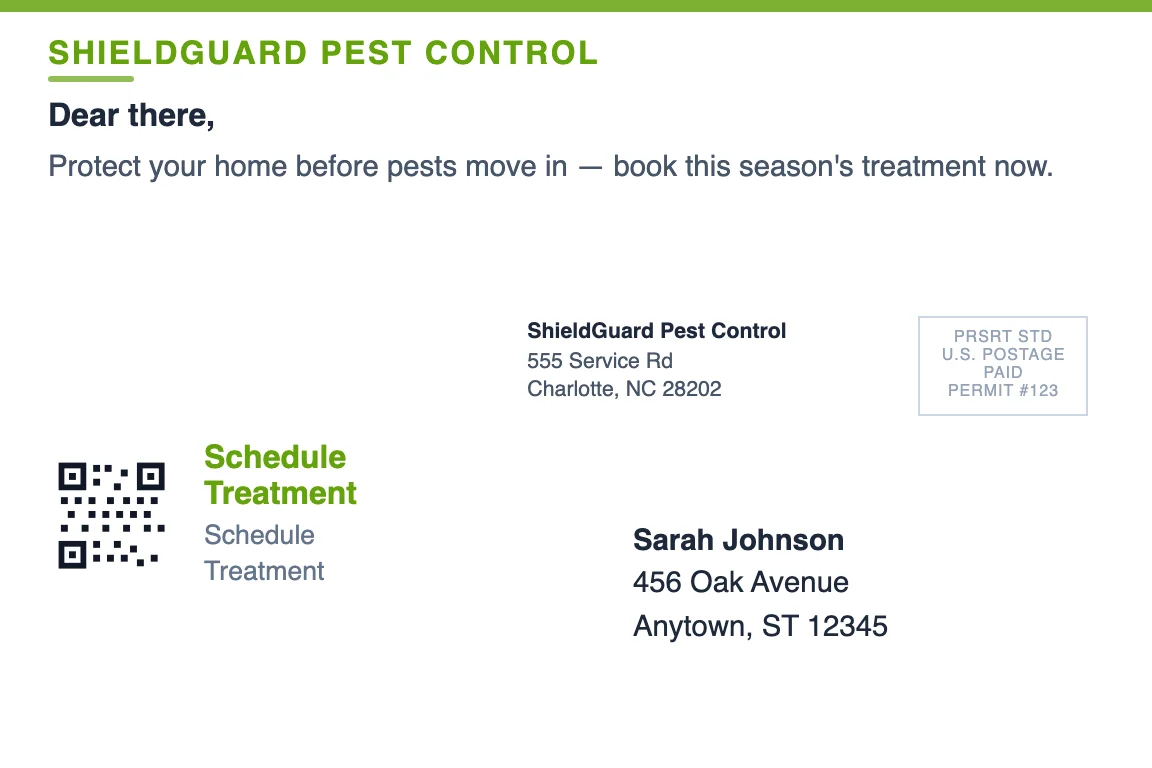
Back (Address Side)
PostKnock seasonal campaigns also work for
Spring seasonal treatment is the highest-ROI pest control play, but PostKnock also runs annual service renewal sequences and win-back campaigns for lapsed past customers.
See all pest control campaigns →Late February through mid-April for most US markets. The exact window varies by region: southern markets (FL, TX, GA) start late January as bug activity picks up earlier; northern markets (MN, MI, NY) push to late March. The PostKnock Seasonal Treatment Reminder playbook ships with a Feb–Apr deploy window flagged in the campaign builder so you don't accidentally launch off-season.
Mail to past customers first — warm "house" list, response rates 6–9%, lowest CAC. Skip current active subscribers (they're already on quarterly). After your house list, layer in radius-purchased lists targeting single-family homes 0–25 years old in your service area. Cold radius lists convert at 1–2% but new customers acquired in the spring stay on quarterly plans for 3+ years on average.
Yes — naming the specific pests common to your region (ants, spiders, wasps, mosquitoes, termites) lifts response noticeably. Generic "pest control" reads as commodity; "we treat for the ants and spiders that come out in [region] in spring" feels local and credible. The Wave 1 template has a regional-pest field that auto-populates from your service area.
PostKnock generates the call queue and pre-loaded scripts. When the office books a treatment, they enter it into PestPac, FieldRoutes, Briostack, GorillaDesk, or PestRoutes — PostKnock doesn't replace your scheduling tool. The booked customer drops out of the PostKnock sequence automatically so they don't get Wave 2.
The Wave 1 template includes "family- and pet-safe products" as a default bullet point on the back of the card. About 60% of pest control prospects mention pet safety as a top concern, so calling it out directly removes a major objection. If your products are EPA-listed or earned a specific certification (Green Pro, EcoSmart), include that in the badge area near your logo.
Stop waiting for the first ant to ring your phone. Fill your spring schedule with preventive treatments before the season starts.
Start Free — No Credit CardContact Sales
Tell us about your needs and we'll put together a custom plan.
1 ANA (Association of National Advertisers), Response Rate Report 2023, published February 2024.