For Plumbing Contractors

Plumbing Seasonal
Maintenance Postcard Campaigns

A 2-wave postcard plus call sequence built around the math homeowners can't argue with: a pre-season inspection costs less than a holiday emergency.

Start Free — No Credit Card
4.4%
Direct mail response rate
—up to 9% on house lists1
10x
Cost difference between
emergency and preventive
$1.05
Per 4x6 card all-in
(printing + USPS postage)

Plumbing Is Reactive Until You Make It Preventive

Homeowners don't think about pipes until something goes wrong — and when it does, they call whichever plumber answers the phone. The contractor who prevents the emergency call wins the customer for life. The one who only takes emergency calls is competing on price every time.

What Doesn't Work

  • × Waiting for the burst pipe phone call
  • × Generic "we do plumbing" cards with no specific service
  • × Mailing in December (already too cold, schedule full)
  • × Yard signs that homeowners don't notice until they need you

What Does Work

  • ✓ Wave 1 in late September with pre-season pricing
  • ✓ Follow-up call 7–14 days after delivery
  • ✓ Wave 2 with the "$5,000 burst pipe vs $99 inspection" hook
  • ✓ 90-day rest before spring spring-checks campaign cycles

The Seasonal Maintenance Playbook

2 waves over 3 weeks, deployed late September through November (winterization) or February through March (spring checks). Below is exactly what mails when.

W1
Day 1 · Postcard + Call Day 7–14

Wave 1 — "Winterize Your Pipes"

Headline: "Winterize Your Pipes" · Offer: Seasonal pipe inspection + water heater check at pre-season rate.

Direct, professional, and specific about what's included: water heater, exposed pipes, shut-off valves, outdoor spigots. List "licensed and insured master plumbers" prominently — this is a credibility-driven decision. Bold pricing, big phone number. Plumbing customers prefer to call rather than book online. The Wave 1 call lands 7–14 days after delivery: "We're scheduling pipe winterization checks now at a pre-season rate. A burst pipe on a cold weekend costs ten times what a check-up costs."

W2
Day 15 · Postcard only (no call)

Wave 2 — "Don't Wait For The Emergency"

Headline: "Don't Wait For The Emergency" · Offer: Pipe inspection + water heater flush, ends [date].

14 days after Wave 1, only to non-responders. The hook is the math: "Pre-season pricing ends [date]. Emergency calls cost 10x more." Add a real specific stat: emergency holiday calls run $500+. Free water heater flush as a bonus to push the deadline conversion. Postcard only, no call — the math does the work. After Wave 2, the contact rests for 90 days, which lets you cycle into spring or summer maintenance campaigns without overlap.

How It Works

1

Pick the Seasonal Maintenance Playbook

Both waves, call timing, and copy direction are pre-configured. You set the price, the inspection items, and your branding.

2

Upload Your Customer List

From ServiceTitan, Housecall Pro, FieldEdge, or Service Fusion: export past customers. Or layer in radius-purchased lists targeting single-family homes 15+ years old (likely candidates for aging plumbing).

3

Launch in Late September

Wave 1 mails within 1–2 business days. Your call queue auto-populates 7 days after delivery, capped at 35 calls per day so the office isn't overwhelmed.

4

Office Books, Plumbers Run the Inspections

Pre-loaded scripts. Office enters bookings into your dispatch software. Booked customers drop out of Wave 2 automatically.

The Math on a 1,000-Home Winterization Campaign

A typical residential plumbing contractor mails to 500–1,500 past customers for the fall winterization push. Here's the math on a 1,000-home run:

  • Wave 1: 1,000 cards · Wave 2: ~870 cards (non-responders)
  • Total: ~1,870 postcards × $0.79 (Pro) = $1,477 in postcard spend
  • Booking rate at 4% (warm list, real urgency) → 40 inspections booked
  • $99 inspection + ~50% upsell to repair, water heater work, or replacements = ~$280 average revenue per booking
  • 40 bookings × $280 = $11,200 immediate revenue
  • ~15% of inspections lead to water heater or major plumbing replacement within 12 months → $50K+ in pipeline value

7:1 ROI on Wave 1 alone, before counting upsell and the steady stream of replacement work that flows from inspection findings.

Run your own numbers in the ROI calculator.

Simple, Transparent Pricing

Free to explore — you only pay when you're ready to send. 30-day money-back guarantee.

Free

$0/forever

Single-wave postcard campaigns · Unlimited contacts · From $1.05/piece

Most Popular

Pro

$99/mo

Everything in Free + calls, sequencing · From $0.79/piece

Per-piece pricing includes printing + USPS First-Class postage. No hidden fees.

What You'll Actually Send

Four design styles, all themed for your plumbing business and ready to customize. Same offer, same call follow-up — just pick the look that fits your brand.

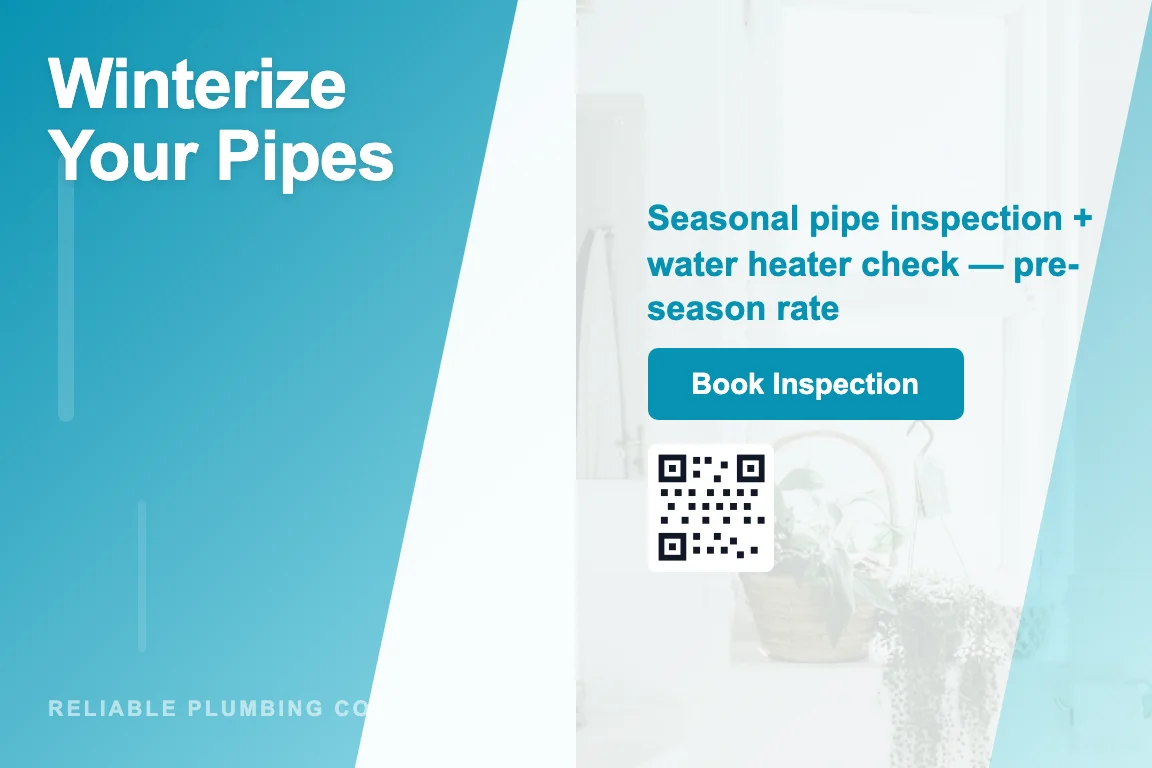
Bold
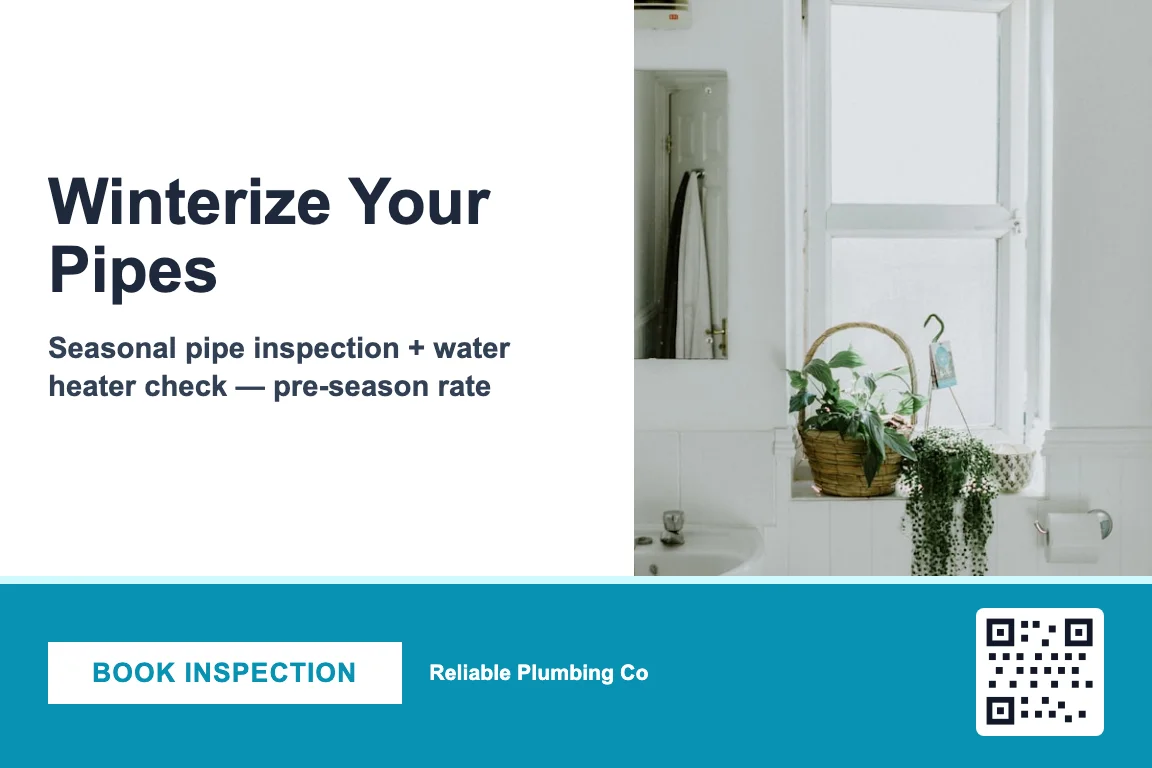
Bold plumbing business postcard design — Seasonal Maintenance

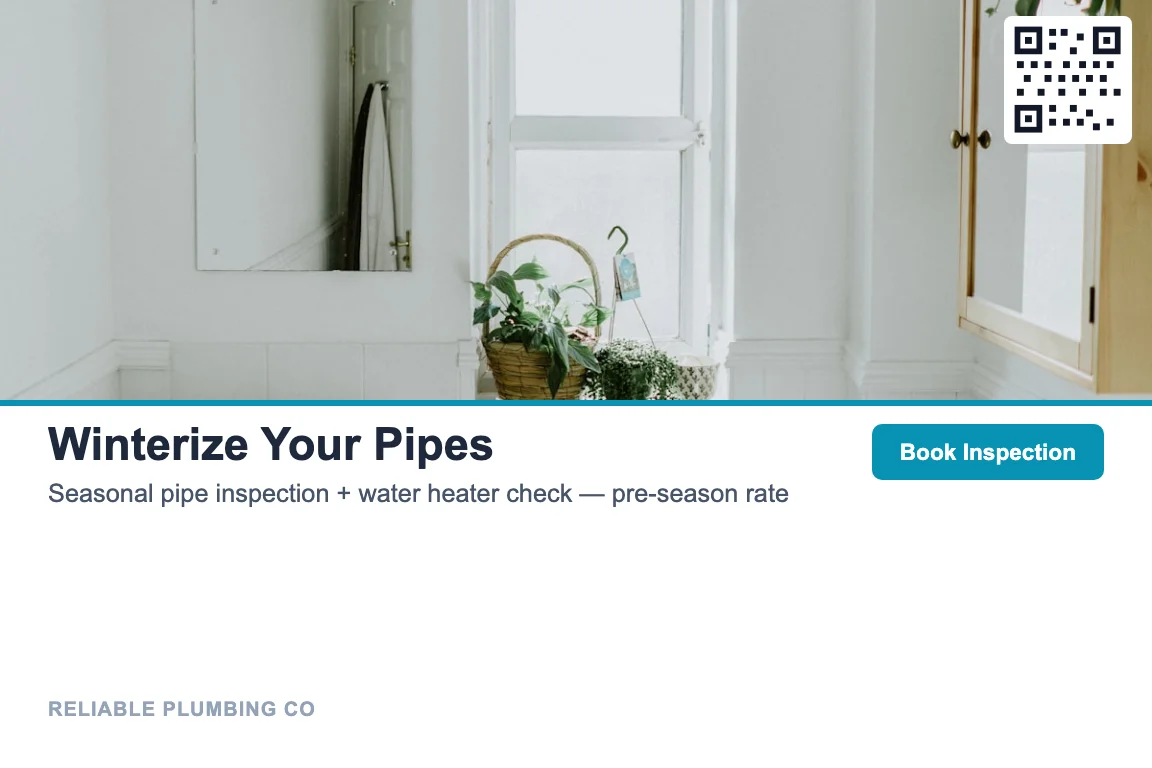
Photo

Photo-led plumbing business postcard design — Seasonal Maintenance

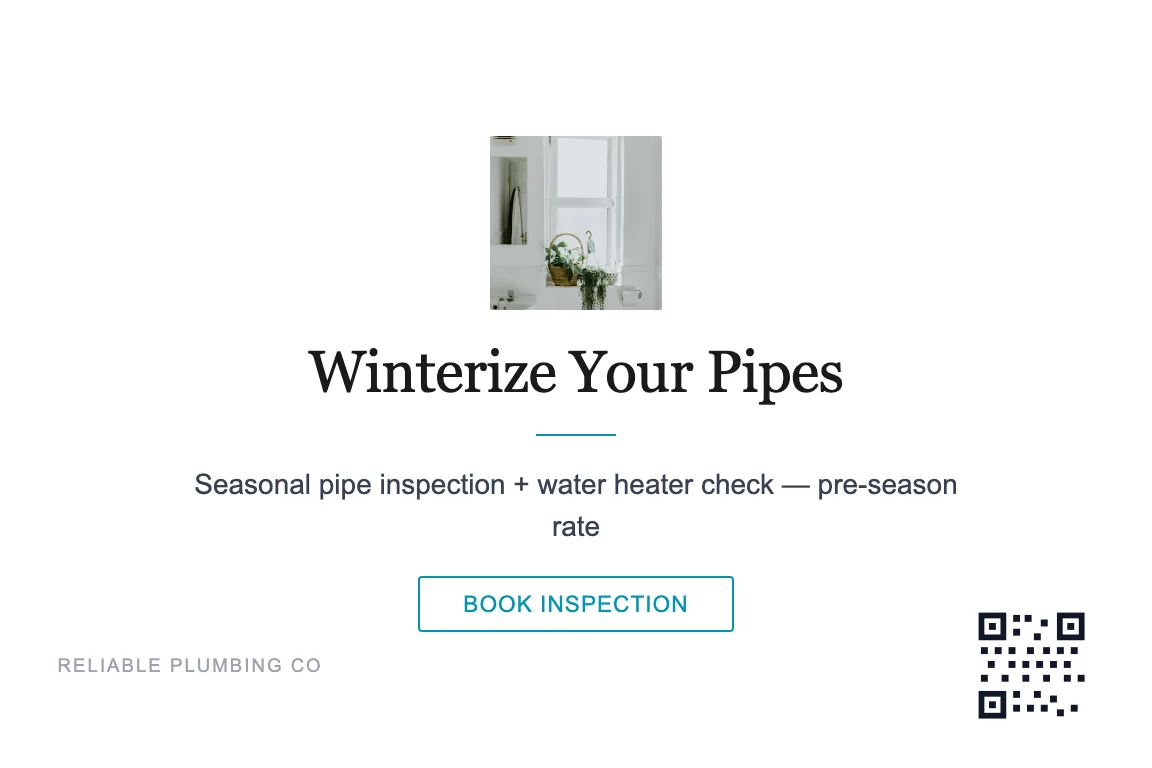
Minimal

Minimal plumbing business postcard design — Seasonal Maintenance

Gradient

Gradient plumbing business postcard design — Seasonal Maintenance

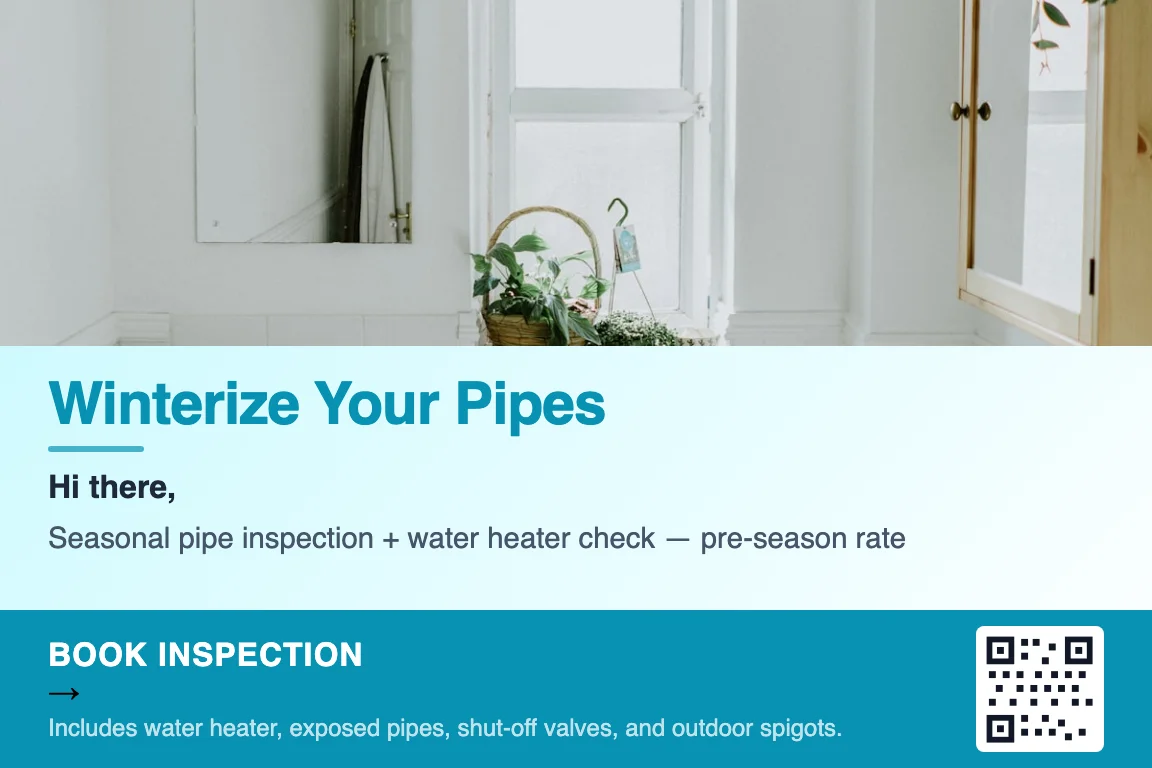
Front Detail

Detailed view of plumbing business postcard front — Seasonal Maintenance

Back (Address Side)

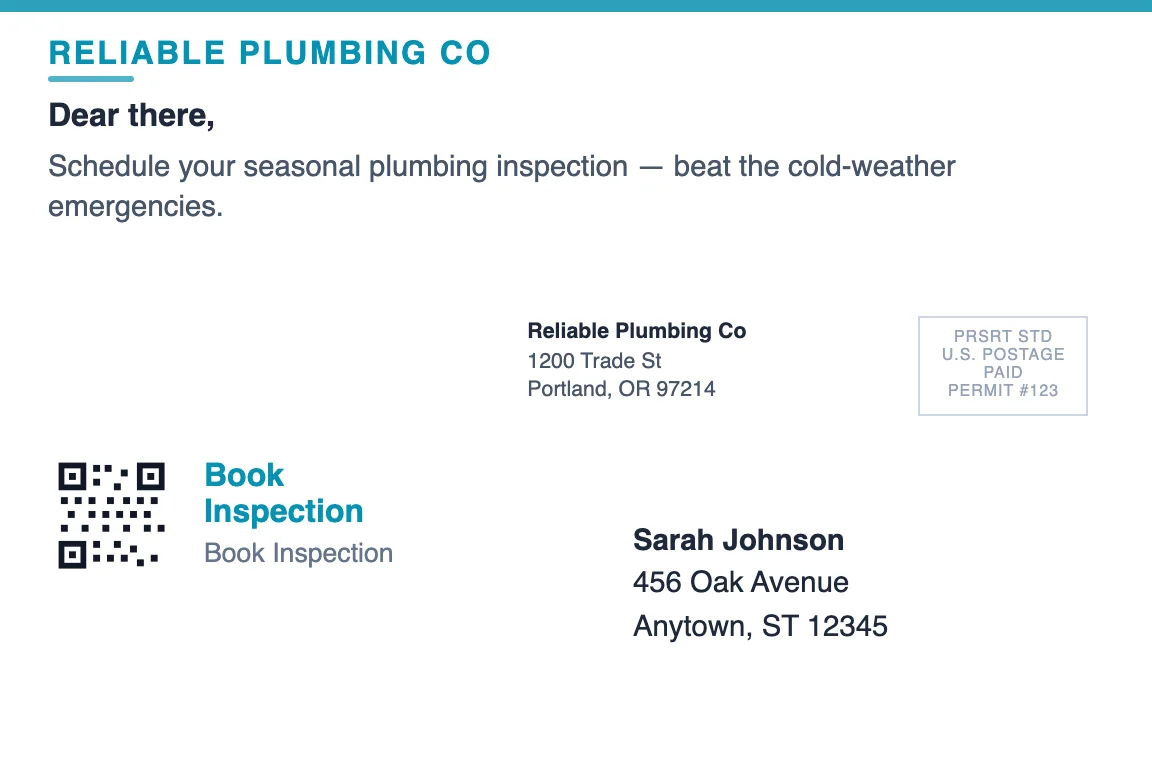
plumbing business postcard back showing return address and recipient zone — Seasonal Maintenance

PostKnock seasonal campaigns also work for

More Plumbing Campaigns

Seasonal maintenance is the highest-ROI plumbing play, but PostKnock also runs water heater age-based reminders and win-back sequences for lapsed past customers.

See all plumbing campaigns →

Plumbing Seasonal Maintenance FAQs

When should I deploy my winterization postcards?

Late September through November in cold-weather markets — the pre-season window before homeowners feel any urgency. Mail too late (after Thanksgiving) and you're competing with the holidays for mailbox attention. In southern markets where freeze risk is lower but storms still happen, run a generic "seasonal pipe check" angle in October instead. PostKnock's Plumbing Seasonal Maintenance playbook has a Sep–Nov deploy window flagged in the campaign builder.

What price point should I put on the inspection?

$99 is the conversion sweet spot for a residential pipe + water heater inspection. The math sells itself: $99 vs a $2,000 burst-pipe cleanup or a $500 emergency holiday call. Inspections are loss-leaders that pay back through repair, water heater replacement, and the customer-retention effect — price aggressively to fill the calendar and use Wave 2 to land the deadline.

Should I mail to past customers or radius lists?

Past customers first — warm list, response rates 5–9%. After your house list, layer in radius-purchased lists targeting single-family homes 15–30 years old (aging plumbing, water heater near end-of-life, real maintenance need). Cold radius lists convert at 1–2%, profitable on a $99 inspection that creates a customer for every future plumbing emergency.

How does the call follow-up integrate with my dispatch software?

PostKnock generates the call queue and pre-loaded scripts. When the office books an inspection, they enter it into ServiceTitan, Housecall Pro, FieldEdge, or Service Fusion. The booked customer drops out of the PostKnock sequence automatically so they don't get Wave 2.

Can I run the same playbook for spring pipe checks?

Yes — the Plumbing Seasonal Maintenance playbook flips between fall winterization and spring inspection (post-thaw pipe damage, outdoor spigot checks, water heater flushes) by toggling the season in the campaign config. Deploy late September for fall, late February for spring. Same customer list, 90-day rest cycle between seasonal campaigns.

Ready to Get Started?

Stop waiting for the burst-pipe phone call. Fill your fall calendar with $99 inspections that prevent the emergency.

Start Free — No Credit Card

1 ANA (Association of National Advertisers), Response Rate Report 2023, published February 2024.