Put your business in the mailbox of people who've never heard of you — then follow up with a phone call. PostKnock pairs acquisition postcards with the Call Queue, using pre-built playbooks for 50+ industries.
Start Free — No Credit CardAn acquisition postcard is a physical mail piece sent to people who aren't customers yet — new movers, nearby households, or a purchased prospect list — with one job: get a first-time patient, member, or customer through the door. It pairs an introduction to your business with a specific, low-risk reason to try you (a new-patient special, a first-visit offer, a clear deadline).
People who don't know you yet: households in your service area, new movers settling in and choosing providers, or a targeted prospect list you bring in as a CSV. The goal is the first appointment, the first sale, the first visit.
A new prospect has no inbox relationship with you to filter or unsubscribe from. A postcard lands in the mailbox with the offer visible at a glance — a tangible, local introduction that an unknown sender's email rarely gets to make.
Cold acquisition is harder than win-back — you haven't earned trust yet, so a single touch rarely lands. Mail puts a real, local introduction in front of people who've tuned out digital ads, and a follow-up call turns "interesting" into "booked."
Industry studies typically report direct-mail response rates to a cold prospect list in the low single digits (often cited around 1–2%, below the higher rates seen for existing-customer house lists),1 with results varying widely by offer, list quality, targeting, and follow-up. Treat any number as an estimate, not a promise — your own offer and targeting drive the outcome.
Postcards that get attention. Callbacks that close the deal. Here's the whole acquisition loop — four steps, no agency.
Choose a pre-built multi-touch wave sequence for your industry (50+ verticals). Wave timing, message direction, UTMs, and call scripts come pre-configured — up to 5 waves. Bring a targeted prospect list in by exporting a CSV from your existing system and uploading it; the import wizard auto-maps name, address, and phone columns. No prospect list yet? Run an EDDM-style saturation mailing to whole carrier routes near you — no addresses required.
Start from an industry template and edit it in the in-app Design Studio — your logo, your first-visit offer, your colors. Choose 4×6, 6×9, or 6×11 (a bigger size stands out for a first impression). Add a QR code that links to your booking page or new-customer offer.
Postcards print and ship via USPS First-Class automatically — printing and postage are included in the per-piece price. Send to a targeted prospect list, or run an EDDM-style saturation mailing to a whole neighborhood. You pay from your wallet, per piece, only for what you send.
When you mail to a list that includes phone numbers, the built-in Call Queue (a Pro feature) fills up a few days after delivery with the people who got the card. Your front desk works the queue with the wave's pre-loaded call script and logs each outcome. Non-responders roll forward into the next wave. This postcard-then-phone one-two punch is the part most "just mail it" tools leave out. (EDDM saturation mail goes to addresses without names or phone numbers, so it's tracked by QR scan rather than a call queue.)
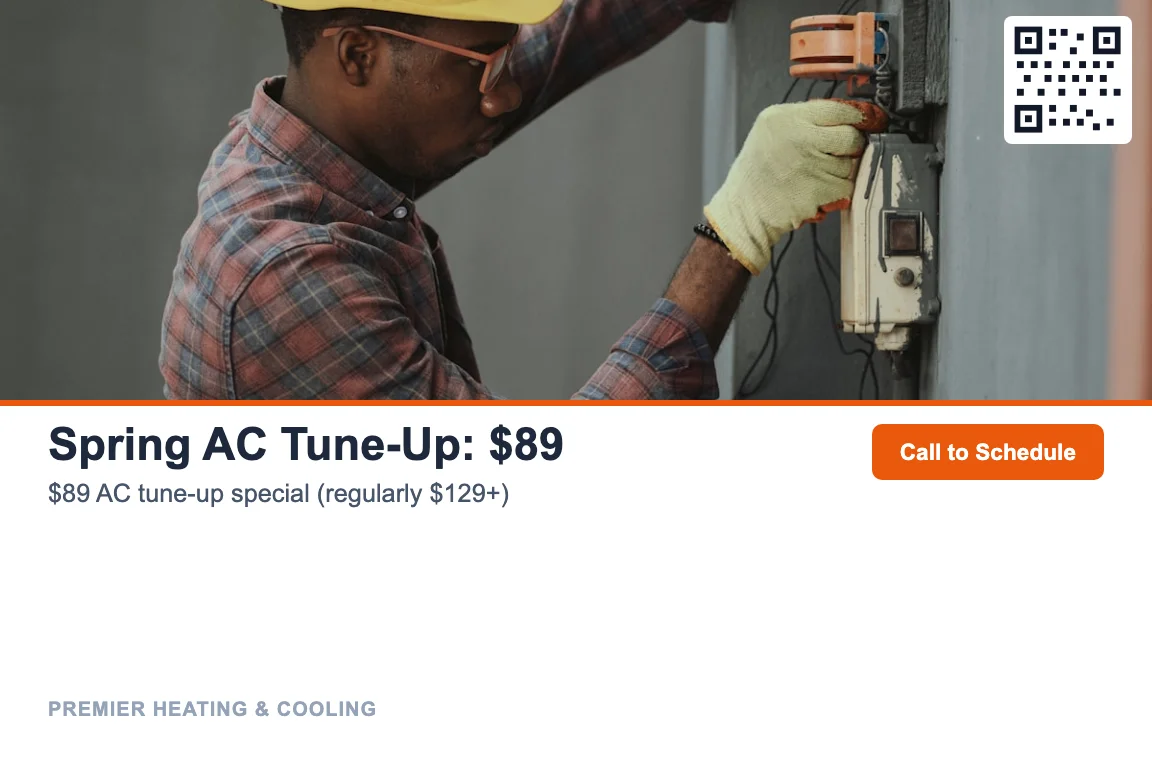
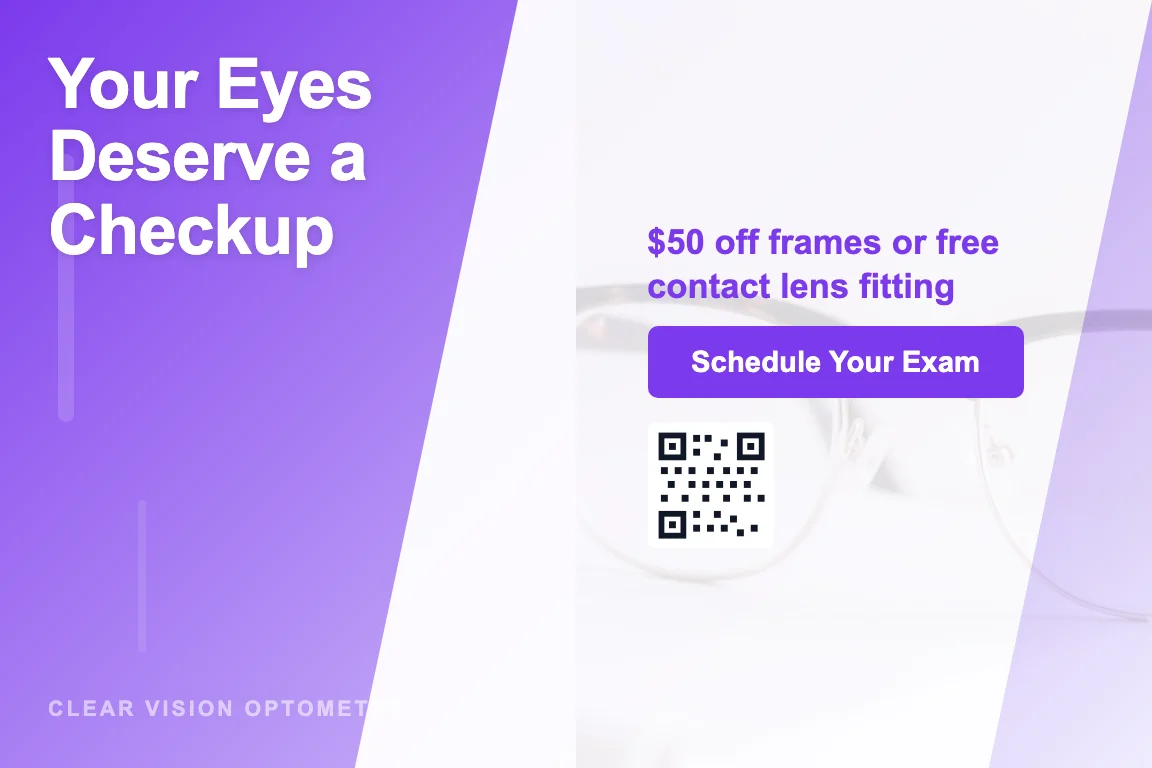
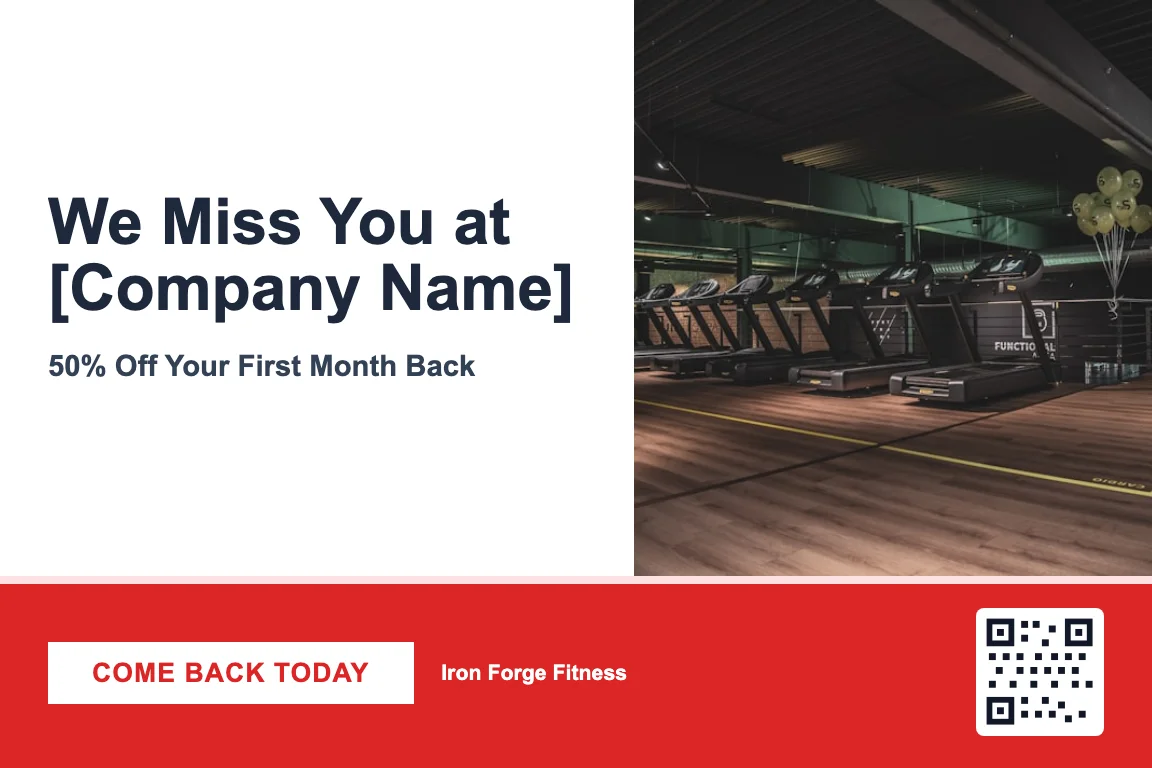
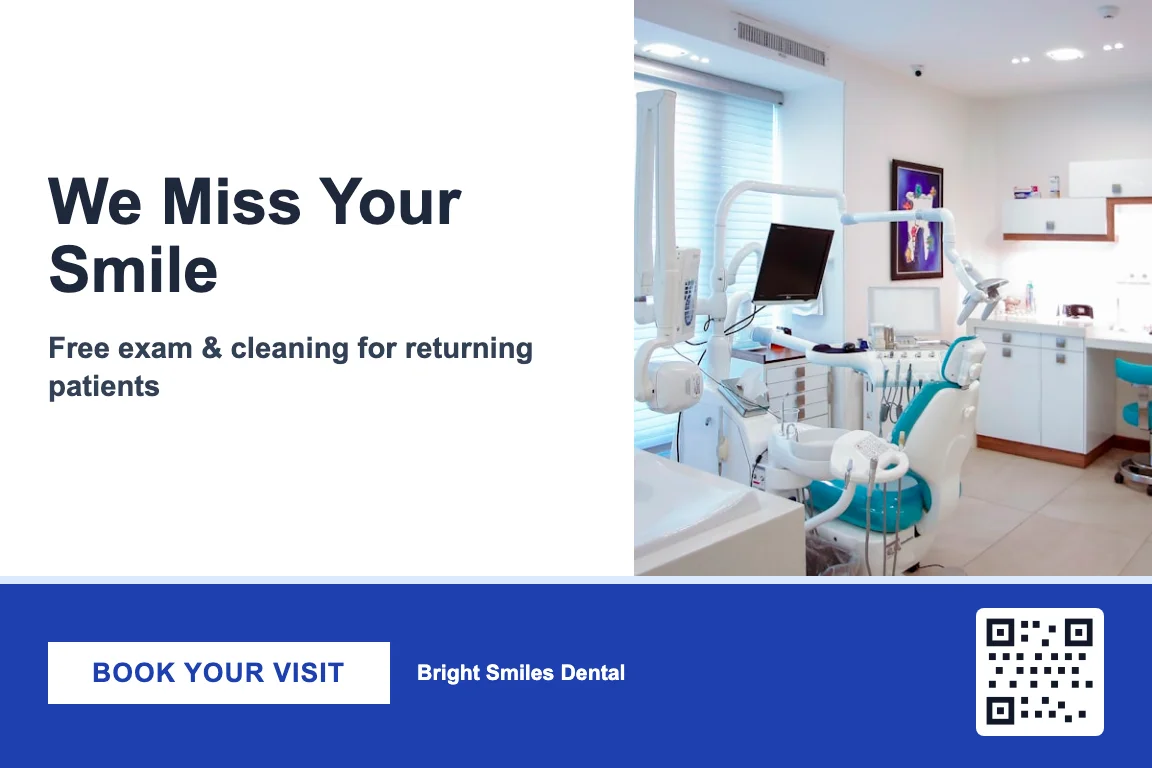
Real postcard designs, themed per industry and ready to customize in the Design Studio. Here are a few across different verticals — the same postcard + call acquisition sequence works for all of them.
Dental
HVAC
Optometry
Gym
Acquisition mail doesn't have to be a black box. Add a QR code to any postcard and tag the link so you can see who responded — even when there's no phone number to call.
Each card carries a QR code linking to your booking page or new-customer offer, so a scan is a measurable signal that the card got noticed — the key response metric for EDDM mail with no names attached.
Playbooks set UTM parameters on the destination URL, so postcard traffic shows up labeled in your own web analytics next to your other channels.
When your list has phone numbers, the Call Queue gives prospects a second, human touch — and a logged outcome whether they book, decline, or ask to be called later.
No credit card, no minimum, no time limit. You only pay when you send — from your wallet, per card.
Single-wave postcard campaigns · Unlimited contacts · From $1.05/piece
Everything in Free + the Call Queue & multi-wave sequences · From $0.79/piece
Per-piece pricing includes printing + USPS First-Class postage. Pro is $99/mo or $799/yr. See full pricing →
The same postcard + call playbook, tuned for your world. A couple of the verticals with their own acquisition guide:
It's a postcard sent to people who aren't customers yet — nearby households, new movers, or a targeted prospect list — to win a first-time patient, member, or customer. It pairs a short introduction to your business with a specific first-visit offer and a clear way to respond, like a QR code to your booking page. On lists that include phone numbers, PostKnock can follow the card with a call so the outreach isn't a single touch.
Results vary a lot by offer, targeting, and list quality, so treat any figure as an estimate. Industry studies typically report direct-mail response rates to a cold prospect list in the low single digits, often cited around 1 to 2 percent, which is below the higher rates usually seen for existing-customer house lists. A strong first-visit offer, tight targeting, and a multi-wave sequence with a phone follow-up tend to lift results, but no number is a guarantee.
A targeted list is specific people you bring in as a CSV — for example a purchased new-mover or prospect list with names and addresses. EDDM (Every Door Direct Mail) is saturation mailing to whole USPS carrier routes near you, with no names or addresses required. Use a targeted list when you want to reach specific prospects and follow up by phone; use EDDM-style saturation when you want broad neighborhood coverage and you'll measure response by QR scans instead of calls.
When you mail to a list that includes phone numbers, PostKnock's built-in Call Queue (a Pro feature) populates a few days after delivery with the people who received the card. Your team works the queue using the playbook's pre-loaded call script and logs each outcome, and anyone who doesn't respond rolls forward into the next wave. The calls are made by your own staff; PostKnock organizes the queue and the scripts. EDDM saturation mail has no names or numbers attached, so it's tracked by QR scan rather than a call queue.
They start at $1.05 per 4x6 postcard on the Free plan and drop to $0.79 on Pro, with printing and USPS First-Class postage included in that per-piece price. You pay from your wallet only for what you send, with no setup fees, no minimums, and no contracts. Pro is $99/mo or $799/yr and adds the Call Queue and multi-wave sequences.
Any service business that wants new customers in a local area. PostKnock ships pre-built playbooks for 50+ industries, including dental, med spa, HVAC, optometry, veterinary, chiropractic, physical therapy, gyms and studios, and home services. The postcard-plus-call sequence is the same; the timing, messaging direction, and call scripts are tuned per vertical.
Export your prospect or new-mover list as a CSV from whatever source you use, then upload that CSV to PostKnock; the import wizard auto-maps name, address, and phone columns. PostKnock does not connect to or sync with third-party software directly — the flow is a one-time CSV export and import, which you can repeat whenever you refresh the list. If you don't have a list, you can skip the upload entirely and run an EDDM-style saturation mailing to nearby carrier routes instead.
Yes. Each postcard can carry a QR code linking to your booking page or new-customer offer, so scans give you a measurable response signal even when the mail has no names attached, and playbooks add UTM parameters so the traffic shows up labeled in your own web analytics. On lists with phone numbers, logged call outcomes from the Call Queue tell you how the human follow-up went.
Three sizes: 4x6, 6x9, and 6x11. You design any of them in the in-app Design Studio, starting from an industry template and editing the copy, first-visit offer, colors, and logo to match your brand. A larger size can help an acquisition card stand out when you're making a first impression.
Pick a playbook, design a card, mail a targeted or EDDM-style list, and work the Call Queue. Start free — you only pay when you send.
Start Free — No Credit Card1 Direct-mail response-rate ranges are drawn from general industry benchmarks (e.g. ANA / DMA Response Rate Report coverage), which typically place cold prospect-list response below existing-customer house-list response. Figures are estimates that vary widely by list, offer, targeting, and follow-up — presented here as a range, not a guarantee.