Everyone who moves to your area needs a new eye doctor — they just don't know it's you yet. PostKnock mails a welcome postcard to new residents, then drops each one into your front desk's call queue so a real person invites them in.
Start Free — No Credit CardFree plan from $1.05/card · Pro from $0.79/card · No contracts
A new resident has left their old eye doctor behind and hasn't picked a new one. They're shopping for everything local at once — and the practice that lands in the mailbox first, then follows up by phone, has a real shot at owning the family's annual exams for years.
A move usually means the previous optometrist is now an hour away. The records, the recall reminders, the "your exam is due" texts — all left behind. They need a new local eye doctor and have no default yet.
Glasses and contact lens prescriptions expire on a clock. A new mover who's down to their last box of contacts needs an exam soon — a postcard arriving at the right moment is a reason to book this week.
Families relocate together. Win the address and you can book annual eye exams for two parents and the kids — one welcome card can fill several chairs and start years of recall.
A family moving over the summer needs back-to-school eye exams and sports-vision clearance before the year starts. A timed new-mover card meets a deadline they already have on the calendar.
A move often comes with a new job and new vision benefits or an FSA they haven't touched. "Use your vision benefits at your new neighborhood eye doctor" is a clean reason to call back.
New residents pick local providers by proximity before loyalty exists. "Your eye doctor is now five minutes away" is a stronger pitch to someone who just unpacked than to anyone who already has an OD.
A new mover has no inbox full of your emails and no relationship with the optometrist down the street. The postcard lands in the mailbox of the home they just moved into — then a few days later a friendly voice from your front desk invites them in. That one-two punch is what PostKnock is built for.
A multi-touch wave sequence built for households that just moved into your area. Postcards mail on schedule; new residents who haven't booked flow into the Call Queue and roll forward to the next wave automatically.
Warm, local tone introducing your practice as their new neighborhood eye doctor. One offer (new-patient exam discount, complimentary frame styling, or "first comprehensive exam, right down the street"). QR code to online scheduling.
3–5 days after the card lands, the new resident appears in your Call Queue with a pre-loaded script: "Welcome to the area — we'd love to be your new eye doctor and have a couple of openings this week." Staff logs the outcome in one click.
A different design for everyone who hasn't booked. Lead with prescription continuity ("running low on contacts?"), back-to-school eye exams for the kids, or "use your new vision benefits before the year ends."
Last call attempt for non-responders, paired with a low-key reminder card. Once they settle in and their old Rx truly runs out, you're the local name they already recognize.
Wave count, timing, and call cadence are yours to set — PostKnock supports up to 5 waves. The phone-call waves use the built-in Call Queue, a Pro feature.
A welcome card needs a reason to book now. These are common, optometry-appropriate angles you can drop into the postcard offer field — pick what fits your patient mix, your optical, and your state's advertising rules.
Offers are illustrative. You set the offer copy; PostKnock prints and mails the card and queues the follow-up call.
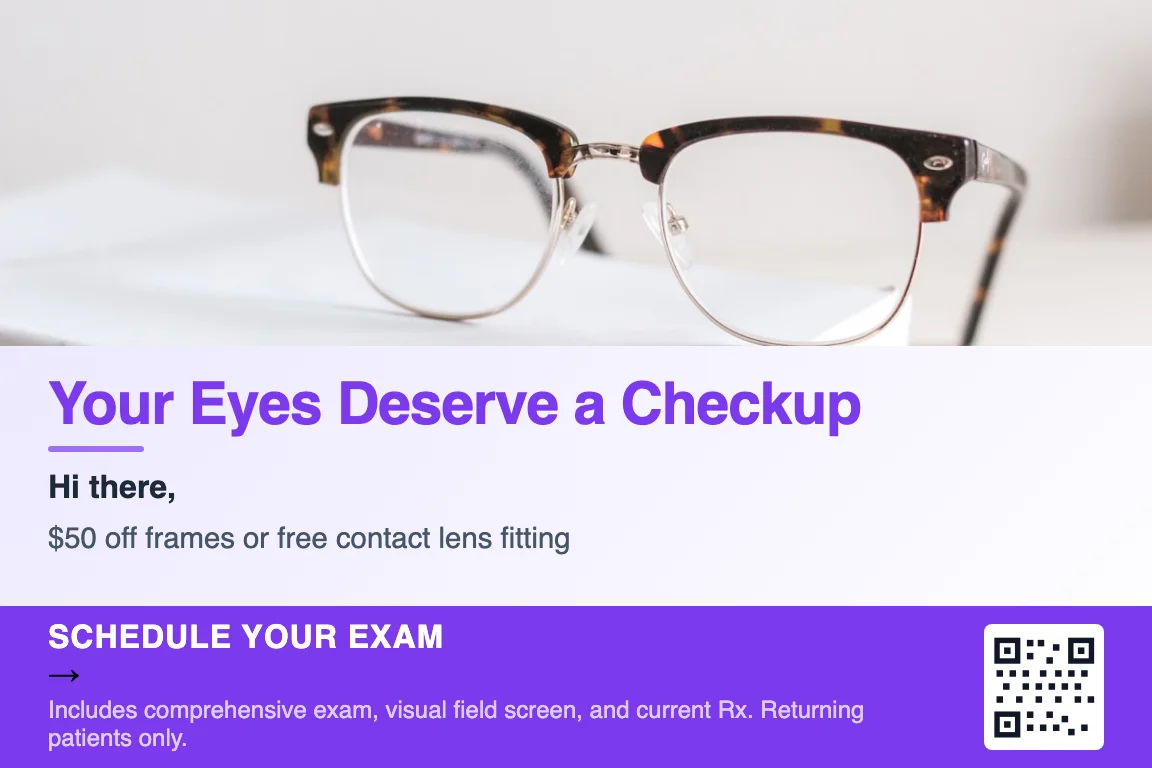
Design it in the in-app Design Studio in your practice's colors. Four starting styles — same offer and same call follow-up behind each, so pick the look that fits your brand.
Bold
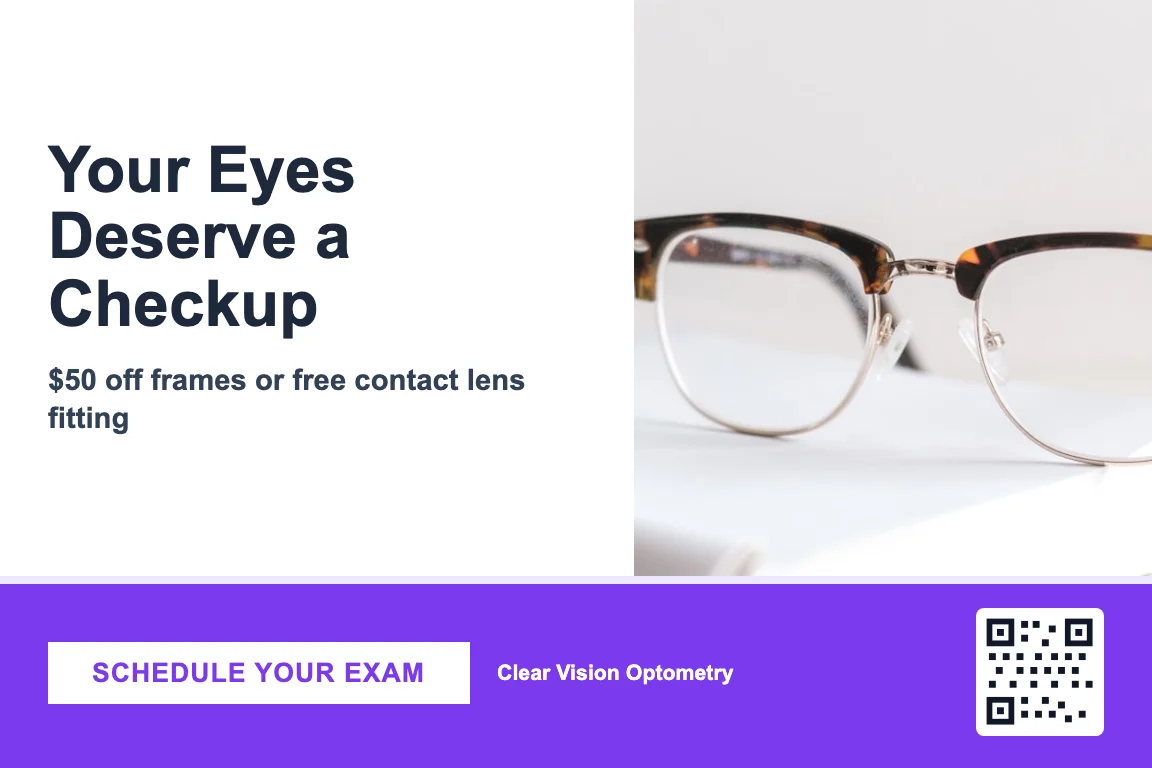
Photo
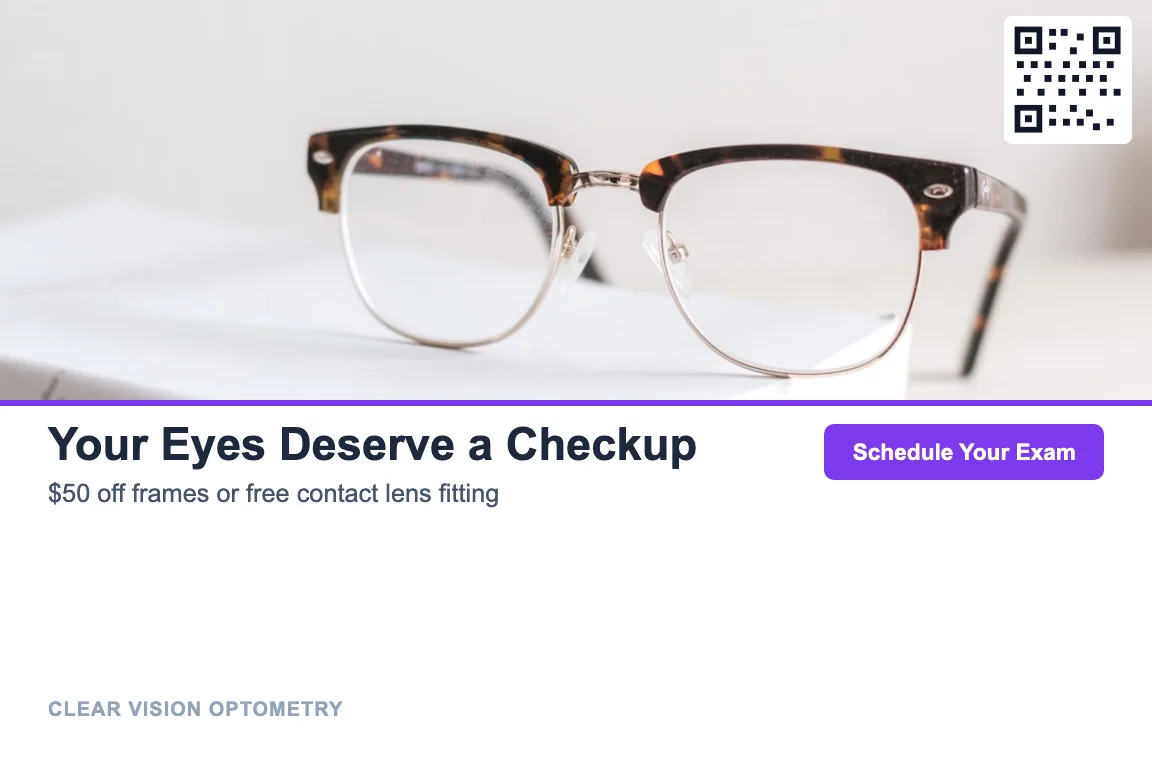
Minimal
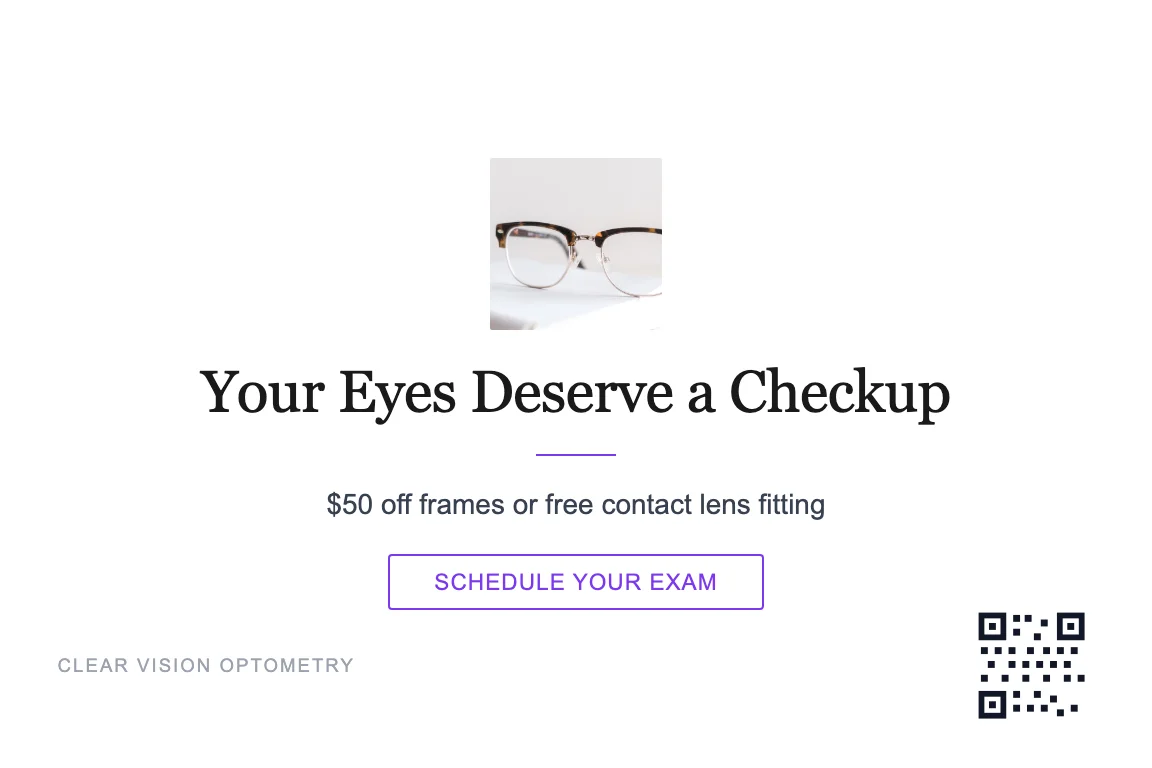
Gradient
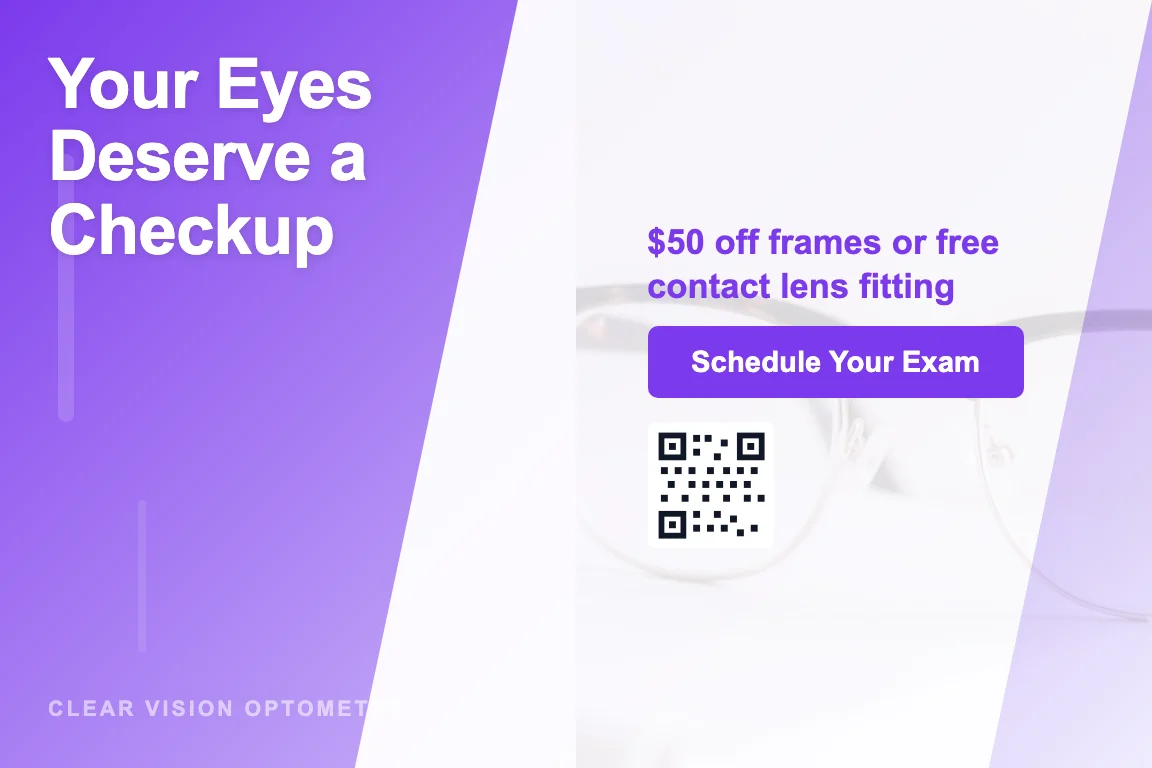
Front Detail
Back (Address Side)
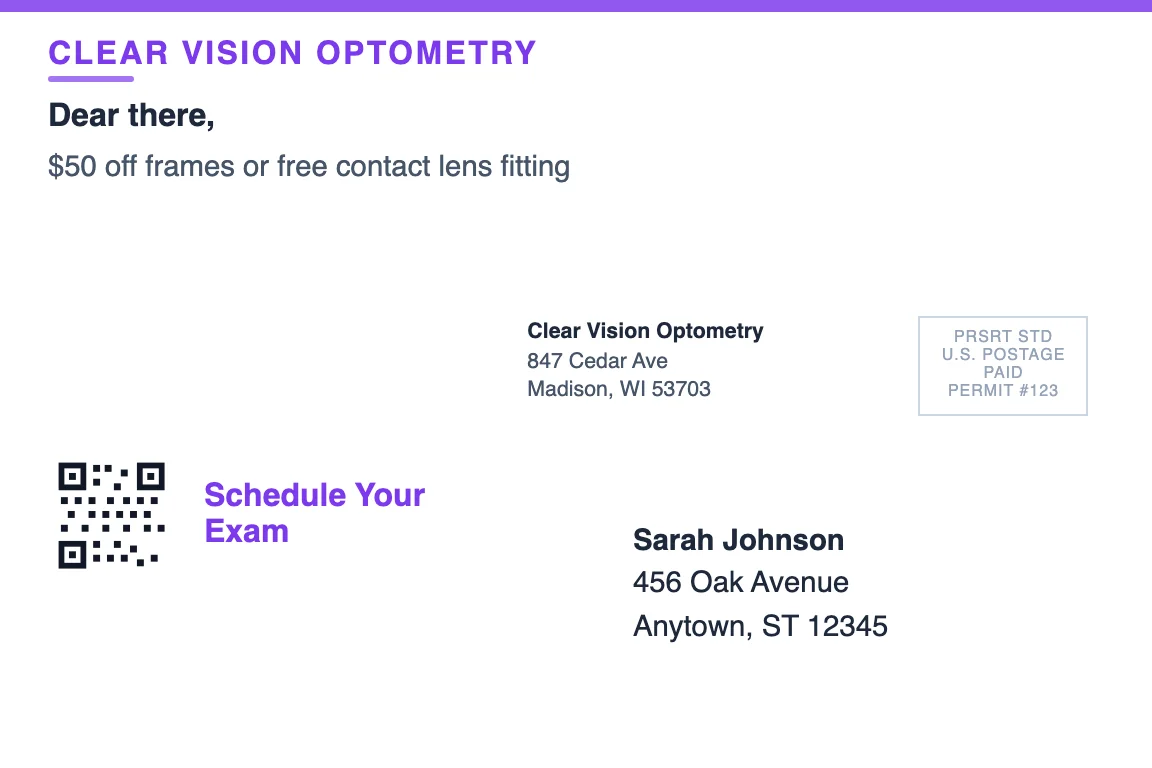
Available in 4×6, 6×9, and 6×11. All-in pricing includes printing and USPS First-Class postage.
Have a new-mover list? Export it as a CSV from whatever new-mover data provider you use and you're ready to import. No list? Run an EDDM-style saturation mailing to every home on the postal routes around your office — that reaches the new residents there along with the whole neighborhood. PostKnock doesn't connect to or sync with third-party data sources; the flow is a one-time CSV export and import you repeat whenever you refresh the list.
Drop in the export and the import wizard auto-maps name, address, and phone columns. If your list flags households with kids or recent move dates, segment those so you can run a back-to-school or "just moved in" angle to the right group.
Choose the wave sequence, set your new-patient eye-exam offer, and design the postcard in the Design Studio. Add a QR code that points to your online scheduler so new residents can self-book a comprehensive exam.
Cards print and ship via USPS First-Class automatically. A few days after delivery, every new resident who hasn't booked drops into the Call Queue. Non-responders advance to the next wave on their own.
Staff calls down the queue with the pre-loaded welcome script and logs each outcome. QR scans are tracked so you can see which cards drove online bookings versus calls.
Say a practice mails to 500 new-mover households in its service area and runs a 3-wave welcome sequence with call follow-up. Here's the transparent math — the inputs are illustrative, not a guarantee:
Response rates are industry-typical ranges, not PostKnock results, and new-mover lists are estimates of who recently moved, so coverage and accuracy vary. Per-patient value depends on your fee schedule and optical mix. Add a Pro subscription ($99/mo) on top of per-piece cost if you want the Call Queue and multi-wave sequencing.
Free to explore — you only pay when you're ready to send. Pay from your wallet per piece.
Single-wave postcard campaigns · Design Studio · QR tracking · From $1.05/piece
Everything in Free + Call Queue & multi-wave sequencing · From $0.79/piece
Per-piece pricing includes printing + USPS First-Class postage. Pro is $99/mo or $799/yr. No setup fees, no minimums, no contracts.
New-mover outreach typically goes to prospective patients, not your existing records — so there's no PHI involved at all. PostKnock keeps PHI off the postcard by default; we don't sign Business Associate Agreements and we don't ask you to upload PHI. Your list only needs name, address, and contact details. Read our healthcare compliance approach →
A new resident has left their old eye doctor behind and hasn't chosen a new one yet, so there's no incumbent to displace. They also tend to have a near-term need — an expiring glasses or contact lens prescription, back-to-school exams for the kids, or new vision benefits to use — which gives a welcome postcard a concrete reason to book. Reaching the whole household at one address can also fill several chairs and start years of annual recall.
Two ways. If you have a new-mover list, export it as a CSV from whatever provider you use and import it into PostKnock; the wizard auto-maps name, address, and phone columns. If you don't have a list, run an EDDM-style saturation mailing to every home on the postal routes around your office, which automatically reaches the new residents there along with the rest of the neighborhood. PostKnock does not connect to or sync with third-party data sources directly — the flow is a one-time CSV export and import you can repeat whenever you refresh the list.
One clear offer with a reason to act now works best: a new-patient comprehensive eye-exam offer, a credit toward a complete pair of glasses, a contact lens fitting, or a "use your new vision benefits" nudge. For families moving over the summer, a back-to-school eye-exam angle meets a deadline they already have. Always check your state optometry board's advertising rules — you write the offer copy, PostKnock prints and mails it.
Recall postcards go to your existing patients who are overdue for an annual eye exam — people already in your system. New-mover postcards go to prospective patients who just moved into your area and have no relationship with you yet; the goal is to be the first eye doctor they choose. Both use the same postcard-plus-call sequence, but the audience, the messaging, and the offer are different. Many practices run both.
Results vary a lot by offer, timing, and list accuracy, so treat any figure as an estimate. Industry studies typically report direct-mail response rates in the low-to-mid single digits, often cited around 3 to 6 percent for a targeted list. New movers are an unusually open audience because they haven't picked a local eye doctor yet, and adding a phone follow-up gives non-responders a second, human touch. New-mover lists are themselves estimates of who recently moved, so coverage and accuracy vary too.
A few days after a card is delivered, PostKnock's built-in Call Queue (a Pro feature) populates with the new residents who received it. Your front desk works the queue using the playbook's pre-loaded welcome script — a friendly "welcome to the area, here's how to book your first exam" — and logs each outcome. Anyone who doesn't respond rolls forward into the next wave. The calls are made by your own staff; PostKnock organizes the queue and scripts.
Most practices run 3 to 4 waves over several weeks, mixing postcards with one or two call attempts for non-responders. PostKnock supports multi-touch wave sequences of up to 5 waves; you control the timing and which waves are postcards versus calls. New movers don't always book the first month they arrive — staying in front of them until their old prescription runs out is what wins the booking.
You pay per piece from your wallet: from $1.05 per 4×6 card on the Free plan, dropping to $0.79 on Pro, with printing and USPS First-Class postage included. Pro is $99/mo (or $799/yr) and adds the Call Queue and multi-wave sequencing. No setup fees, no minimums, no contracts — you only pay for what you send.
New-mover outreach typically targets prospective patients, not your existing records, so there's usually no PHI involved at all. PostKnock keeps PHI off the postcard by default and your list only needs name, address, and contact info. We are HIPAA-aware: we don't sign Business Associate Agreements and we don't ask you to upload PHI. Review your own obligations and your state optometry advertising rules, and see our healthcare compliance approach for details.
Postcards that get attention. Callbacks that close the deal. Start free — you only pay when you send.
Start Free — No Credit Card1 Response figures are industry-typical ranges, not PostKnock results. Targeted direct-mail response is commonly reported in the low-to-mid single-digit percent range — e.g. ANA (Association of National Advertisers), Response Rate Report. Your results depend on your list, offer, and follow-up.
2 U.S. household mover counts are based on published U.S. Census Bureau Current Population Survey geographic-mobility estimates; the figure is approximate and varies year to year. New-mover lists are estimates of who recently relocated, so coverage and accuracy vary.
3 PostKnock supports three postcard sizes (4×6, 6×9, 6×11) and multi-touch wave sequences of up to 5 waves.