For HVAC Contractors

HVAC Fall Tune-Up
Postcards

Time fall furnace campaigns to land in late September — before the first cold snap fills your phone with emergency calls. A 2-wave seasonal postcard plus call sequence built to fill your tune-up calendar before heating season hits.

Start Free — No Credit Card
4.4%
Direct mail response rate
—up to 9% on house lists1
117K
HVAC contractors in the US
running 2x/yr maintenance cycles2
Sep–Nov
Optimal fall deploy window
before heating season

Furnaces Always Fail on the First Cold Day

Here's the pattern every HVAC contractor knows by heart: the temperature drops 20 degrees overnight in October, every furnace in town fires up for the first time since spring, and your phone explodes with no-heat calls. Customers panic. You scramble. The contractor who books fall tune-ups in September wins the season. The one who waits until November is fighting fires instead of selling preventive work.

What Doesn't Work

  • × Mailing in November when emergency calls already saturate the schedule
  • × Generic "winter is coming" cards with no price and no offer
  • × Waiting for the first cold snap to drive customers to the phone
  • × Email-only reminders that get buried under back-to-school promos

What Does Work

  • ✓ Wave 1 in late September with bold furnace tune-up pricing
  • ✓ Follow-up call 14–21 days after delivery while the card is still on the fridge
  • ✓ Optional Wave 3 with hard urgency for non-responders before November
  • ✓ 365-day rest cycle that re-engages every fall on a predictable cadence

The HVAC Fall Maintenance Special Playbook

2 waves over 4 weeks (with an optional Wave 3), deployed September through early November. Below is exactly what mails when, and why each wave's hook is different.

W1
Day 0 · Postcard

Wave 1 — "Furnace Tune-Up: Beat the First Cold Snap"

Headline: "Furnace Tune-Up — Beat the First Cold Snap" · Offer: $89–$99 special vs $129+ regular · full safety check, igniter inspection, filter, CO test.

Bold pricing front and center — HVAC homeowners respond to clear dollar amounts. Pair the price with a season-specific hook ("before the first cold day") so it doesn't read like a generic year-round ad. Wave 1 typically books 70–80% of total seasonal bookings on its own. Mail late September through the first week of October so cards land while leaves are still falling and customers are mentally switching to heating.

W2
Day 14–21 · Phone call follow-up

Wave 2 — Follow-Up Call Queue

Channel: Phone · Script hook: "We sent you a card about your fall furnace tune-up — we're filling our heating-season schedule and have an opening this week."

PostKnock auto-populates a call queue 14–21 days after Wave 1 delivery, scoped to a 40-call-per-day cap so the office isn't overwhelmed. The card primes the conversation: customers recognize your name and the offer is already in their head. Calls convert at 15–25% on warm follow-ups vs 2–5% on cold dials. Booked customers drop out of Wave 3 automatically.

W3
Day 28 · Optional postcard, urgency framing

Wave 3 (Optional) — "Last Week for Fall Pricing"

Headline: "Last Week for Fall Tune-Up Pricing" · Offer: $89 tune-up + free filter, ends [date].

28 days after Wave 1, sent only to non-responders. Hard deadline ("fall pricing ends [date]") plus a small bonus (free filter, free CO detector check, or a $10 furnace-cleaning voucher). Postcard only, no second call — the deadline does the work. After Wave 3, contacts rest for 365 days before re-entering for next fall's cycle. The spring AC playbook ships separately for the same list in February.

How It Works

1

Pick the HVAC Fall Maintenance Special Playbook

Both waves, call timing, and copy direction are pre-configured for furnace season. You set the price, the offer details, and your branding. The deploy window is flagged in the campaign builder so you don't accidentally launch in July.

2

Upload Your Customer List

From ServiceTitan, Housecall Pro, FieldEdge, or any field service software: export customers with installed gas, oil, or heat-pump systems. CSV upload, auto-mapped columns. Or layer in radius-purchased lists targeting homes 10–25 years old (likely to have aging heating equipment).

3

Launch in Mid-September or Early October

Wave 1 mails within 1–2 business days. Your call queue auto-populates 14–21 days after delivery, scoped to a 40-call-per-day cap. PostKnock prompts you mid-October on whether to send Wave 3 to non-responders.

4

Front Desk Works the Call Queue, Techs Run the Tune-Ups

Pre-loaded furnace-season call scripts. Office staff books appointments directly into your scheduling tool. Booked customers drop out of Wave 3 automatically so you never call or mail someone who already booked.

The Math on a 1,000-Home Fall Tune-Up Campaign

A typical residential HVAC contractor mails to 500–1,500 past customers for fall furnace tune-ups. Here's the math on a 1,000-home run:

  • Wave 1: 1,000 cards · Wave 3 (non-responders only): ~1,000 cards → ~2,000 postcards total
  • 2,000 cards × $0.79 (Pro) = $1,580 in postcard spend
  • Booking rate at 5% (warm list, fall urgency, with call follow-up) → 50 tune-ups booked
  • $99–$189 tune-up = $5,000–$9,500 immediate revenue
  • ~30% of tune-ups uncover repair work at ~$400/job = $6,000 in same-month repair revenue
  • ~15% of tune-ups become full system replacements within 2 years → $50K+ in lifetime value

7:1 ROI on Wave 1 alone, before counting upsell, repair work, and replacement leads.

Run your own numbers in the ROI calculator.

Simple, Transparent Pricing

Free to explore — you only pay when you're ready to send. 30-day money-back guarantee.

Free

$0/forever

Single-wave postcard campaigns · Unlimited contacts · From $1.05/piece

Most Popular

Pro

$99/mo

Everything in Free + calls, sequencing · From $0.79/piece

Per-piece pricing includes printing + USPS First-Class postage. No hidden fees.

What You'll Actually Send

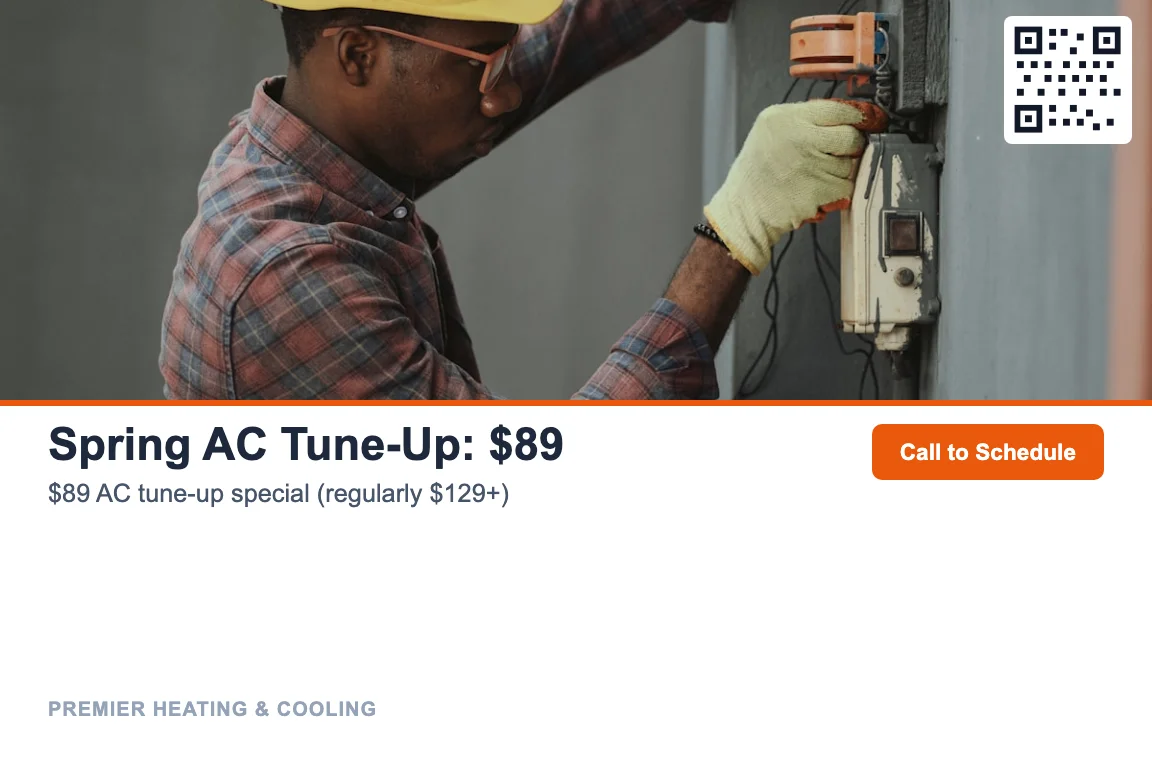
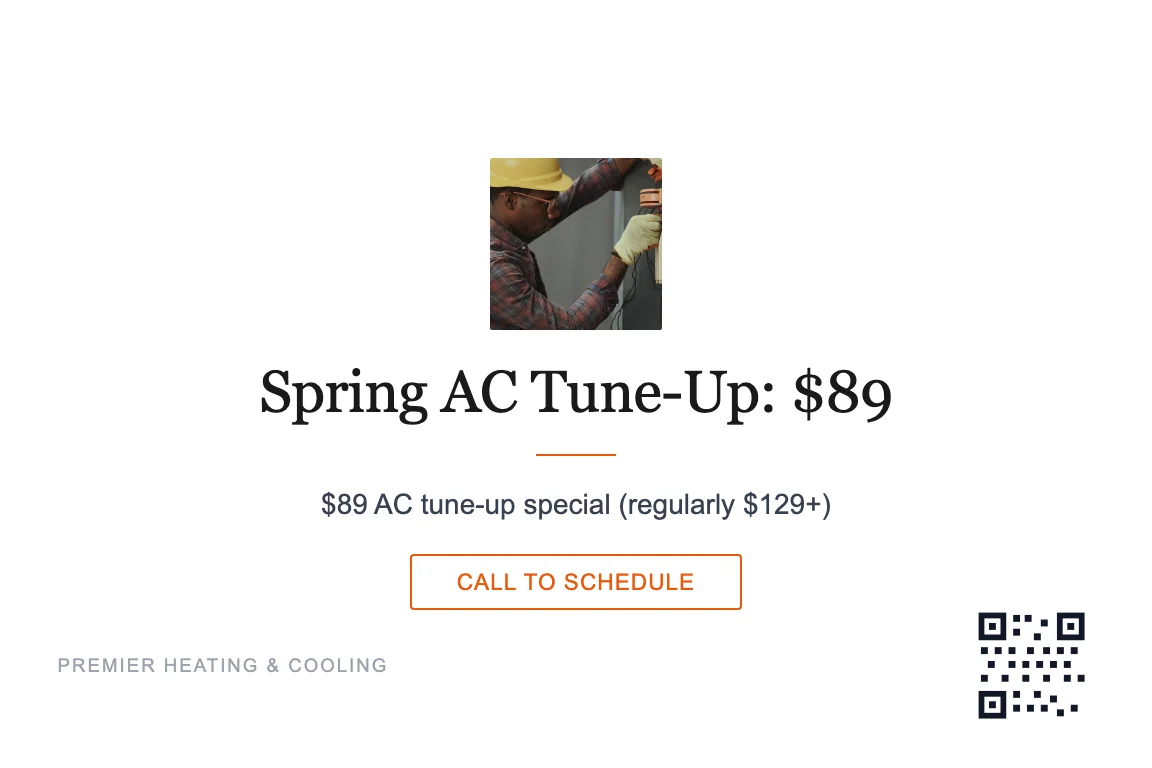
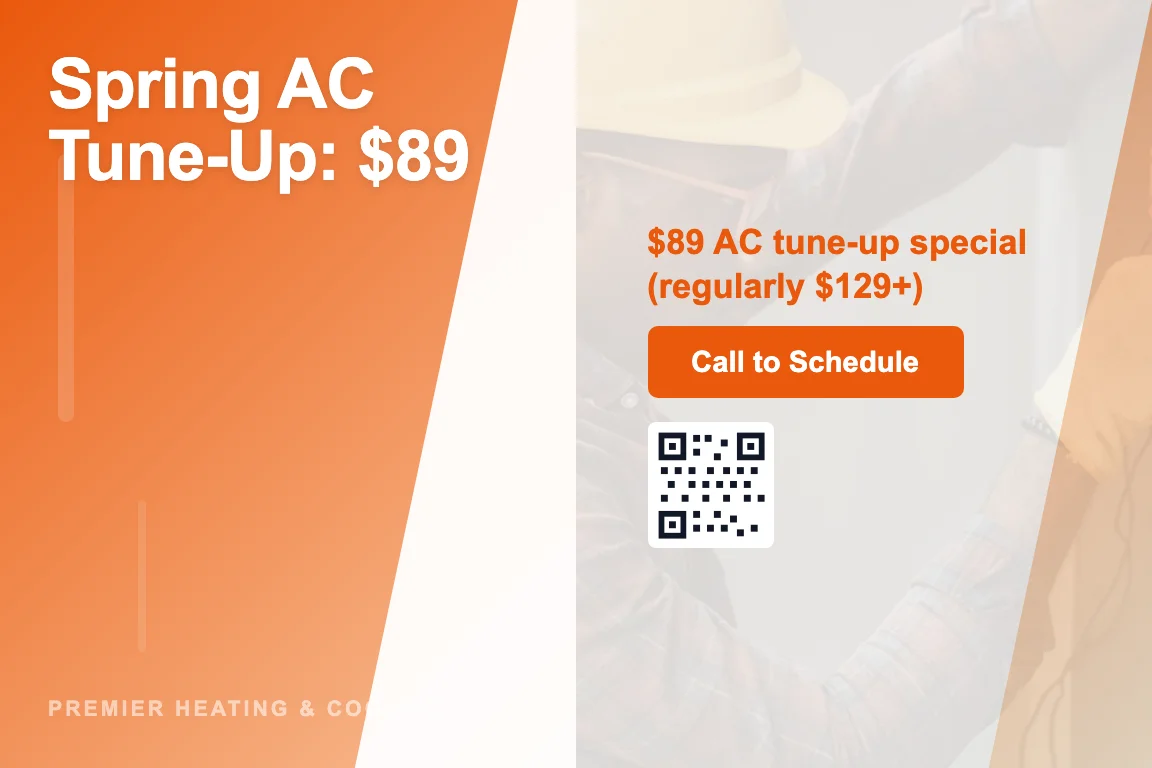
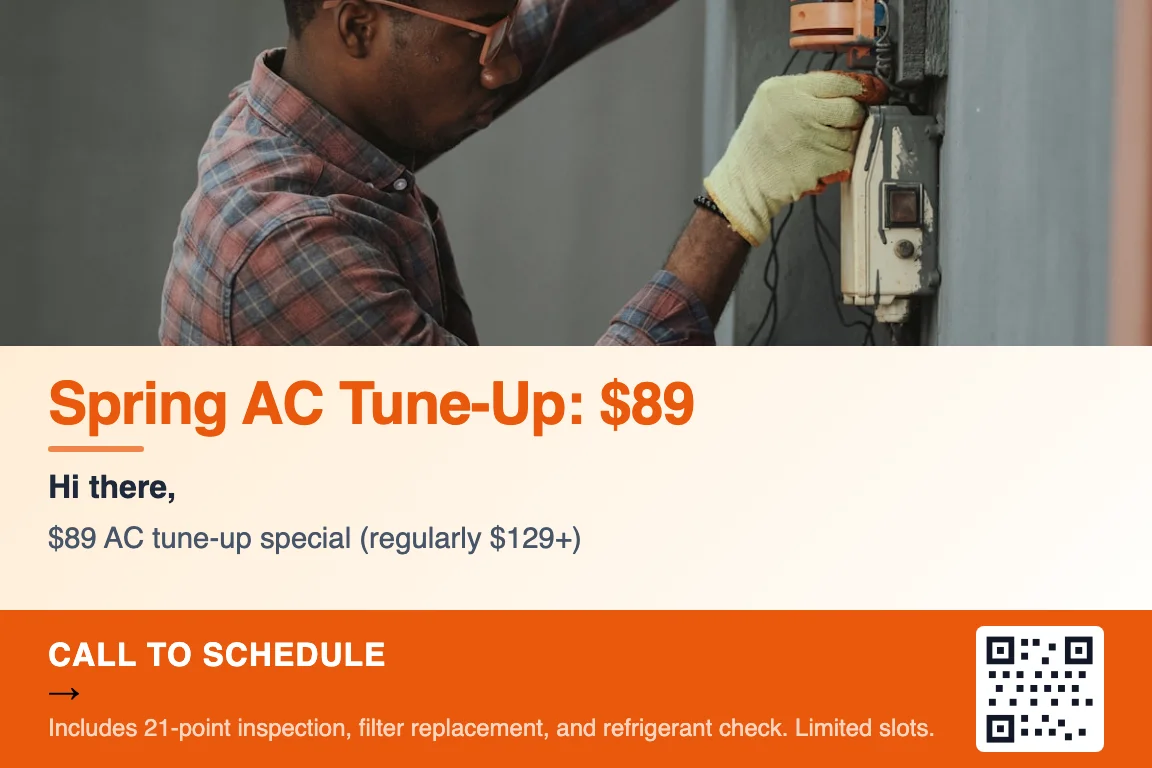
Four design styles, all themed for your HVAC business and ready to customize. Same offer, same call follow-up — just pick the look that fits your brand.

Bold
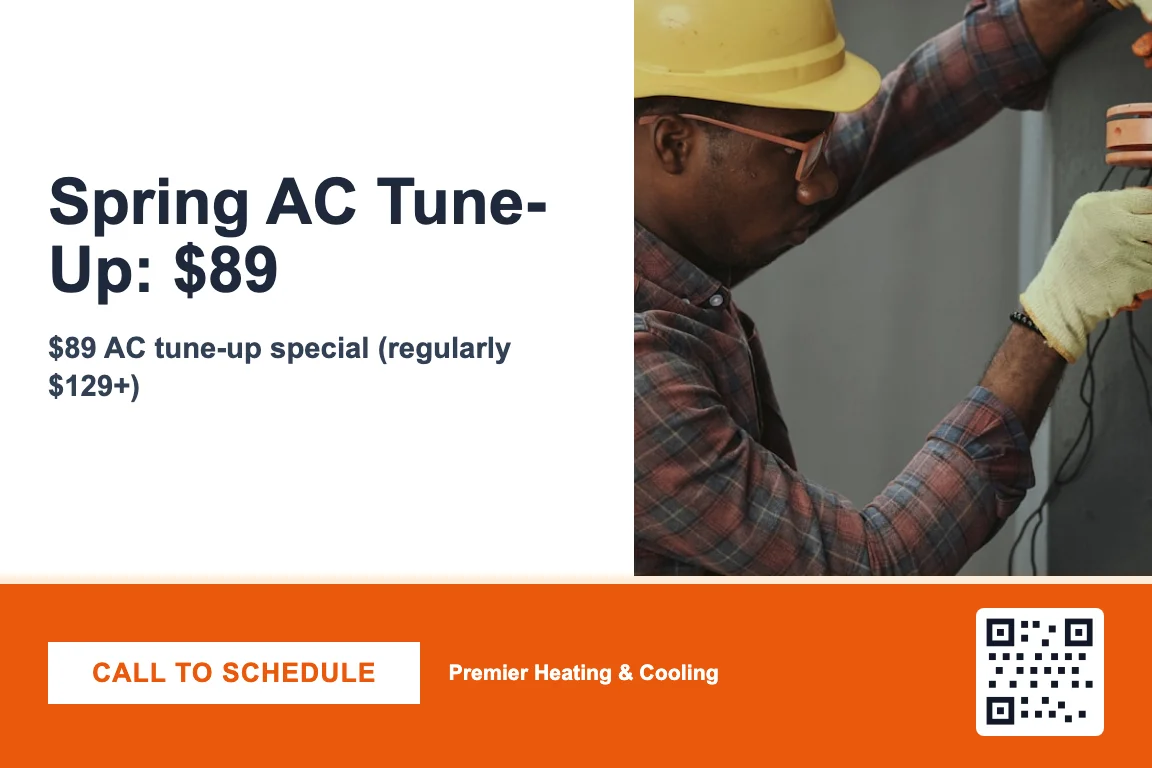
Bold HVAC business postcard design — Spring Maintenance Special

Photo

Photo-led HVAC business postcard design — Spring Maintenance Special

Minimal

Minimal HVAC business postcard design — Spring Maintenance Special

Gradient

Gradient HVAC business postcard design — Spring Maintenance Special

Front Detail

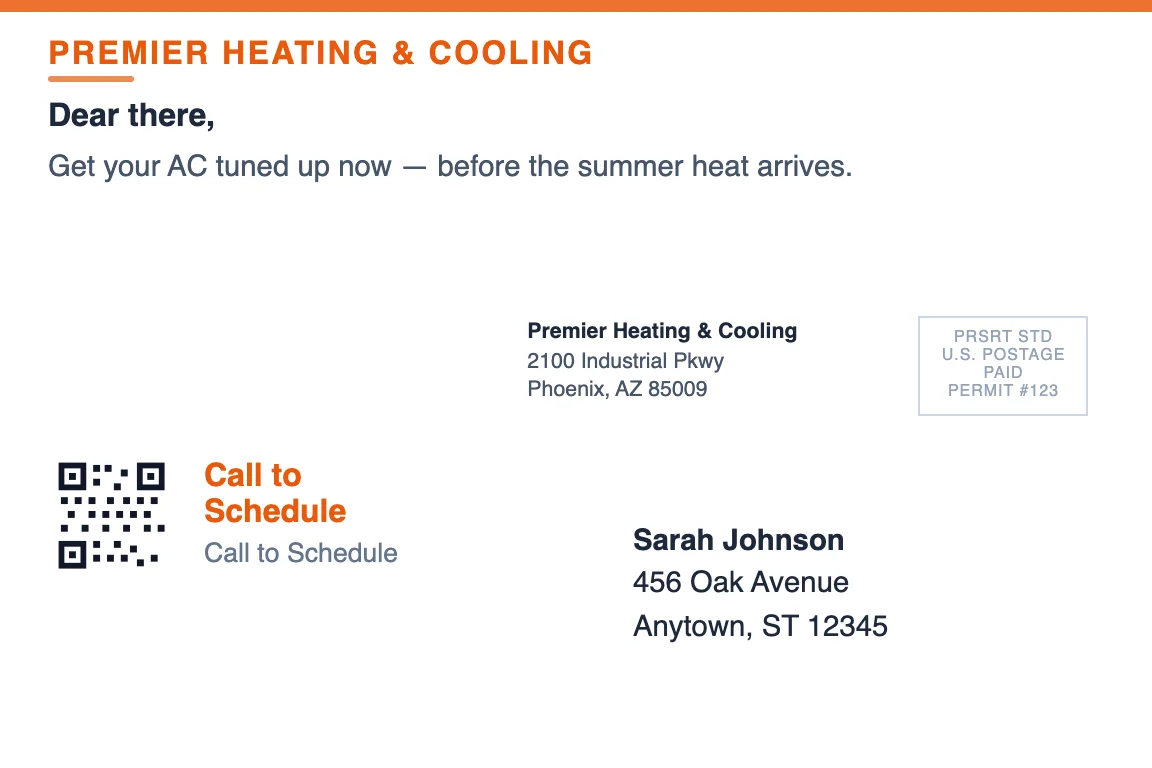
Detailed view of HVAC business postcard front — Spring Maintenance Special

Back (Address Side)

HVAC business postcard back showing return address and recipient zone — Spring Maintenance Special

PostKnock seasonal campaigns also work for

More HVAC Campaigns

Fall furnace tune-ups are one of the two highest-ROI HVAC seasonal plays. PostKnock also runs spring AC tune-ups, win-back sequences for lapsed past customers, and equipment-age replacement campaigns — all from the same customer list.

See all HVAC campaigns →

HVAC Fall Tune-Up Campaign FAQs

When should I send fall HVAC postcards?

Late September through early November is the sweet spot. Mail too early (August) and homeowners are still in summer mode. Mail too late (mid-November or December) and you're competing with no-heat emergency calls and a full schedule. Aim to land Wave 1 in mailboxes between September 25 and October 7 — right when leaves start turning and customers mentally switch to heating season. The PostKnock Fall Maintenance Special playbook ships with that deploy window flagged in the campaign builder.

What's the best offer for a fall tune-up postcard?

$89–$99 is the conversion sweet spot for a residential furnace tune-up special, depending on your market and regular pricing. Show the discount: "$89 (regularly $129+)" outperforms a flat "$89 tune-up" by 15–25%. Bundle a small bonus — free filter, free CO detector check, or a thermostat battery — to push fence-sitters off the fence. Tune-ups are loss-leaders that pay back through repair upsell, replacement leads, and the customer-retention effect, so price aggressively to fill the calendar.

How long does it take to launch a fall campaign?

From CSV upload to mailbox is 4–7 business days. Most contractors finish setup (upload list, customize the offer and branding, approve the proof) in under 30 minutes. Postcards print and enter the USPS First-Class mail stream within 1–2 business days, and First-Class delivery runs 3–5 business days. If you want cards landing the week of October 1, kick off setup by September 22.

Can I target customers with old furnaces?

Yes. Most field service software (ServiceTitan, Housecall Pro, FieldEdge) lets you export customers by equipment age, install date, or last service date. Filter for furnaces 10+ years old and you'll find the highest-converting segment — these homeowners know their unit is on borrowed time and respond hardest to a maintenance offer that hints at "before something fails." For prospects you don't have history on, layer in a radius-purchased list filtered by home age (homes built 1995–2010 are likely to be on their second or third furnace).

How does the call queue help my fall sales?

The call queue is the single biggest lever in the playbook. After Wave 1 lands, PostKnock generates a queue of every contact who received a card, scoped to a 40-call-per-day cap so your office isn't overwhelmed. Pre-loaded scripts reference the postcard ("we sent you a card last week about your fall furnace check"), turning a cold call into a warm one. Conversion rates run 15–25% on these warm follow-ups vs 2–5% on cold dials. When the office books an appointment, the customer drops out of Wave 3 automatically so you never double-touch.

Ready for Furnace Season?

Stop waiting for the first cold snap to ring your phone. Fill your fall tune-up calendar before heating season hits.

Start Free — No Credit Card

1 ANA (Association of National Advertisers), Response Rate Report 2023, published February 2024.

2 IBISWorld, Heating & Air-Conditioning Contractors in the US, industry report, 2024.