Mail the homes around your spa a free-consult card, a first-time-pricing card and a bring-a-friend card, then have your front desk call. Three cards and two calls turn a nervous first-timer into a booked consult.
Start FreeFree plan from $1.04/card · Pro from $0.91/card · No contracts
A med spa lives on a steady flow of first-time consults: the injectables client who becomes a regular, the facial client who moves to a package. Here is where new-client growth stalls, and what a postcard and a call can do about each.
Cosmetic procedures sit under the platforms' health rules (Meta's Health and Wellness policy, for one, requires targeting adults 18 and older2), and your cost per booked consult is whatever the auction says that month. A postcard has a fixed price per piece that you see before you send.
People drive 10–15 minutes for injectables, not 45. You need to reach the specific affluent neighborhoods near your spa, not pay to show ads to a whole metro that will never visit.
A new med spa or a derm office's "aesthetics arm" seems to open every quarter. Standing out in a saturated feed is brutal: a physical card in the mailbox has the lane mostly to itself.
A click or a form-fill isn't a client. Aesthetics prospects compare, hesitate, and ghost. Without a human follow-up call, your hard-won interest quietly evaporates.
Wedding season, "summer body" prep, prom, the holiday glow-up, and the January post-resolution wave all spike demand. If you're not in the mailbox 4–6 weeks ahead, you miss the booking window.
A loyal injectables or membership client is worth thousands a year. That makes it worth spending real effort to land a first visit. Which is exactly what a multi-touch, postcard-plus-call sequence is built to do.
Built for nervous, price-sensitive first-timers, and meant for cold lists such as new-mover data, a ZIP list or local partners. Its tone guidance is aspirational, calm and never salesy: lead with free, conservative and low-pressure.
A free 30-minute consult: see the space, meet the provider, ask anything. The default copy walks through Botox, fillers, HydraFacial and skin care options, and promises a printed treatment plan to take home. The call that follows sounds warm and low-key, mentions flexible day and evening times, and stresses there is no commitment.
First-time pricing on a conservative starter treatment, such as Botox, filler or a signature facial, with the price locked at the consult and photos plus a plan to take home. The second call uses the small-starter framing and avoids discount-y energy.
Postcard only. A side-by-side consult for two, both complimentary, with first-time pricing locked for both if they book. The playbook's reasoning is that social comfort is the real objection for a first-timer.
Default copy, so confirm every price, claim and treatment name against your state's medical-spa and physician-advertising rules before anything prints. Call pacing follows your calling settings, and the list size it's built for is 200 to 1,500.
Med spa acquisition is about reaching the right households close to you. There are two ways to build that audience, and they can run side by side.
Under Contacts, choose Find a mailing list and pick the ZIP codes within a short drive. The count is free, and you can narrow it by filters such as age or income range. You confirm the exact total before your wallet is charged: $0.15 per address, down to $0.09 on very large lists. Addresses you already hold are skipped and not billed.
The homes arrive as contacts, named where the vendor has a name and "Current Resident" otherwise. How buying by ZIP works.
Event sign-ups, a referral export, or your booking software's "leads who never converted." Save the file as Excel or CSV and import it; the wizard maps name, address and phone. This is also the list your front desk can call, since the Call Queue works from the phone number on each contact.
PostKnock doesn't connect to your booking or POS system. You export a file and import it.
A new-client card needs a reason to book a first visit now. These are common, client-appropriate angles you can drop into the postcard offer field: pick what fits your services and your state's medical-advertising rules.
Offers are illustrative. You set the offer copy and confirm it meets your state's medical-spa advertising rules; PostKnock prints and mails the card and queues the follow-up call.
Design it in the in-app Design Studio in your spa's colors and aesthetic. Five starting styles, with the same intro offer and call follow-up behind each, or browse the full med spa design gallery.
Bold
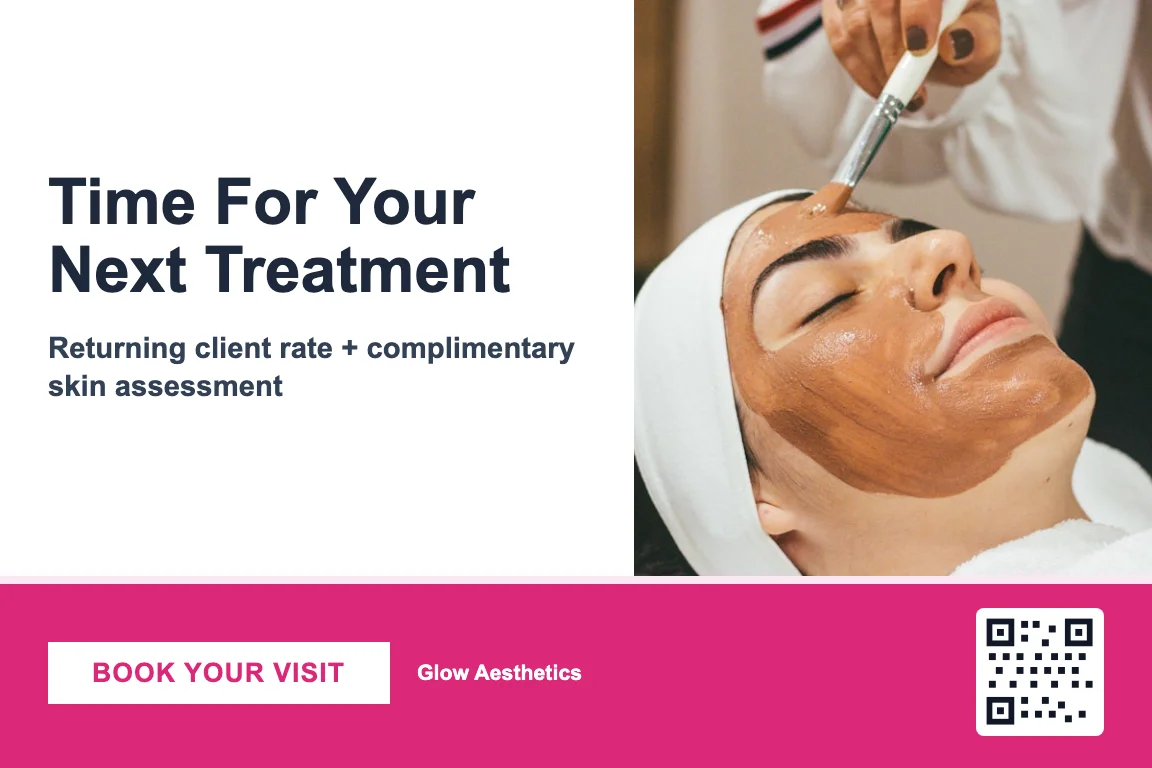
Photo
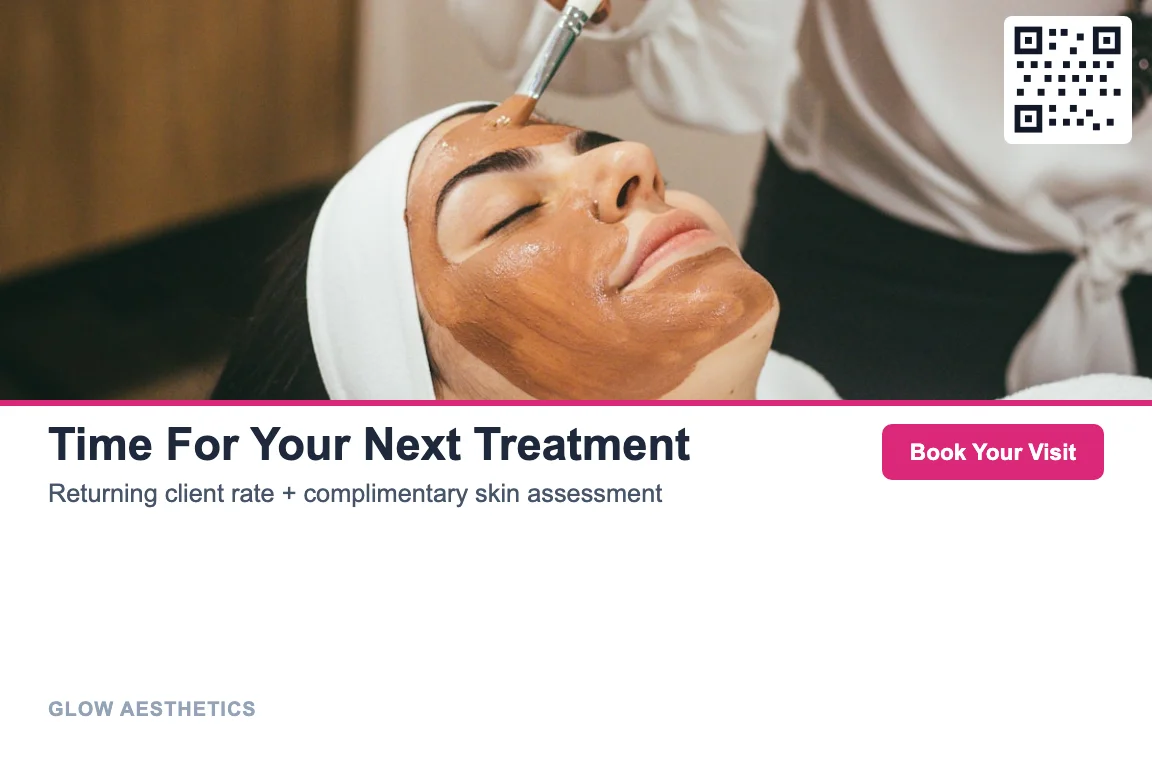
Minimal
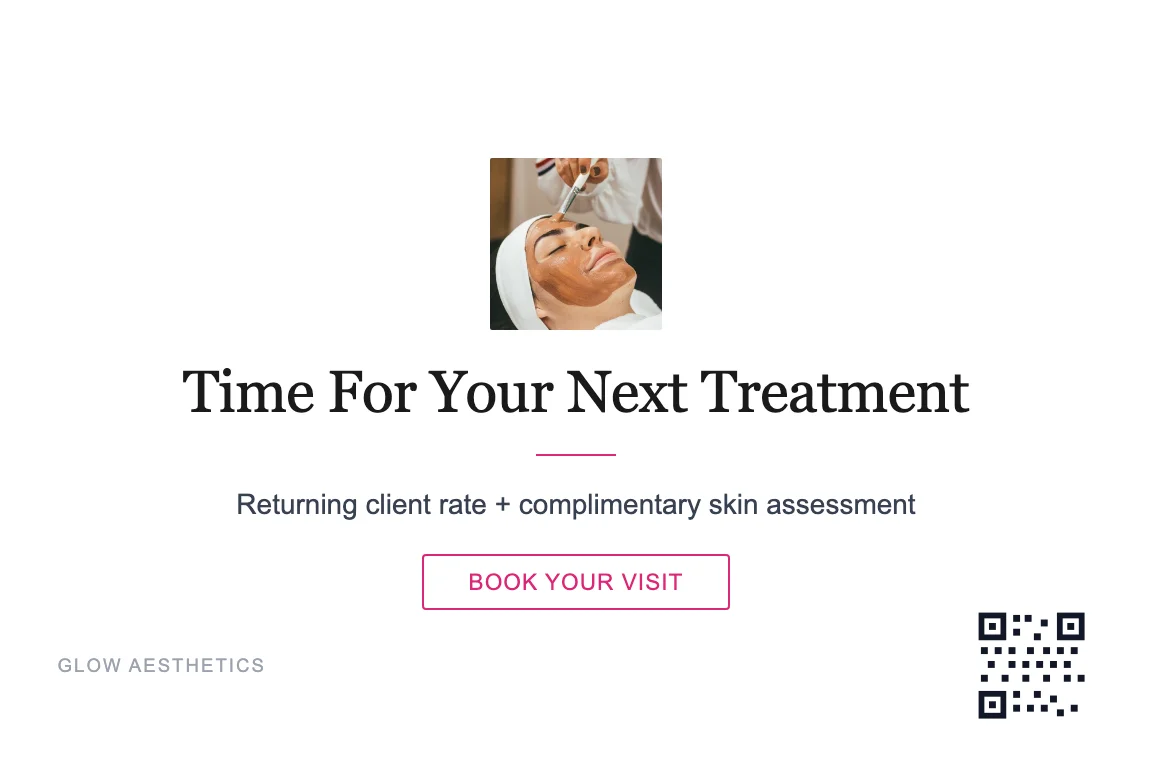
Gradient
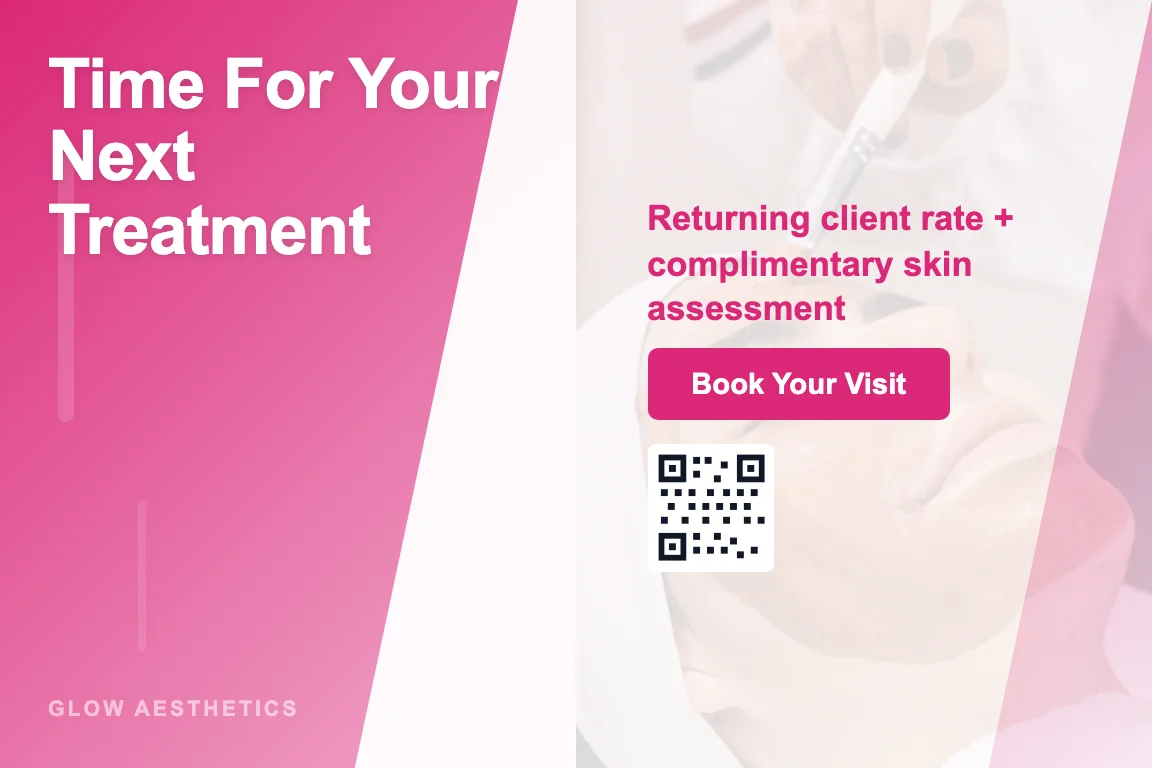
Overlay
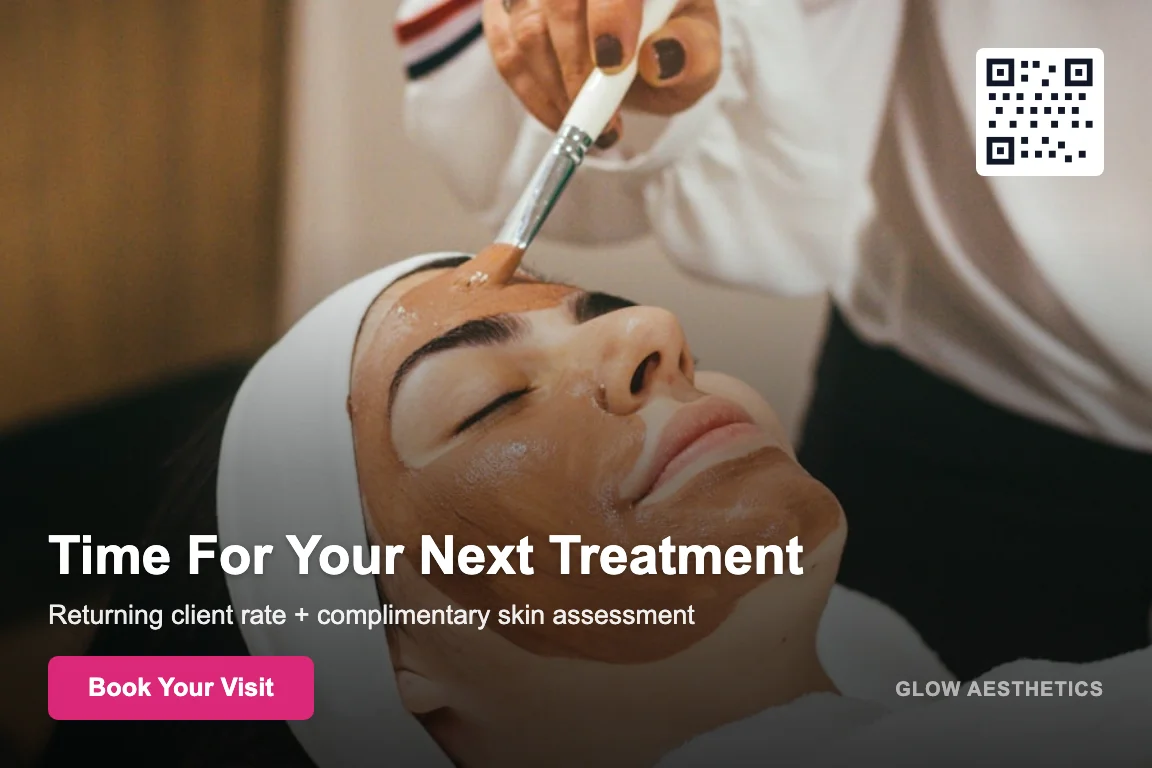
Front Detail
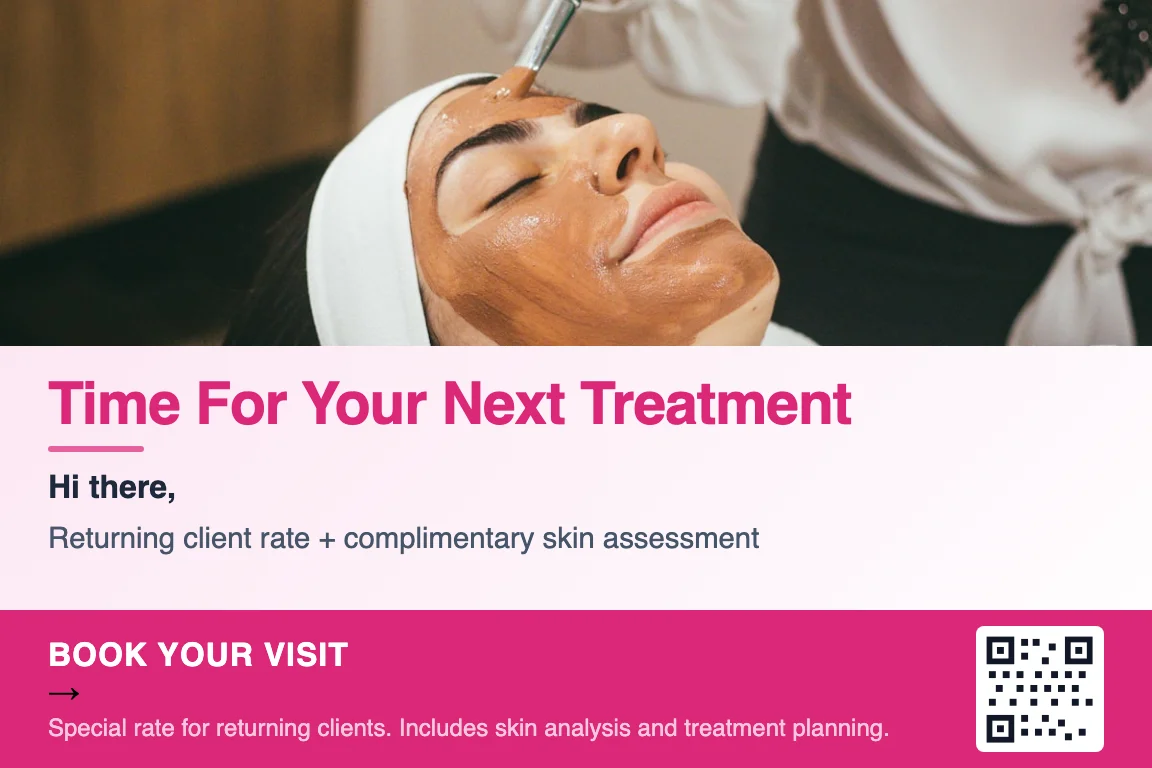
Back (Address Side)
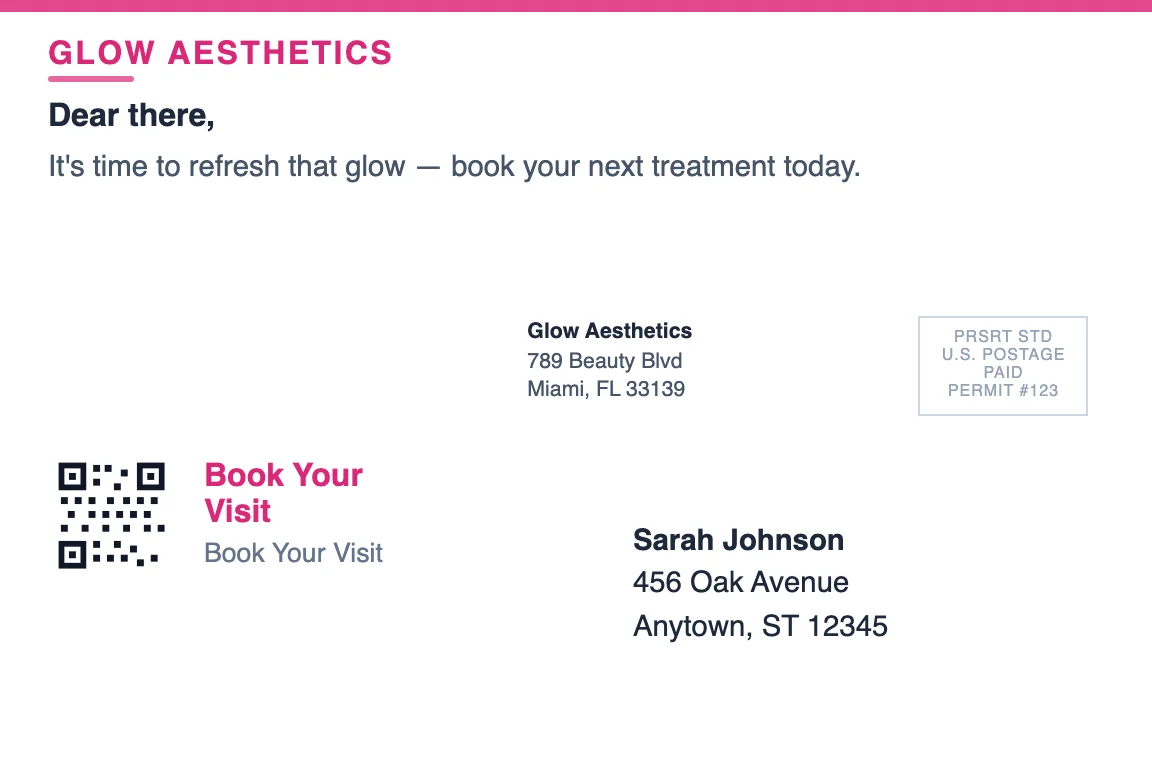
Available in 4×6, 6×9, and 6×11. All-in pricing includes printing and USPS First-Class postage.
Prices, treatment names, "free" language and any before-and-after imagery fall under state medical-spa and physician-advertising rules. The playbook copy is a starting point, not legal review.
Scans are tracked per card, so you can see which waves and neighborhoods send people to your scheduler. Test the link on your own phone before you print.
Injectables and peels often need lead time before a wedding, prom or holiday. Aim for wave 1 to be in the mailbox roughly four to six weeks before the booking window opens.
On Pro, the Call Queue lists the contacts to phone with the wave's script. Pick the person at the front desk who will actually work it, and keep daily call volume low enough that each one sounds unhurried (call pacing follows your calling settings). Free accounts mail wave 1 only.
Say a spa mails to 1,000 nearby households and runs a 3-wave new-client sequence with call follow-up. Here's the transparent math. The inputs are illustrative, not a guarantee:
Response rates are industry-typical ranges, not PostKnock results, and prospect-list response runs lower than house-list response. Per-client value depends on your services, pricing, and retention. Add a Pro subscription ($99/mo) on top of per-piece cost if you want the Call Queue and multi-wave sequencing.
Free to explore. You only pay when you're ready to send. Pay from your wallet per piece.
Single-wave postcard campaigns · Design Studio · QR tracking · From $1.04/piece
Everything in Free + Call Queue & multi-wave sequencing · From $0.91/piece
Per-piece pricing includes printing + USPS First-Class postage. Pro is $99/mo or $799/yr. No setup fees, no minimums, no contracts.
New-client postcards reach prospects, not patients, so there's no PHI on the card, just your offer, your brand, and a way to book. PostKnock keeps PHI off the postcard by default; we are HIPAA-aware, we don't sign Business Associate Agreements, and we don't ask you to upload PHI. You're responsible for confirming your offer copy follows your state's medical-spa and physician-advertising rules. Read our healthcare compliance approach →
A postcard reaches specific homes near your spa without an auction, and its cost per piece is fixed and visible before you send. Cosmetic procedure ads sit under platform health rules; Meta's Health and Wellness policy requires targeting adults 18 and older. State medical-advertising rules still apply to a card. It isn't either/or: on Pro the postcard adds a front-desk call that an ad can't make.
Yes. Pick the ZIP codes near your spa in the app under Contacts, then Find a mailing list, narrow by filters such as age or income range, and buy the list from your wallet after you confirm the total. Or import your own file as Excel or CSV. PostKnock does not do Every Door Direct Mail; our EDDM guide covers when that is the better tool.
No. PostKnock does not connect to or sync with booking, EHR or POS systems like Boulevard, Aesthetic Record, Vagaro or Mindbody. To mail an existing list, export it from those tools as Excel or CSV and import it. Your QR code can still point to your online booking page so prospects book there.
The playbook's default is a free 30-minute consult with a printed treatment plan, then first-time pricing on a conservative starter treatment, then a bring-a-friend consult for two. The tone guidance is to lead with free, conservative and low-pressure, since first-timers are nervous and price-sensitive. You write the final copy and confirm it meets your state's rules.
Injectables and peels often need time before an event, so for wedding season, prom, summer or the holidays, aim to have wave 1 in the mailbox roughly four to six weeks before the booking window. The second wave and the calls then reach everyone still in the sequence.
No. Free accounts mail postcards only, and only wave 1 of a campaign sends. The Call Queue and waves 2 and 3 are on Pro, and a call needs a phone number on the contact. For first-timers who compare and hesitate, the scripts keep it simple: free, low-key and about 30 minutes.
For wave 1 on Pro, about $150 for the list ($0.15 an address) plus $910 in 4×6 postcards ($0.91 each), or about $1,060. On Free the postcards are $1.04 each, about $1,190 with the list. Later waves cost postcard money only. Pro is $99 a month or $799 a year.
No. PostKnock is direct mail plus phone-call follow-up. We don't send marketing email. You can keep using your own email or texting tools alongside a PostKnock campaign; they just aren't part of the product.
Postcards that get attention. Callbacks that close the deal. Start free. You only pay when you send.
Start Free1 Response figures are industry-typical ranges, not PostKnock results. Direct-mail response is commonly reported higher for house lists than for prospect/acquisition lists: e.g. ANA (Association of National Advertisers), Response Rate Report. New-client acquisition mailings go to prospects, so expect response toward the lower end. Your results depend on your list, offer, targeting, and follow-up.
2 Meta Transparency Center, Health and Wellness (advertising standards), checked October 2026. Platform policies change, so check the current text.