A homeowner who just moved in has no HVAC company yet — and an aging system they know nothing about. Be the first name in their drawer. PostKnock mails a new-mover postcard, then drops them into your Call Queue so you actually follow up.
Start Free — No Credit CardFree plan from $1.05/card · Pro from $0.79/card · No contracts
A house changing hands resets every service relationship. The new owner doesn't know who serviced the furnace, when the AC was last touched, or who to call when something breaks. Whichever HVAC company shows up first — usefully, not as spam — tends to win the system for years.
The previous owner's HVAC company is a name on an old sticker the buyer will never call. There's an open slot for "my HVAC guy" and it's first-come, first-served.
New owners rarely know the age, brand, or service history of the furnace and AC they inherited. A "let's inspect what you've got" offer answers a question they're already asking.
People who just bought a home are actively buying for it — and an inherited 15-year-old system is a likely repair or replacement. A new mover is a high-ticket lead, not just a tune-up.
New-mover lists let you mail only the homes that just sold inside the ZIPs and routes you actually serve — no wasted postage on towns you won't drive to.
A fresh homeowner with no service relationship is the ideal person to enroll in an annual filter-and-tune-up membership — recurring revenue that locks out competitors.
The day their AC quits in July, they'll Google — unless your magnet card is already on the fridge. New-mover outreach buys you that first emergency call before the relationship even starts.
Most HVAC mailers are a one-shot card that lands during a chaotic move-in week and gets recycled. A new-mover postcard physically introduces your shop — then, a few days later, a real person from your office follows up by phone to book the inspection. That one-two punch is what PostKnock is built for.
A multi-touch wave sequence built for homeowners who just moved in. Postcards mail on schedule; non-responders flow into the Call Queue and roll forward to the next wave automatically.
A friendly intro to your shop with one offer — a discounted new-homeowner system inspection or first-tune-up special. QR code to online booking, and a phone number for the impatient.
3–5 days after the card lands, the homeowner appears in your Call Queue with a pre-loaded script: "Welcome to the area — we'd love to take a look at your system before the season hits." Your office logs the outcome in one click.
A different design for everyone who hasn't booked. Lead with the next season's pain — "Is your inherited furnace ready for winter?" or "Beat the summer AC rush" — and a real deadline.
Last call attempt for non-responders, paired with a low-key "save the magnet" maintenance-membership card so you stay on the fridge for the first breakdown. Then the segment rests before you recycle the next batch of move-ins.
Wave count, timing, and call cadence are yours to set — PostKnock supports up to 5 waves. The phone-call waves use the built-in Call Queue, a Pro feature.
A new-mover card needs a reason to book before the system becomes an emergency. These are common, HVAC-appropriate angles you can drop into the postcard offer field — pick what fits your service mix and your season.
Offers are illustrative. You set the offer copy; PostKnock prints and mails the card and queues the follow-up call.
HVAC demand swings hard by season, and home-sale volume peaks in spring and summer. The win is mailing new movers just before the season that'll actually make them call — so book waves to land ahead of the heat and the cold, not during the panic.
Peak home-buying season means the most fresh move-ins on the list — and AC season is about to test every inherited system. Mail a "beat the summer rush" inspection offer before the first heat wave fills your dispatch board.
Catch the spring/summer movers before the first cold snap with a "get your new furnace ready for winter" tune-up. New owners have no idea if the heat works until they need it — give them a reason to find out on your schedule.
During the busy season, dial back to a single intro card plus a maintenance-plan magnet so you're top-of-fridge for the inevitable breakdown — without overloading a crew that's already slammed.
Whatever the season, every new mover is a membership candidate. A steady monthly drip of new-mover cards into your service ZIPs keeps a recurring-revenue pipeline filling even in the shoulder months.
You control wave timing in PostKnock. Schedule sends to land ahead of each season — the platform mails on your calendar and queues the calls.
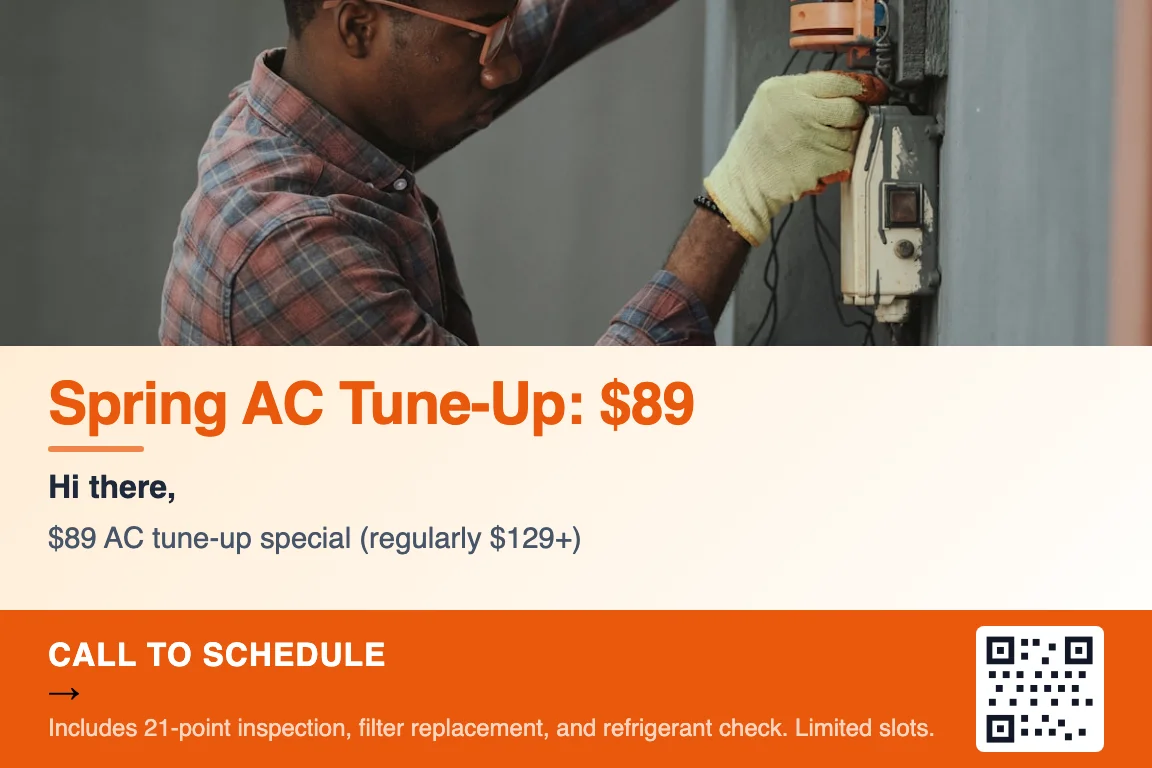
Design it in the in-app Design Studio in your company's colors and truck-wrap look. Four starting styles — same offer and same call follow-up behind each, so pick the look that fits your brand.
Bold
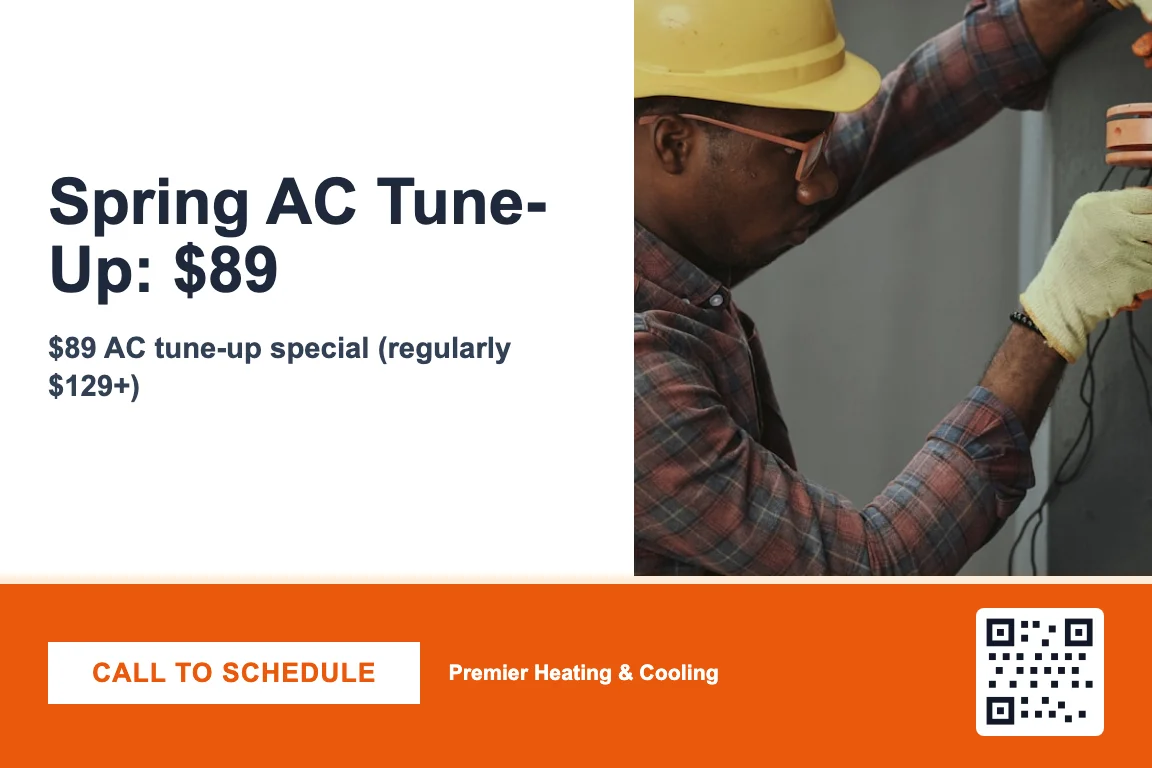
Photo
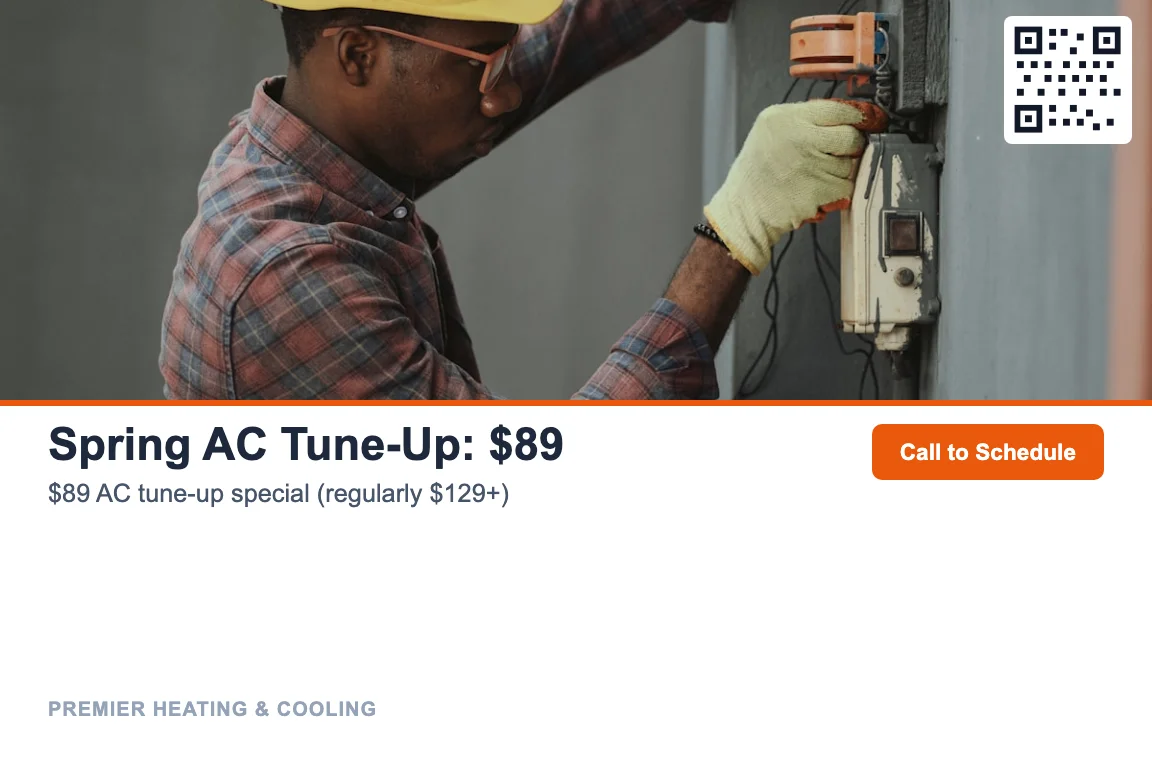
Minimal
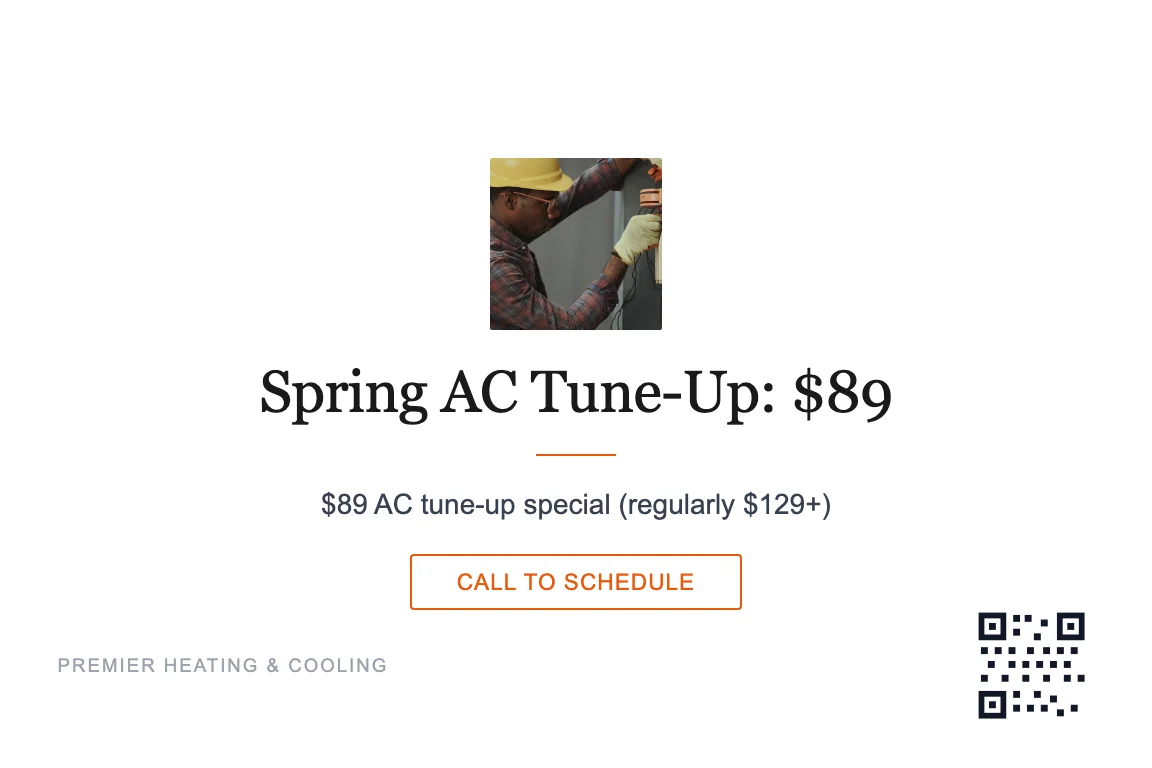
Gradient
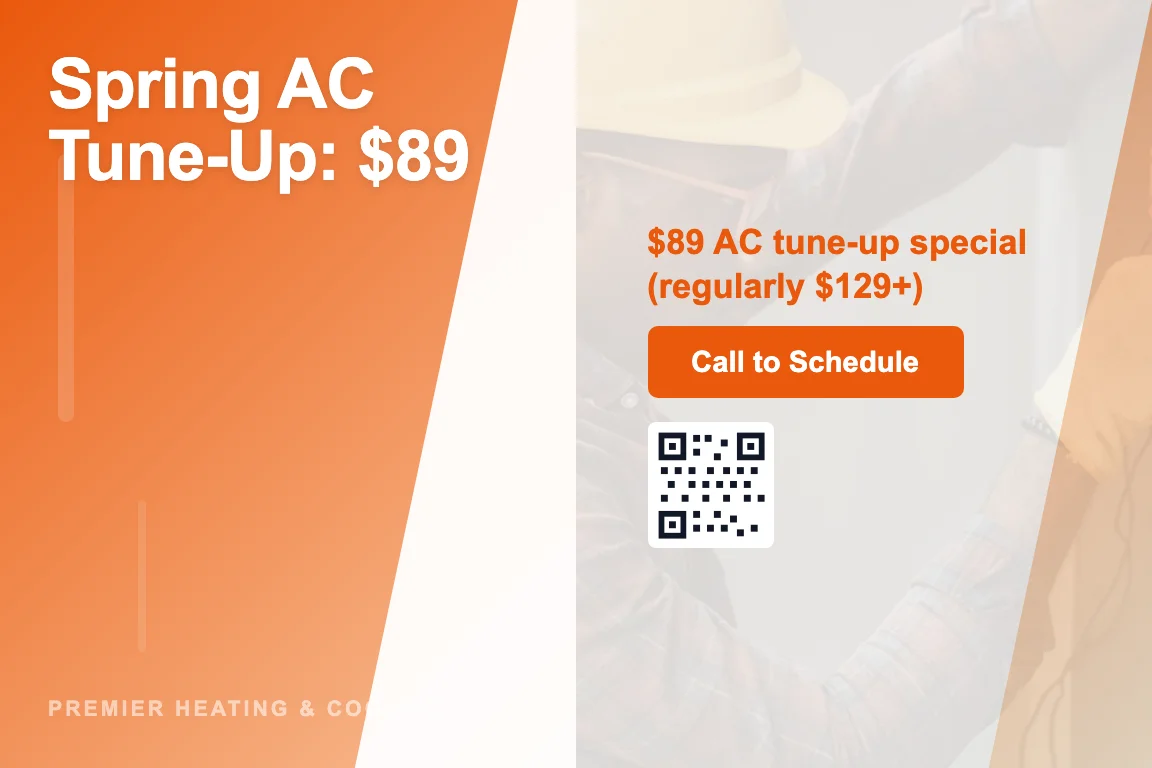
Front Detail
Back (Address Side)
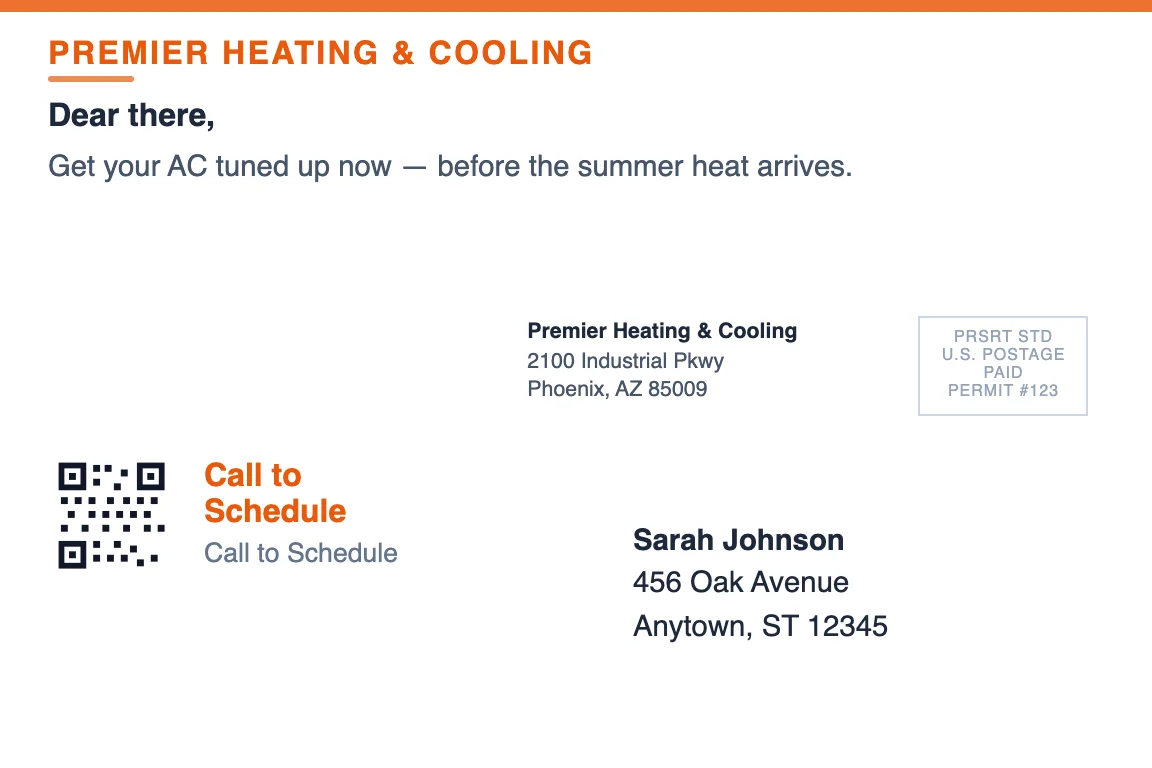
Available in 4×6, 6×9, and 6×11. All-in pricing includes printing and USPS First-Class postage.
New-mover and recently-sold-home lists are sold by data brokers (USPS-NCOA-based movers, county deed records, and the like) filtered to the ZIPs and routes you serve. Export it as a CSV. PostKnock doesn't connect to any list provider — you bring the file, then import it.
Drop in the export and the import wizard auto-maps name, address, and phone columns. Segment by ZIP, route, or move-in date if you want different offers or send timing per group.
Choose the wave sequence, set your HVAC offer, and design the postcard in the Design Studio. Add a QR code that points to your online booking page so homeowners can self-schedule the inspection.
Cards print and ship via USPS First-Class automatically. A few days after delivery, every homeowner who hasn't booked drops into the Call Queue. Non-responders advance to the next wave on their own.
Your office or CSR calls down the queue with the pre-loaded welcome script and logs each outcome. QR scans are tracked so you can see which cards drove online bookings versus calls.
Say you mail 600 new movers across your service ZIPs and run a 3-wave new-mover sequence with call follow-up. Here's the transparent math — the inputs are illustrative, not a guarantee:
Response and booking rates are industry-typical ranges, not PostKnock results. Per-customer value depends on your pricing, attachment rate, and how many systems you ultimately replace. Add a Pro subscription ($99/mo) on top of per-piece cost if you want the Call Queue and multi-wave sequencing.
Free to explore — you only pay when you're ready to send. Pay from your wallet per piece.
Single-wave postcard campaigns · Design Studio · QR tracking · From $1.05/piece
Everything in Free + Call Queue & multi-wave sequencing · From $0.79/piece
Per-piece pricing includes printing + USPS First-Class postage. Pro is $99/mo or $799/yr. No setup fees, no minimums, no contracts.
New-mover and recently-sold-home lists are sold by direct-mail data brokers, built from USPS change-of-address (NCOA) data, county deed and property records, and similar sources. You buy a list filtered to your service ZIPs, export it as a CSV, then import it into PostKnock. PostKnock does not sell lists or connect to any list provider — you bring your own file and the import wizard maps the columns for you.
EDDM-style saturation mailing hits every home on a route — great for broad brand awareness, but most of those homes already have an HVAC company. New-mover targeting mails only the homes that just changed hands, where there's no incumbent contractor and the owner is actively setting up services. PostKnock supports both: EDDM-style saturation when you want reach, and targeted new-mover lists when you want the highest-intent prospects. You can run them side by side.
There is no direct integration. PostKnock does not connect to ServiceTitan, Housecall Pro, Jobber, or any field-service software. The supported flow is to export a CSV from those systems (or from your new-mover list provider) and import it into PostKnock, where the wizard auto-maps name, address, and phone columns. For new-mover campaigns the list usually comes from a data broker rather than your FSM, since these are prospects you haven't served yet.
One clear offer that answers a question a new homeowner is already asking works best: a discounted new-homeowner system inspection ("know what you bought"), a seasonal tune-up timed to the next season, or a welcome-rate maintenance membership. New movers don't know the age or condition of the system they inherited, so an inspection or health-check angle usually beats a generic percent-off coupon. You write the offer copy; PostKnock prints and mails it.
Time waves to land just before the season that will make a homeowner call — a "get winter-ready" furnace card in late summer and fall, a "beat the summer rush" AC card in spring and early summer. Home sales peak in spring and summer, so that's when new-mover lists are largest. During peak heating or cooling season, dial back to a single intro card plus a maintenance-plan magnet so you stay top-of-fridge without overloading a slammed crew. You control all timing in PostKnock.
You can mail postcards on the Free plan with no calls at all. The built-in Call Queue — which puts each new mover in front of your office with a pre-loaded welcome script after the card lands — is a Pro feature. For new-mover outreach specifically, the welcome call is usually what turns a card into a booked inspection, so most HVAC companies use it.
Most HVAC companies run 3 to 4 waves over several weeks, mixing postcards with one or two call attempts for non-responders. PostKnock supports multi-touch wave sequences of up to 5 waves; you control the timing and which waves are postcards versus calls. A single card during a chaotic move-in week rarely books — the follow-up is what closes it.
You pay per piece from your wallet: from $1.05 per 4×6 card on the Free plan, dropping to $0.79 on Pro, with printing and USPS First-Class postage included. Pro is $99/mo (or $799/yr) and adds the Call Queue and multi-wave sequencing. No setup fees, no minimums, no contracts — you only pay for what you send. The new-mover list itself is bought separately from a data broker.
Postcards that get attention. Callbacks that close the deal. Start free — you only pay when you send.
Start Free — No Credit Card1 Response and booking figures are industry-typical ranges, not PostKnock results. Prospect-list (cold) direct-mail response is commonly reported in the low-single-digit percent range — e.g. ANA (Association of National Advertisers), Response Rate Report; DMA benchmarks. Your results depend on your list, offer, timing, and follow-up.
2 PostKnock supports three postcard sizes (4×6, 6×9, 6×11) and multi-touch wave sequences of up to 5 waves.