Your trucks already work whole neighborhoods. PostKnock mails acquisition postcards to the homes around your last job — then drops the responders into your office's call queue so a real person books the tune-up or the estimate.
Start Free — No Credit CardFree plan from $1.05/card · Pro from $0.79/card · No contracts
Most homeowners don't think about heating and cooling until something breaks — and when it does, they call whoever's name they remember or whoever lands in the box first. Acquisition postcards plus a follow-up call put your name in the right driveways before the system fails.
You just finished a $9k install on Maple Street and drove past 80 homes with the same aging systems — and never reached a single one. The neighbors are your warmest prospects and they don't know you were there.
When the AC quits in July or the furnace dies in January, the homeowner Googles or calls the first magnet on the fridge. If your card isn't already in the house, you're competing on page two of search.
Shared leads from the big aggregators get sold to three contractors at once and price you into a race to the bottom. A postcard to a targeted neighborhood is a lead nobody else is bidding on.
Spring and fall are when the phone goes quiet. A pre-season tune-up postcard fills those weeks with $89–$149 maintenance visits — and every visit is a chance to find an aging system.
Families that just bought a house have no HVAC contractor and an unfamiliar system. The first company to introduce itself — with a real offer — often becomes their company for the next decade.
A homeowner pins your card to the corkboard, means to call, and forgets. Without a follow-up call from your office, the warm interest goes cold and the job goes to whoever called back.
Homeowners hang on to a good HVAC postcard — but "I'll call later" rarely becomes a booked appointment on its own. A card that physically lands in the box, then a friendly call from your office a few days later, is the one-two punch PostKnock is built for.
A multi-touch wave sequence built to turn a target neighborhood into booked tune-ups and estimates. Postcards mail on schedule; responders and non-responders flow into the Call Queue and roll forward to the next wave automatically.
Mail the streets around your last install or service area. Lead with a seasonal tune-up offer ("$89 AC tune-up before summer") and a QR code to your booking page. Saturate the route with an EDDM-style mailing, or target a list you imported.
3–5 days after the card lands, prospects appear in your Call Queue with a pre-loaded script: "We were just in your neighborhood — we have a couple of tune-up slots open this week." Your office logs the outcome in one click.
A different design for everyone who hasn't booked. Lead with a new-customer estimate, a financing message for system replacement, or a "beat the season rush" deadline for anyone whose system is on its last legs.
Last call attempt for non-responders, paired with a low-key card that earns a spot on the fridge for the day the system breaks. Then the route rests before you re-mail it next season.
Wave count, timing, and call cadence are yours to set — PostKnock supports up to 5 waves. The phone-call waves use the built-in Call Queue, a Pro feature.
A new-customer card needs a reason to call today. These are common, HVAC-appropriate angles you can drop into the postcard offer field — match the offer to the season and to the kind of work you want to fill.
Offers are illustrative. You set the offer copy and the price; PostKnock prints and mails the card and queues the follow-up call.
HVAC demand is driven by the weather, so the calendar is your campaign plan. The goal is to land in the box a few weeks before homeowners feel the heat or the cold — while they can still book a tune-up instead of an emergency.
Mail AC maintenance offers before the first hot week. Catch failing systems early so you can sell a planned replacement instead of an emergency one.
Demand peaks and systems fail. Lead with fast estimates, financing, and a "we were just on your street" angle for neighbors of your install jobs.
Mail furnace safety checks and heating tune-ups before the first cold snap. This is the season that builds your winter maintenance base.
Be the card on the fridge when the furnace quits. Push maintenance plans and "save our number" messaging so you win the emergency call.
Months are illustrative and shift by climate. Pair seasonal cards with the maintenance pages: spring cooling and fall heating.
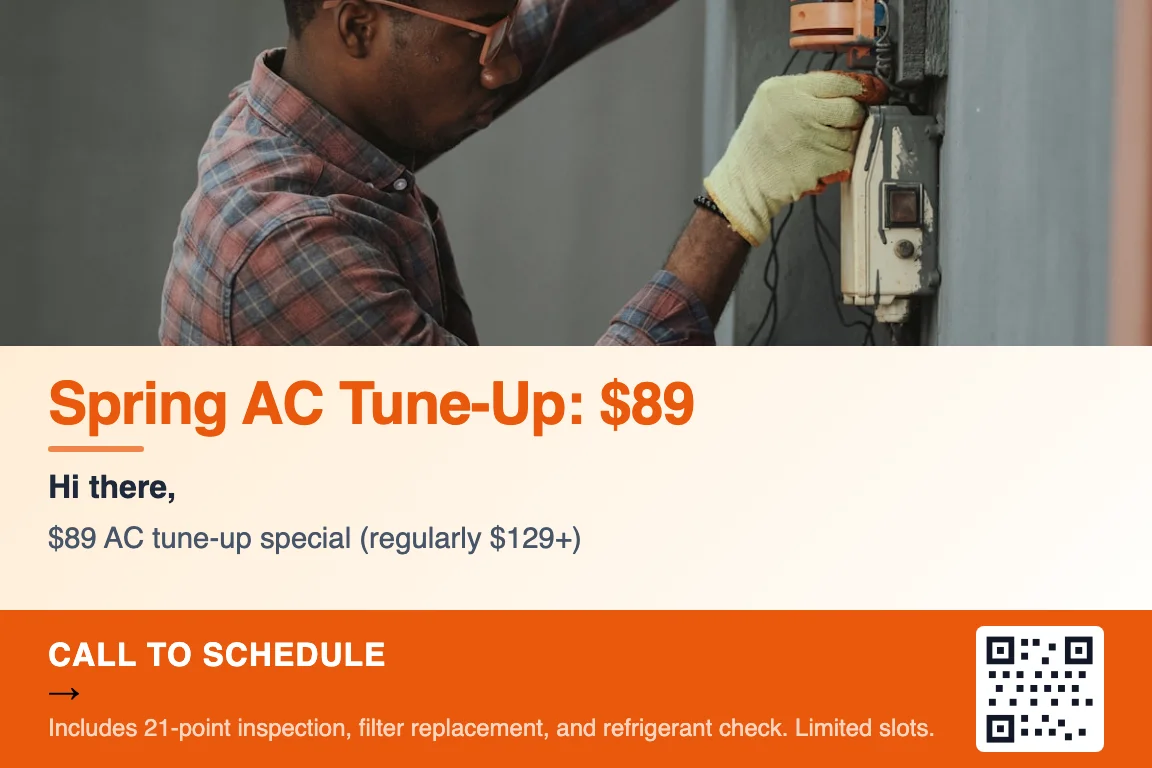
Design it in the in-app Design Studio in your company's colors. Four starting styles — same offer and same call follow-up behind each, so pick the look that fits your brand.
Bold
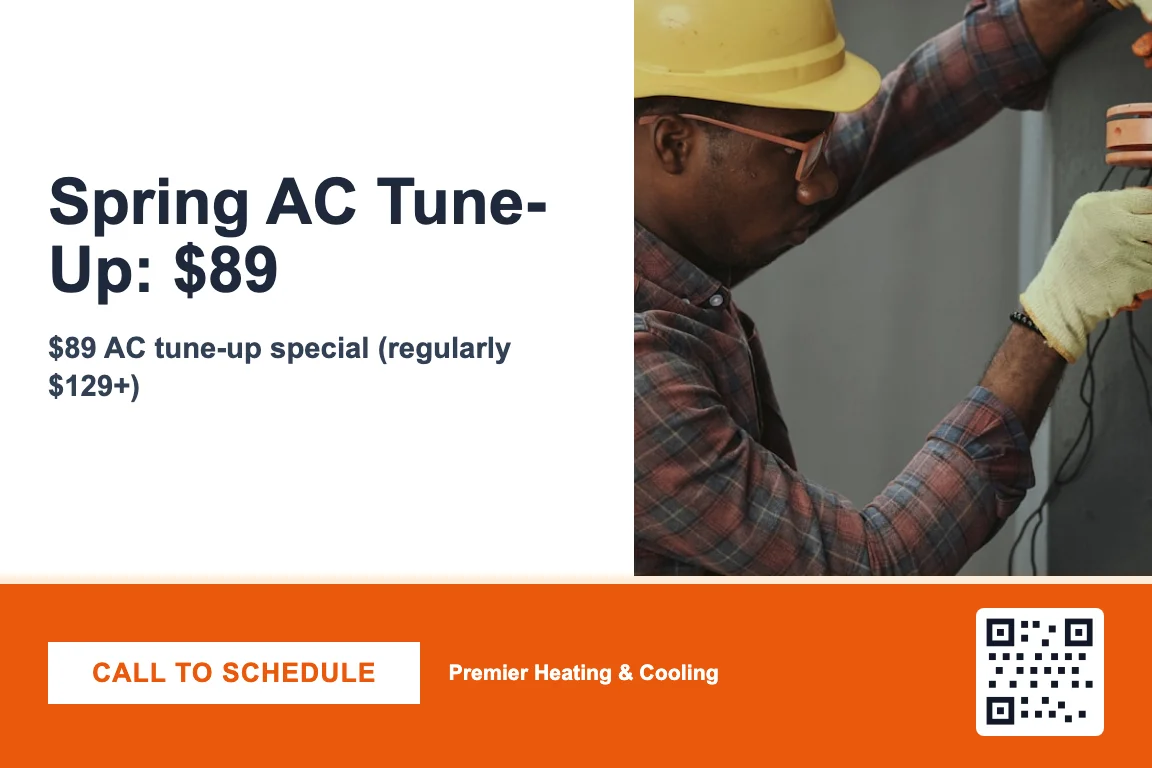
Photo
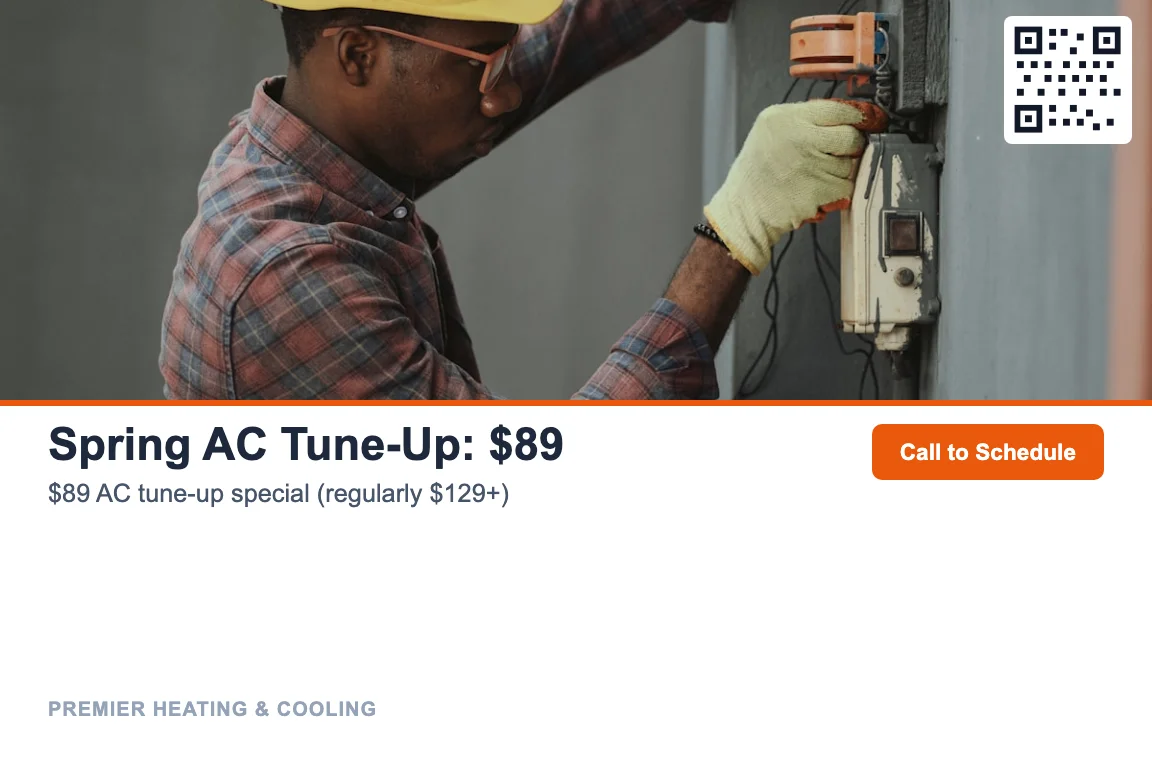
Minimal
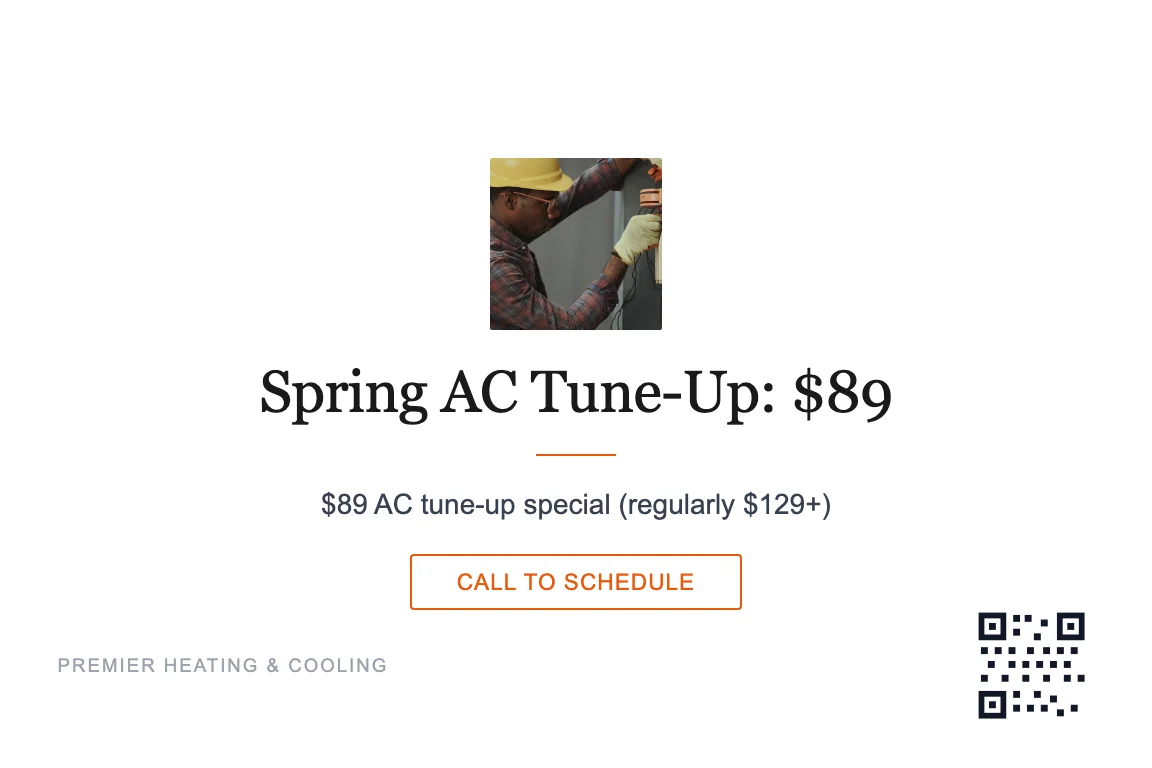
Gradient
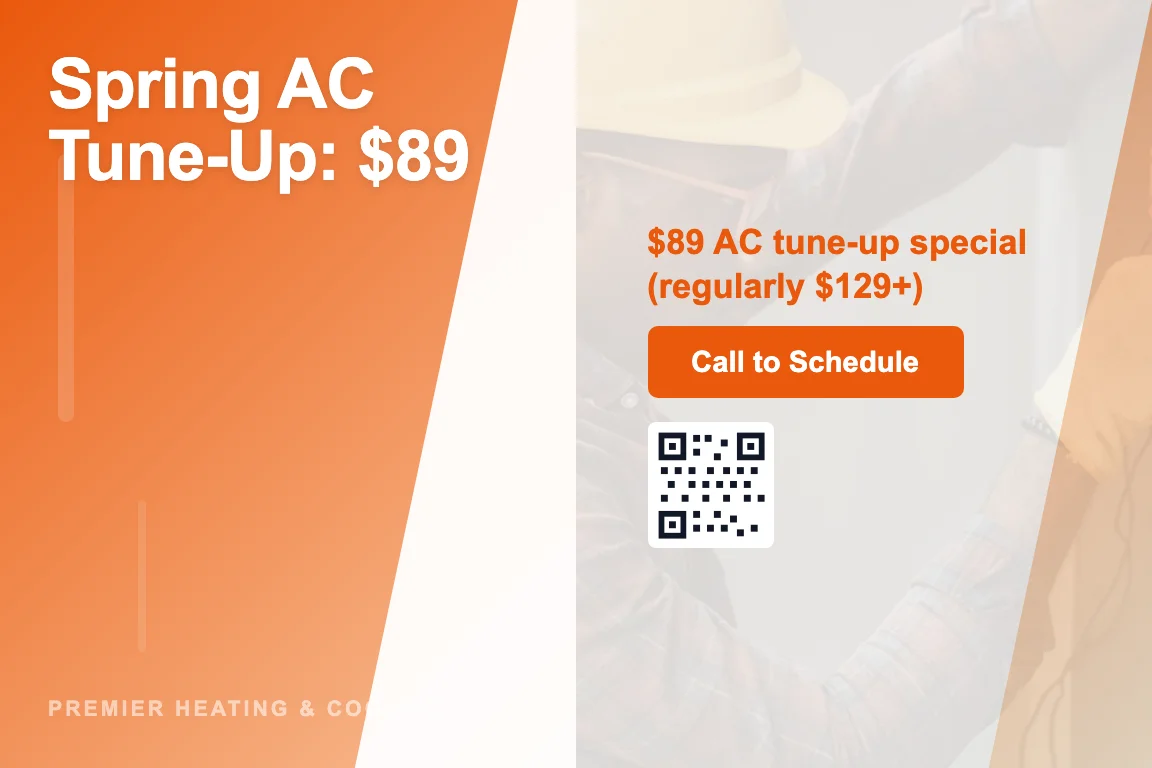
Front Detail
Back (Address Side)
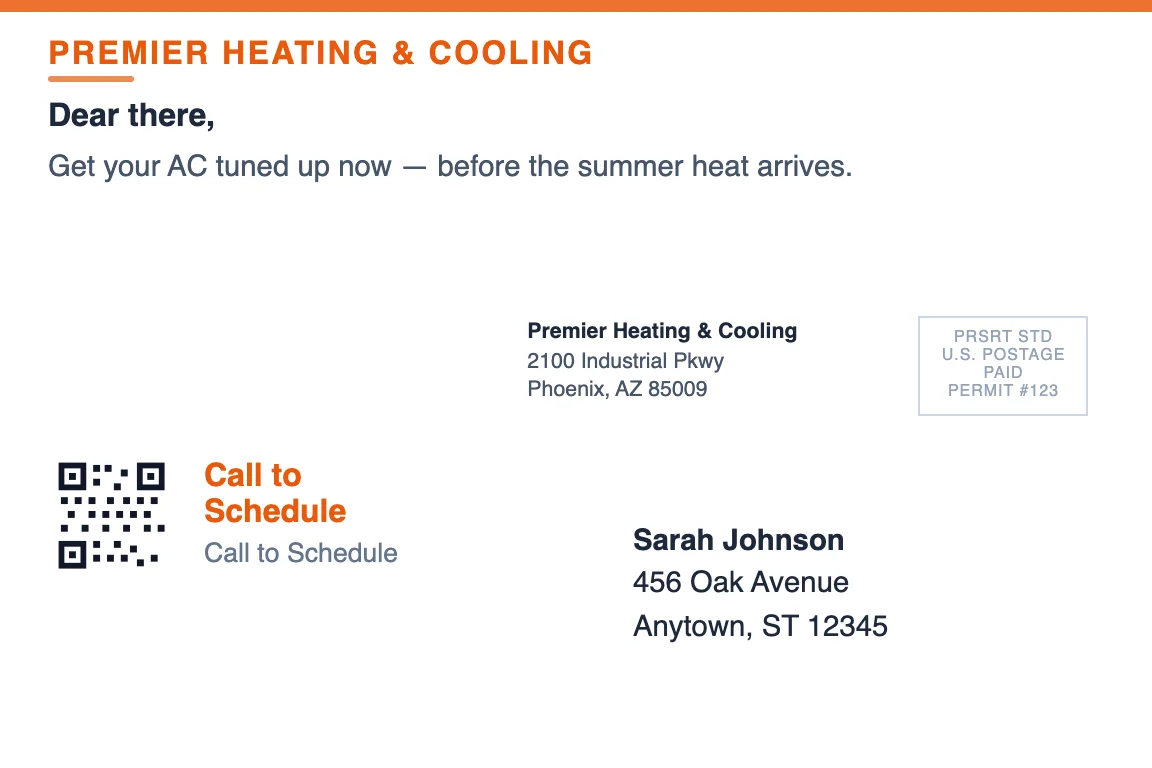
Available in 4×6, 6×9, and 6×11. All-in pricing includes printing and USPS First-Class postage.
Saturate a route around your last install with EDDM-style mailing, or build a prospect list. If you keep customers and leads in ServiceTitan, Housecall Pro, Jobber, or a spreadsheet, export them to a CSV — PostKnock doesn't connect to your field-service software; you export the file, then import it.
Drop in the export and the import wizard auto-maps name, address, and phone columns. Segment new movers vs. neighbors-of-installs vs. past estimates if you want a different offer per group.
Choose the wave sequence, set your seasonal offer, and design the postcard in the Design Studio. Add a QR code that points to your online booking or "request an estimate" page so homeowners can self-book.
Cards print and ship via USPS First-Class automatically. A few days after delivery, prospects drop into the Call Queue. Non-responders advance to the next wave on their own, timed to the season.
Your office calls down the queue with the pre-loaded script and logs each outcome. QR scans are tracked so you can see which cards and which neighborhoods drove online bookings versus calls.
Say a contractor mails 1,000 homes around recent jobs and runs a 2-wave acquisition sequence with call follow-up. Here's the transparent math — the inputs are illustrative, not a guarantee:
Response rates and ticket values are industry-typical ranges, not PostKnock results. Your numbers depend on your list, offer, season, and how well your office works the follow-up calls. Add a Pro subscription ($99/mo) on top of per-piece cost if you want the Call Queue and multi-wave sequencing.
Free to explore — you only pay when you're ready to send. Pay from your wallet per piece.
Single-wave postcard campaigns · Design Studio · QR tracking · From $1.05/piece
Everything in Free + Call Queue & multi-wave sequencing · From $0.79/piece
Per-piece pricing includes printing + USPS First-Class postage. Pro is $99/mo or $799/yr. No setup fees, no minimums, no contracts.
Your warmest prospects are the homes around jobs you've already done — same neighborhood, same era of systems, and your trucks have been seen on the street. Beyond that, new movers and homes in your best service ZIPs are strong targets. You can saturate a route with an EDDM-style mailing, or import a prospect list as a CSV and mail to it directly.
Yes. PostKnock supports EDDM-style saturation mailing, so you can blanket the routes around your jobs without buying or building a list of names. That's a natural fit for HVAC, where your best prospects are simply "the homes near the one we just worked on." When you do have a list — new movers, past estimates — you import it as a CSV and mail to those addresses instead.
No — PostKnock does not integrate directly with field-service software. The supported flow is to export your customers, leads, or past estimates from ServiceTitan, Housecall Pro, Jobber (or a spreadsheet) as a CSV, then import that CSV into PostKnock. The import wizard auto-maps name, address, and phone columns for you. There is no API sync; you export the file and import it.
Mail ahead of demand, not during it. Send cooling tune-up offers in late winter and spring before the first hot week, and furnace safety-check offers in late summer and fall before the first cold snap. Summer leans toward replacement and new-mover offers; winter is about being the card on the fridge for the emergency call. Landing a few weeks early means homeowners can book a planned visit instead of an emergency one.
One clear offer with a reason to act now works best. A discounted seasonal tune-up (for example, an $89 AC tune-up or a $99 furnace safety check) is a low-risk way to get a first-time customer in the door — and a tune-up often uncovers a system that needs replacing. For higher-intent prospects, a free estimate or a financing message on a new system works. You write the offer copy and set the price; PostKnock prints and mails the card.
You can mail postcards on the Free plan with no calls at all. The built-in Call Queue — which puts each responder in front of your office with a pre-loaded script after the card lands — is a Pro feature. For acquisition, the call is usually what turns "I'll get to it" into a scheduled tune-up or estimate, so most contractors use it.
Lead-gen aggregators sell the same lead to several contractors, which puts you in a price race the moment the homeowner picks up. A postcard to a neighborhood you choose is a lead nobody else is bidding on — you control the targeting, the offer, and the follow-up, and you keep every contact you generate. It's marketing you own rather than leads you rent.
Most contractors run 2 to 4 waves over several weeks, mixing postcards with one or two call attempts for responders and non-responders. PostKnock supports multi-touch wave sequences of up to 5 waves; you control the timing and which waves are postcards versus calls. A single mailing rarely fills a schedule — the repeat exposure plus the follow-up call is what books jobs.
You pay per piece from your wallet: from $1.05 per 4×6 card on the Free plan, dropping to $0.79 on Pro, with printing and USPS First-Class postage included. Pro is $99/mo (or $799/yr) and adds the Call Queue and multi-wave sequencing. No setup fees, no minimums, no contracts — you only pay for what you send.
Postcards that get attention. Callbacks that close the deal. Start free — you only pay when you send.
Start Free — No Credit Card1 Response and ticket figures are industry-typical ranges, not PostKnock results. Direct-mail response to a prospect (acquisition) list is commonly reported in the low-single-digit percent range — e.g. ANA (Association of National Advertisers), Response Rate Report — and tends to run lower than response to an existing-customer house list. Average HVAC ticket and install values vary widely by region and system. Your results depend on your list, offer, season, and follow-up.
2 PostKnock supports three postcard sizes (4×6, 6×9, 6×11), EDDM-style saturation mailing, and multi-touch wave sequences of up to 5 waves.