For HVAC Companies

Lapsed-Customer Reactivation
Postcards for HVAC Companies

Every furnace and AC you've ever serviced is a customer who already trusts you. PostKnock mails reactivation postcards to your past tune-up, repair, and install list — then drops each one into a call queue so your office follows up before the season hits.

Start Free — No Credit Card

Free plan from $1.05/card · Pro from $0.79/card · No contracts

4–9%
Estimated direct-mail response
range on a house list1
Seasons a year to re-engage
your list (cooling + heating)
<30 min
Typical sign-up to
first campaign launched

Where HVAC Companies Lose Repeat Work

"Lapsed" isn't one problem — it's several. Each one is a homeowner whose system you already know, who quietly stopped calling. Reactivation postcards plus a phone call are how you get back on their list before they Google a competitor at 95°.

📅

Skipped tune-ups

Customers who got one spring AC or fall furnace tune-up and never came back the next year. The maintenance list bleeds a little every season it isn't worked.

🔧

One-time repair, never seen again

You fixed their AC two summers ago, did good work, and then… nothing. They never booked maintenance and don't think of you until something else breaks.

🚫

Lapsed maintenance plans

A service agreement that auto-expired or was cancelled and never renewed. That recurring revenue walks out the door the month the plan lapses.

🌡

Aging systems near replacement

Past customers running 12–15+ year-old units headed for failure. Reach them before the breakdown and you win the replacement; miss them and a competitor does.

☀️

Off-season silence

You're slammed in July and dead in October. Reactivating past customers in the shoulder seasons smooths out the slow weeks and pre-books the rush.

🏠

Movers & new ownership

A house you've serviced changes hands and the new owner has no idea who maintains the system. A postcard to the address re-establishes you as their HVAC company.

A Postcard Alone Won't Rebook the Job. The Call Will.

Email blasts to old customers get ignored. A reactivation postcard physically lands in the mailbox — then, a few days later, a familiar voice from your office closes the loop and books the truck roll. That one-two punch is what PostKnock is built for.

What stalls reactivation

  • × A single "we miss you" card with nobody following up
  • × The office meaning to call the old customer list "when it's slow" (in summer, it never is)
  • × Vague messaging with no specific offer, season, or deadline
  • × A magnet on the fridge the homeowner stopped noticing years ago

What rebooks the truck

  • ✓ A designed postcard with one clear HVAC offer + a seasonal deadline
  • ✓ A QR code that drops straight onto your online scheduler
  • ✓ A phone-call follow-up 3–5 days after the card lands, with a pre-loaded script
  • ✓ A second and third wave for everyone who didn't pick up

The HVAC Reactivation Playbook

A multi-touch wave sequence built for past HVAC customers, timed to the season. Postcards mail on schedule; non-responders flow into the Call Queue and roll forward to the next wave automatically.

W1

Wave 1 — "Beat the rush, book your tune-up" postcard

Warm, personal tone with the customer's name auto-filled. One seasonal offer (spring AC tune-up, fall furnace check, or "let's get your system ready"). QR code to online scheduling.

W2

Wave 2 — Office phone call (Pro Call Queue)

3–5 days after the card lands, the customer appears in your Call Queue with a pre-loaded script: "We serviced your system a while back — we've got tune-up slots open before it gets hot." Staff logs the outcome in one click.

W3

Wave 3 — Second postcard, new angle

A different design for everyone who hasn't booked. Lead with a maintenance-plan offer, a "before the heat wave / cold snap" deadline, or a financing nudge for customers on aging systems.

W4

Wave 4 — Final call + "you're still our customer" card

Last call attempt for non-responders, paired with a low-key reintroduction postcard. Then the segment rests until the next season, when you recycle it for the opposite system.

Wave count, timing, and call cadence are yours to set — PostKnock supports up to 5 waves. The phone-call waves use the built-in Call Queue, a Pro feature.

Reactivation Offers That Fit an HVAC Company

A reactivation card needs a reason to call back now. These are common, customer-appropriate angles you can drop into the postcard offer field — pick what fits the season and the customer's system.

For skipped tune-ups

  • • Discounted spring AC or fall furnace tune-up
  • • "Book before peak season" priority scheduling
  • • Precision tune-up + filter included

For lapsed maintenance plans

  • • Reinstate your plan, no enrollment fee
  • • First visit free when you renew this season
  • • Member pricing on the next repair

For aging systems

  • • Free in-home replacement estimate
  • • System efficiency / health check
  • • Financing or seasonal rebate reminder

For one-time repair customers

  • • "Let's keep it running" maintenance offer
  • • Indoor air quality or duct check add-on
  • • A genuine thank-you with a return-visit credit

Offers are illustrative. You set the offer copy; PostKnock prints and mails the card and queues the follow-up call. Check your state's advertising and rebate rules.

Time It to the Season, Not the Calendar

HVAC reactivation lives and dies by timing. The win is reaching past customers in the shoulder weeks — before the rush, while crews still have open slots. Mail ahead of the season, not during it.

🌻

Late winter → spring (cooling season)

Mail AC tune-up reactivation cards in late February through April, before the first heat wave floods your phones. Reach last year's tune-up customers who never rebooked.

🍂

Late summer → fall (heating season)

Mail furnace check reactivation cards in late August through October, ahead of the first cold snap. Same list, opposite system — recycle the segment with a new offer.

PostKnock playbooks let you schedule waves so the cards arrive in the shoulder window and the follow-up calls land while there's still room on the schedule. Run the same list twice a year — AC in spring, heat in fall.

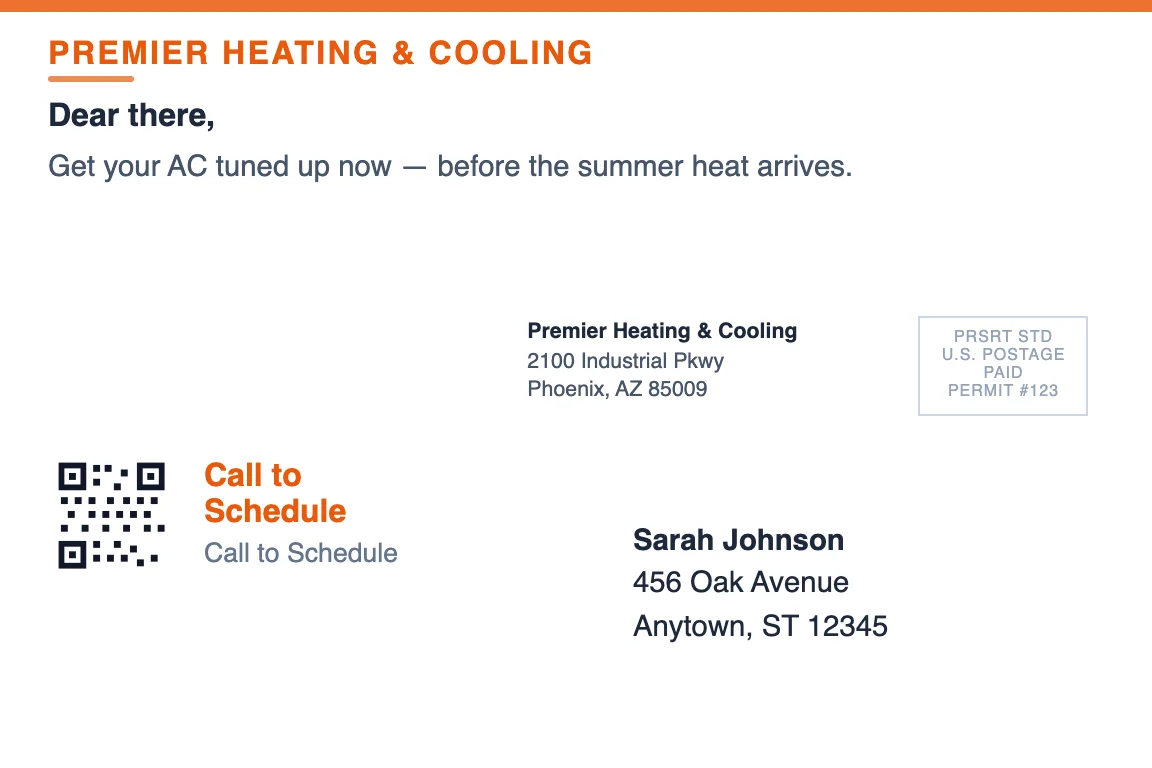
What Your Reactivation Card Looks Like

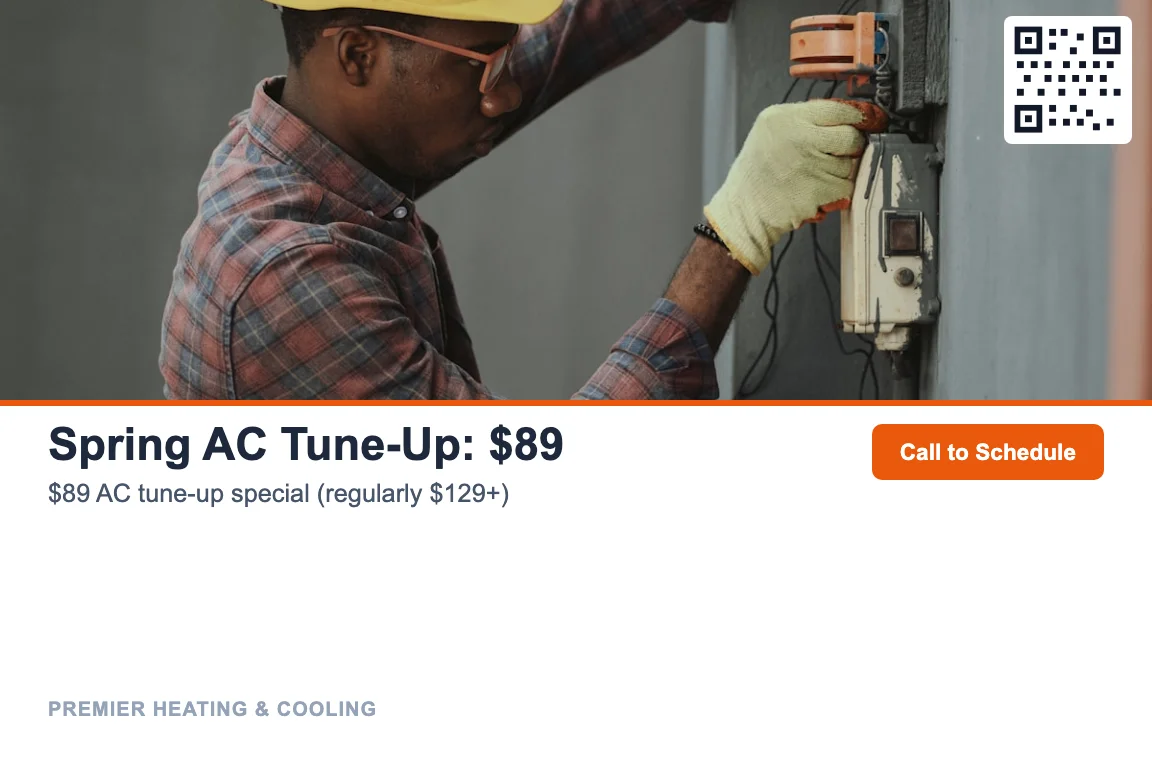
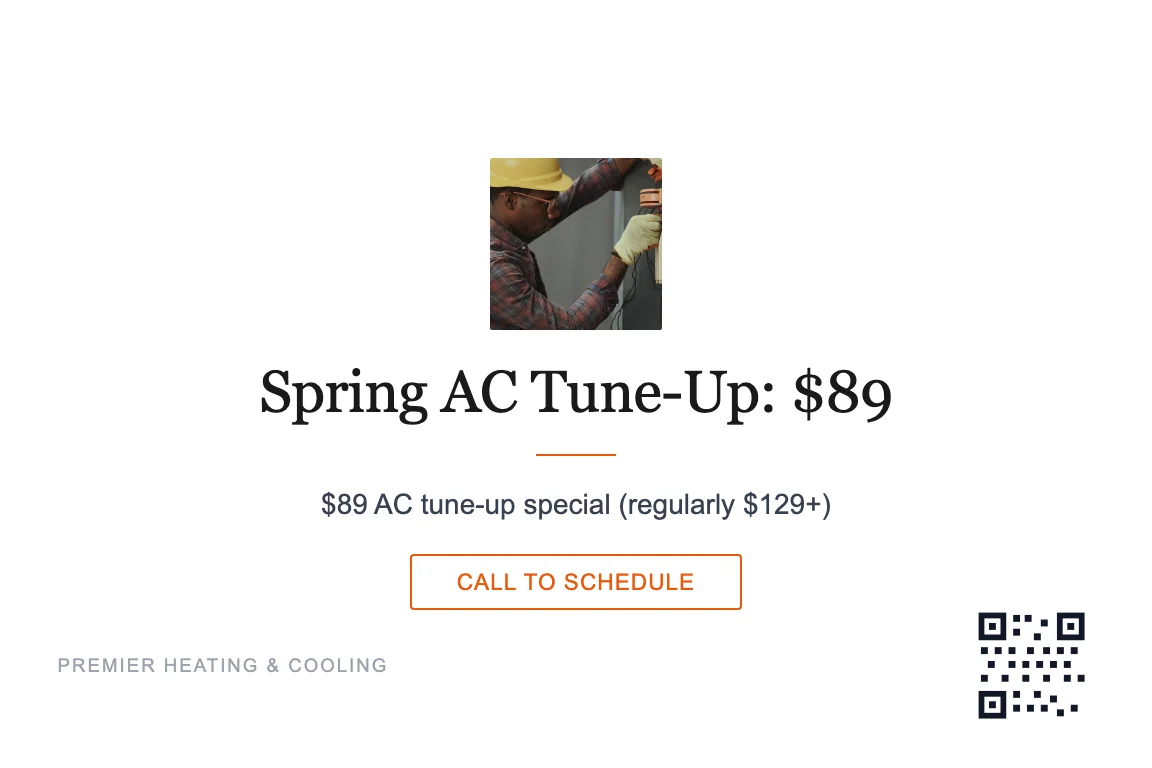
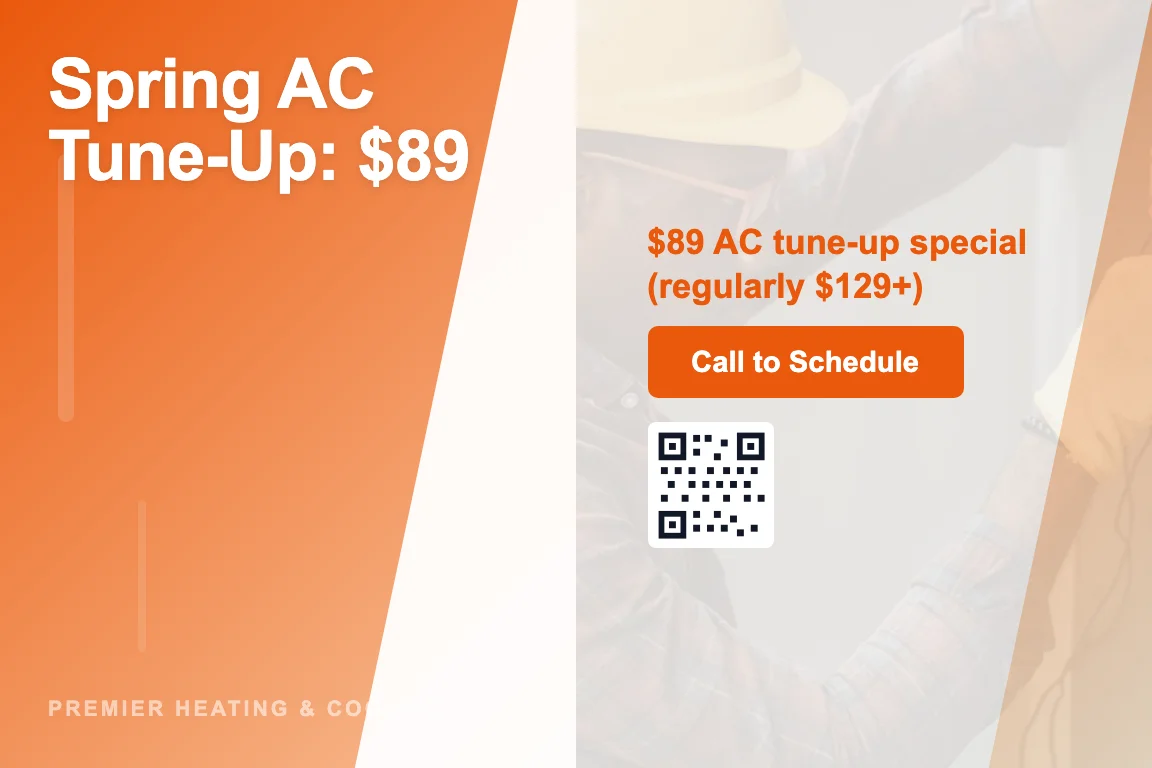
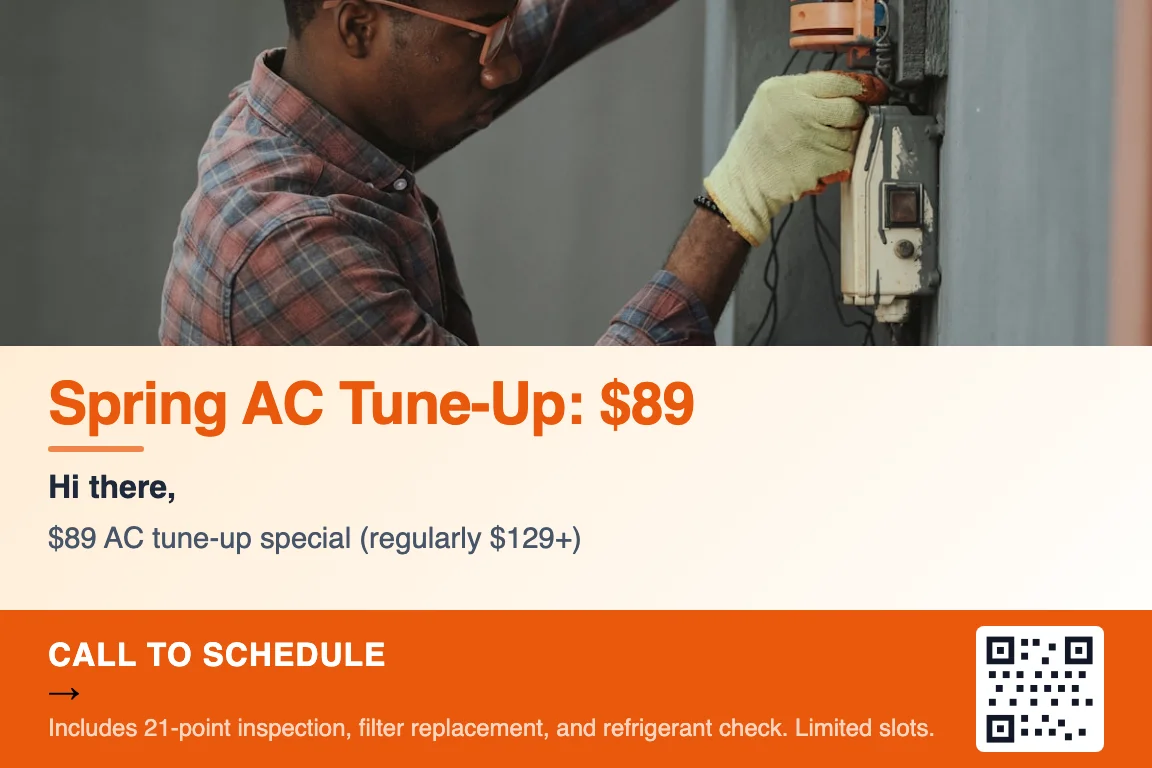
Design it in the in-app Design Studio in your company's colors. Four starting styles — same offer and same call follow-up behind each, so pick the look that fits your brand.

Bold
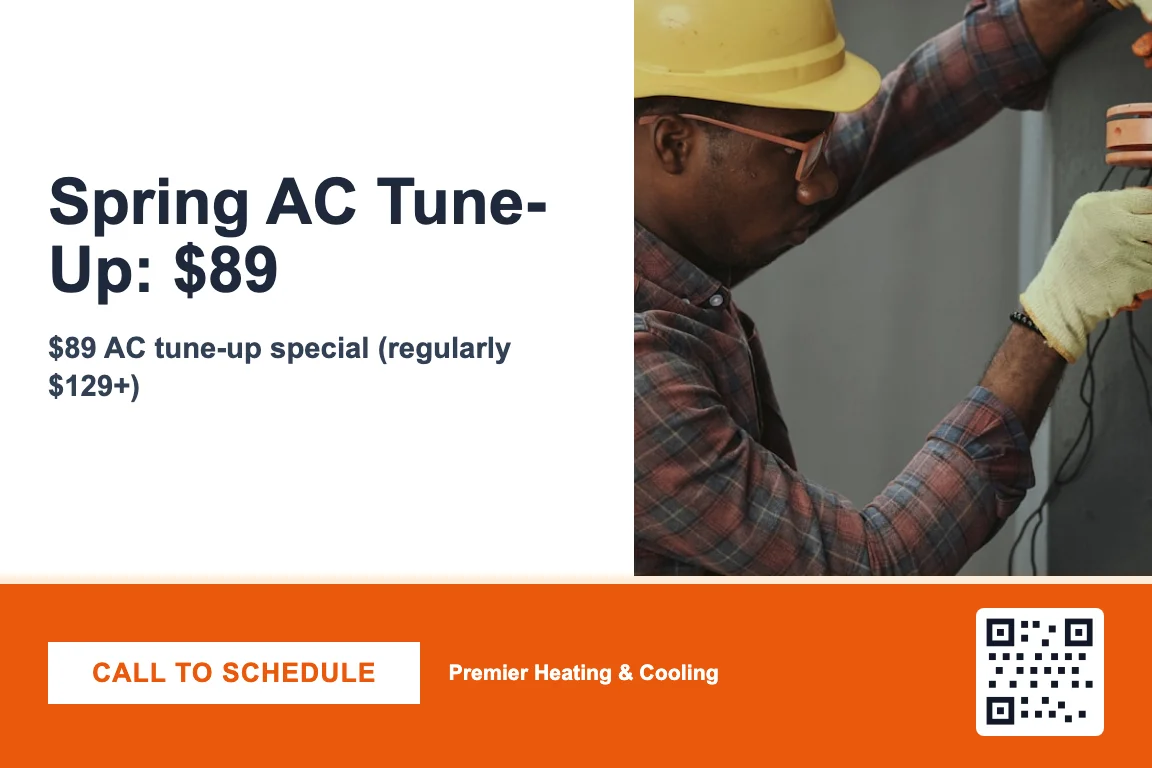
Bold HVAC reactivation postcard design front

Photo

Photo-led HVAC reactivation postcard design front

Minimal

Minimal HVAC reactivation postcard design front

Gradient

Gradient HVAC reactivation postcard design front

Front Detail

Detailed view of an HVAC reactivation postcard front

Back (Address Side)

HVAC reactivation postcard back showing return address and recipient zone

Available in 4×6, 6×9, and 6×11. All-in pricing includes printing and USPS First-Class postage.

How PostKnock Runs It, End to End

1

Pull your lapsed list from your field-service software

In ServiceTitan, Housecall Pro, Jobber, FieldEdge, or any system — run a report for customers with no job in the last 12–24 months (or your own cutoff) and export it as a CSV. PostKnock doesn't connect to your software; you export the file, then import it.

2

Import the CSV — the wizard maps your columns

Drop in the export and the import wizard auto-maps name, address, phone, and last-service columns. Segment AC vs. furnace, maintenance-plan lapses, or aging-system customers if you want different offers per group.

3

Pick the reactivation playbook & your card

Choose the wave sequence, set your seasonal offer, and design the postcard in the Design Studio. Add a QR code that points to your online scheduler so homeowners can self-book a tune-up.

4

Launch — postcards mail, the queue fills

Cards print and ship via USPS First-Class automatically. A few days after delivery, every customer who hasn't booked drops into the Call Queue. Non-responders advance to the next wave on their own.

5

Office works the queue & you track scans

Staff calls down the queue with the pre-loaded script and logs each outcome. QR scans are tracked so you can see which cards drove online bookings versus calls.

A Worked Example (Your Numbers Will Vary)

Say an HVAC company pulls 500 lapsed customers (no job in 12+ months) and runs a 3-wave reactivation sequence with call follow-up ahead of cooling season. Here's the transparent math — the inputs are illustrative, not a guarantee:

  • 500 customers × 3 waves = 1,500 cards × $0.79/card (Pro 4×6) = ~$1,185 in postage + print
  • At an estimated 3–5% reactivation rate1 → roughly 15–25 customers rebooked
  • If a reactivated tune-up customer is worth, say, $150–$300 on the first visit — and far more if even a few become maintenance-plan members or replacements…
  • …that's a meaningful return before you even count the install jobs that come out of a tune-up. Plug in your own per-customer value to see yours.

Response and reactivation rates are industry-typical ranges, not PostKnock results. Per-customer value depends on your ticket sizes and how many become repeat or replacement jobs. Add a Pro subscription ($99/mo) on top of per-piece cost if you want the Call Queue and multi-wave sequencing.

Simple, Transparent Pricing

Free to explore — you only pay when you're ready to send. Pay from your wallet per piece.

Free

$0/forever

Single-wave postcard campaigns · Design Studio · QR tracking · From $1.05/piece

Most Popular

Pro

$99/mo

Everything in Free + Call Queue & multi-wave sequencing · From $0.79/piece

Per-piece pricing includes printing + USPS First-Class postage. Pro is $99/mo or $799/yr. No setup fees, no minimums, no contracts.

Frequently Asked Questions

What counts as a "lapsed" HVAC customer?

Most HVAC companies treat a customer as lapsed once they've gone a full season or year without booking — commonly 12+ months since their last tune-up, repair, or service — or once a maintenance plan expires and isn't renewed. You set the cutoff when you pull the list from your field-service software; PostKnock just mails to whoever is on your CSV.

When should I mail HVAC reactivation postcards?

Time it to the season, not the calendar. Mail AC tune-up reactivation cards in late winter through spring before the first heat wave, and furnace check cards in late summer through fall before the first cold snap. The goal is reaching past customers in the shoulder weeks while your crews still have open slots — you can run the same list twice a year for the opposite system.

Can I export customers from ServiceTitan, Housecall Pro, or Jobber?

Yes. ServiceTitan, Housecall Pro, Jobber, FieldEdge and most other field-service systems let you run a customer or inactive-customer report and export it as a CSV. Filter by last service date to find customers lapsed 12+ months, then import the CSV into PostKnock — the wizard auto-maps name, address, phone, and last-service columns. PostKnock does not integrate directly with your software; you export the file and import it.

What offer should an HVAC reactivation postcard make?

One clear, seasonal offer with a reason to act now works best: a discounted spring AC or fall furnace tune-up, a maintenance-plan reinstatement with no enrollment fee, or a free replacement estimate for customers on aging systems. Customers who only ever had a one-time repair tend to respond to a "let's keep it running" maintenance offer. Always check your state's advertising and rebate rules — you write the offer copy, PostKnock prints and mails it.

How many waves should a reactivation campaign have?

Most HVAC companies run 3 to 4 waves over several weeks, mixing postcards with one or two call attempts for non-responders. PostKnock supports multi-touch wave sequences of up to 5 waves; you control the timing and which waves are postcards versus calls. A single touch rarely rebooks the job — the follow-up call is what closes it.

Do I need the phone calls, or can I just mail postcards?

You can mail postcards on the Free plan with no calls at all. The built-in Call Queue — which puts each lapsed customer in front of your office staff with a pre-loaded script after the card lands — is a Pro feature. For reactivation specifically, the call is usually what turns a postcard into a booked truck roll, so most HVAC companies use it.

How do I win back customers on a 12–15 year-old system?

Past customers running aging equipment respond best to a specific, higher-value offer — a free in-home replacement estimate, an efficiency check, or a financing or seasonal-rebate reminder — rather than a generic greeting. Pair it with a wave sequence and a follow-up call so you reach them before the system fails and they call a competitor in a panic. Industry studies typically report direct-mail response in the low-single-digit-percent range on a house list.

What does it cost to reactivate my customer list?

You pay per piece from your wallet: from $1.05 per 4×6 card on the Free plan, dropping to $0.79 on Pro, with printing and USPS First-Class postage included. Pro is $99/mo (or $799/yr) and adds the Call Queue and multi-wave sequencing. No setup fees, no minimums, no contracts — you only pay for what you send.

Does PostKnock work for other home-service trades too?

Yes. PostKnock supports 50+ industries with pre-built playbooks — including plumbing, roofing, pest control, lawn care, and more. The reactivation playbook works the same way across trades: import a CSV of past customers, mail a designed postcard with a seasonal offer, and follow up by phone on Pro. See the all-industries reactivation page for the cross-vertical version.

Keep exploring

Turn Your Old Customer List Into Booked Truck Rolls

Postcards that get attention. Callbacks that close the deal. Start free — you only pay when you send.

Start Free — No Credit Card

1 Response and reactivation figures are industry-typical ranges, not PostKnock results. House-list direct-mail response is commonly reported in the low-single-digit-to-high-single-digit percent range — e.g. ANA (Association of National Advertisers), Response Rate Report. Your results depend on your list, offer, season, and follow-up.

2 PostKnock supports three postcard sizes (4×6, 6×9, 6×11) and multi-touch wave sequences of up to 5 waves.