Every overdue patient in your PMS is a pet that still needs care — and a client who hasn't found a new vet yet. PostKnock mails reactivation postcards to your lapsed clients, then drops each one into your front desk's call queue so a real person follows up.
Start Free — No Credit CardFree plan from $1.05/card · Pro from $0.79/card · No contracts
"Lapsed" isn't one problem — it's several. Each one is a pet that was already your patient and quietly fell off the schedule. Reactivation postcards plus a call are how you catch them before the owner books somewhere closer or cheaper.
Rabies, DHPP, FVRCP, Bordetella — due dates slide past and the reminder card from two years ago never got a follow-up. Overdue vaccines are the most common reactivation trigger in a clinic.
12+ months since the last exam. Skip a year and you miss the early signs — weight, dental, bloodwork trends — and the client starts treating "the vet" as something they only do when the pet is sick.
Heartworm, flea, and tick refills that lapsed when the client bought one box online and never came back. A missed annual heartworm test is both a health gap and lost recurring revenue.
A dental was recommended at the last exam and never booked — the COHAT that sits in the chart. February Pet Dental Health Month is the natural reason to call those owners back.
They liked you, then a move, a new puppy, or a corporate-clinic coupon pulled them away. They're not angry — they just drifted. A postcard plus a warm call brings a lot of them back.
One pet still comes in while the second pet's records go cold — or a senior dog overdue for twice-yearly geriatric checks. Reactivating one household can rebook two or three patients.
Vaccine-reminder emails get filtered and reminder texts get muted. A reactivation postcard physically lands in the mailbox — then, a few days later, a familiar voice from the front desk closes the loop. That one-two punch is what PostKnock is built for.
A multi-touch wave sequence built for overdue veterinary clients. Postcards mail on schedule; non-responders flow into the Call Queue and roll forward to the next wave automatically.
Warm, personal tone with the pet's name auto-filled. One offer (wellness exam discount, free first dose of prevention, or "let's get Bella back on the books"). QR code to online scheduling.
3–5 days after the card lands, the client appears in your Call Queue with a pre-loaded script: "Hi, this is ___ from ___ Animal Hospital — Bella's due for her wellness visit and we have openings this week." Staff logs the outcome in one click.
A different design for everyone who hasn't rebooked. Lead with a seasonal hook — Pet Dental Health Month, spring heartworm-test season, or a limited-time wellness offer with a real deadline.
Last call attempt for non-responders, paired with a low-key "we'd hate to lose you" postcard noting that the pet's file and vaccine history are still on hand. Then the segment rests before you recycle it next cycle.
Wave count, timing, and call cadence are yours to set — PostKnock supports up to 5 waves. The phone-call waves use the built-in Call Queue, a Pro feature.
A reactivation card needs a reason to call back today. These are common, client-appropriate angles you can drop into the postcard offer field — pick what fits your patient mix and your state veterinary board's advertising rules.
Offers are illustrative. You set the offer copy; PostKnock prints and mails the card and queues the follow-up call.
Design it in the in-app Design Studio in your clinic's colors. Four starting styles — same offer and same call follow-up behind each, so pick the look that fits your brand.
Bold
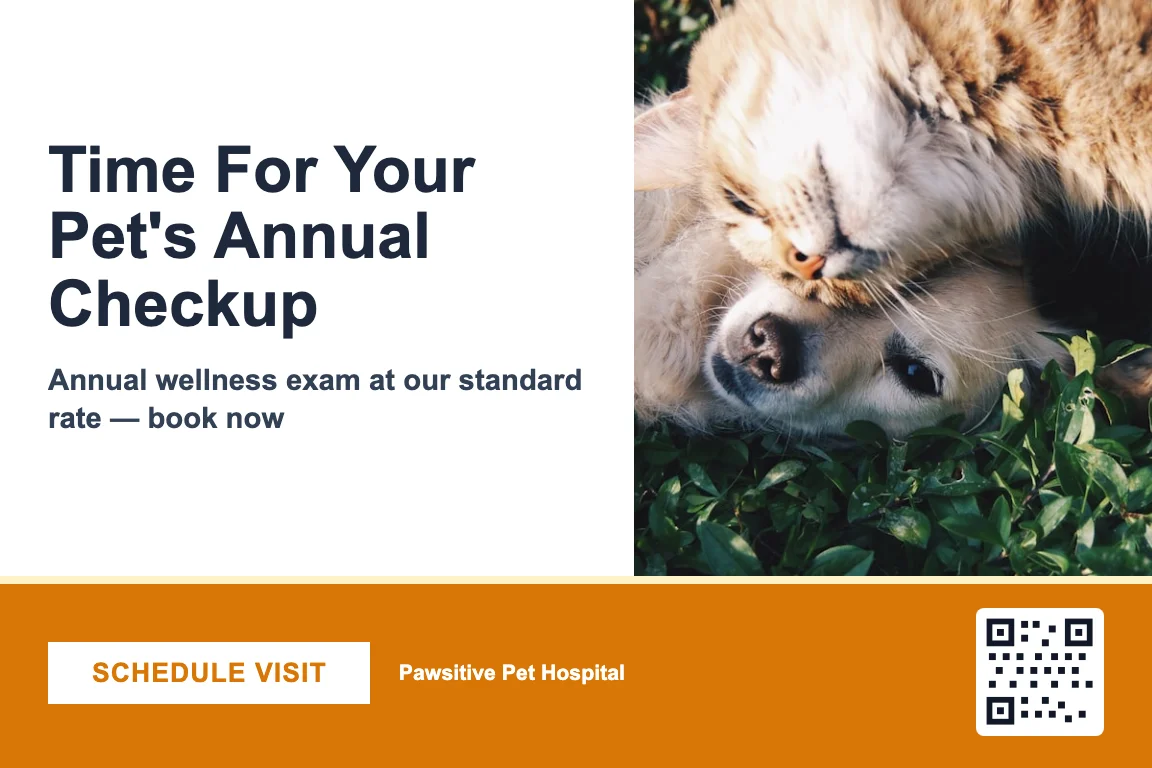
Photo
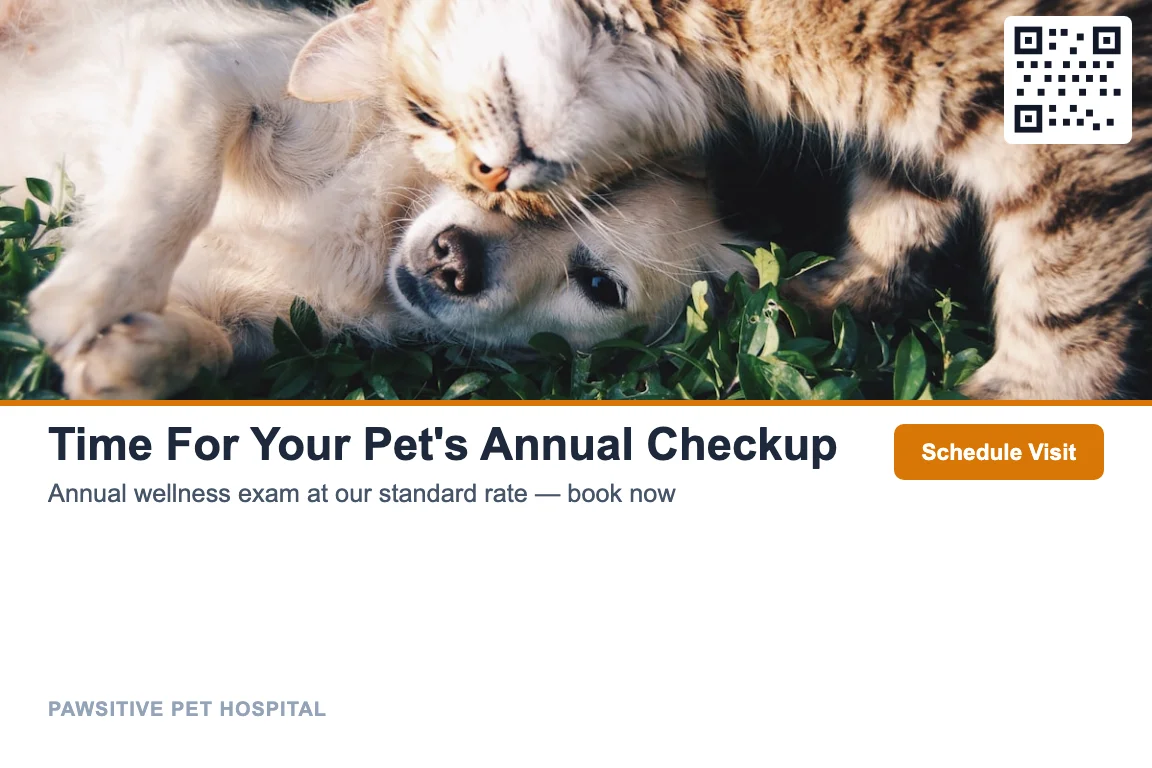
Minimal
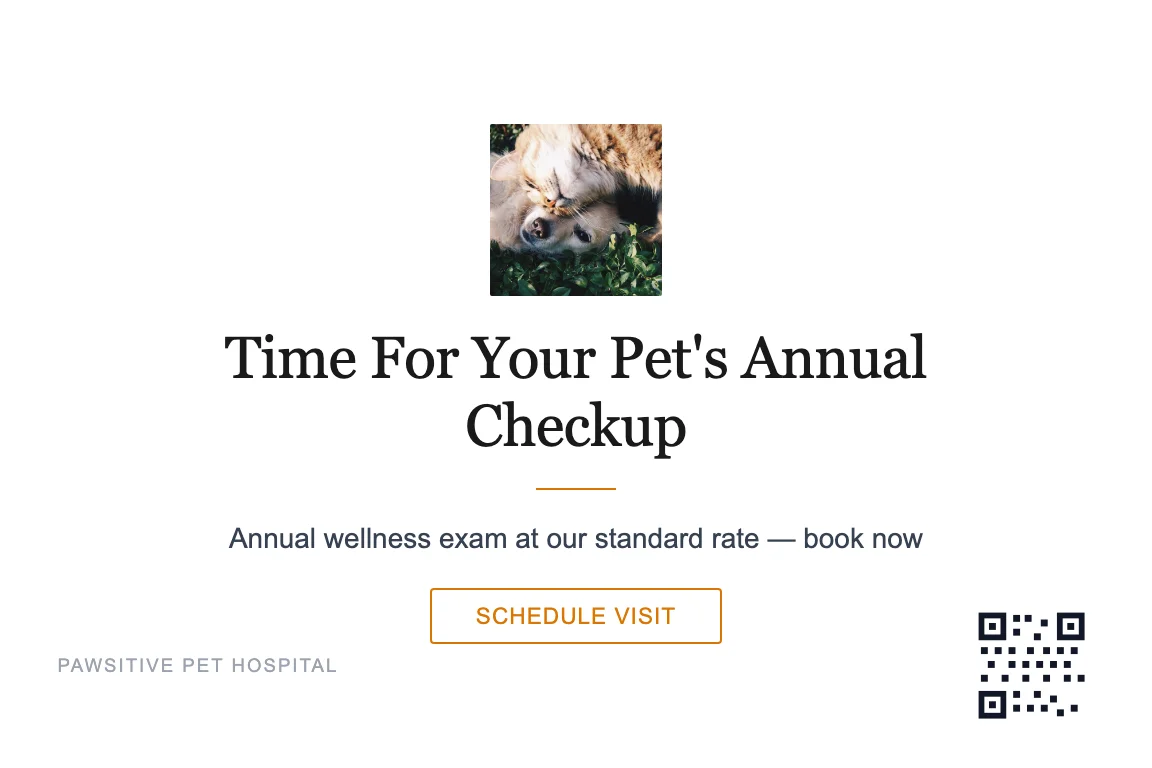
Gradient
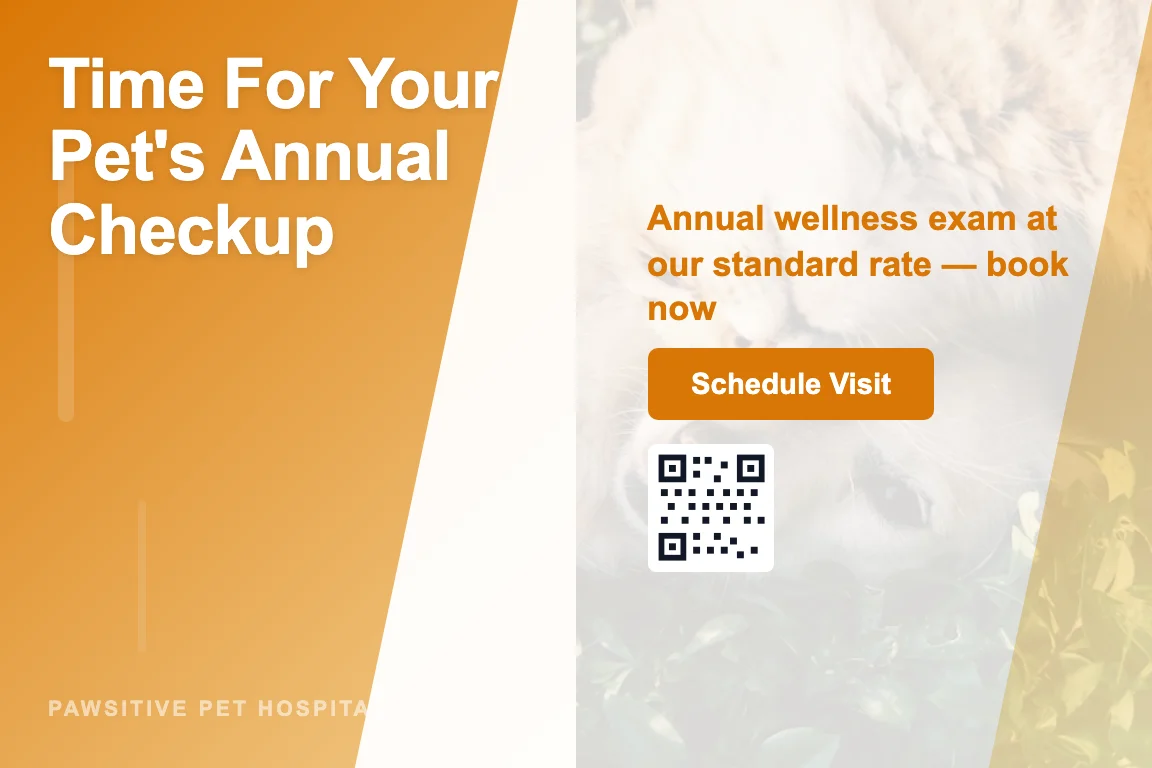
Front Detail
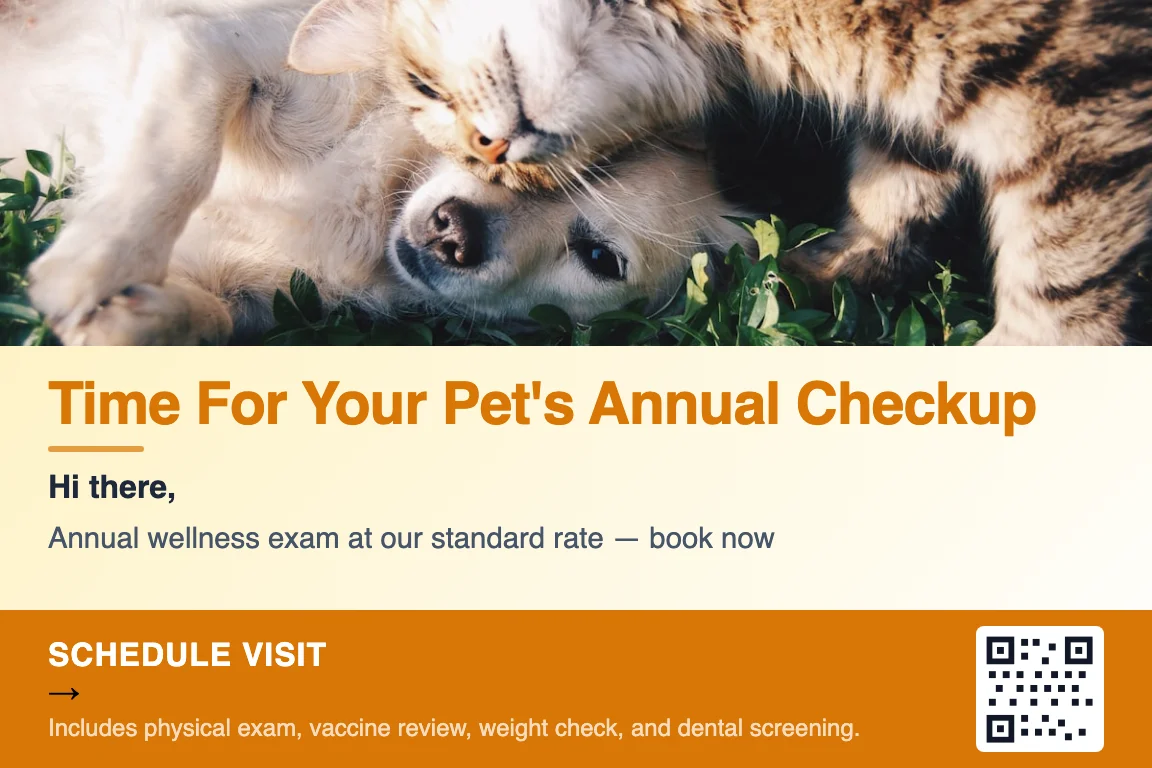
Back (Address Side)
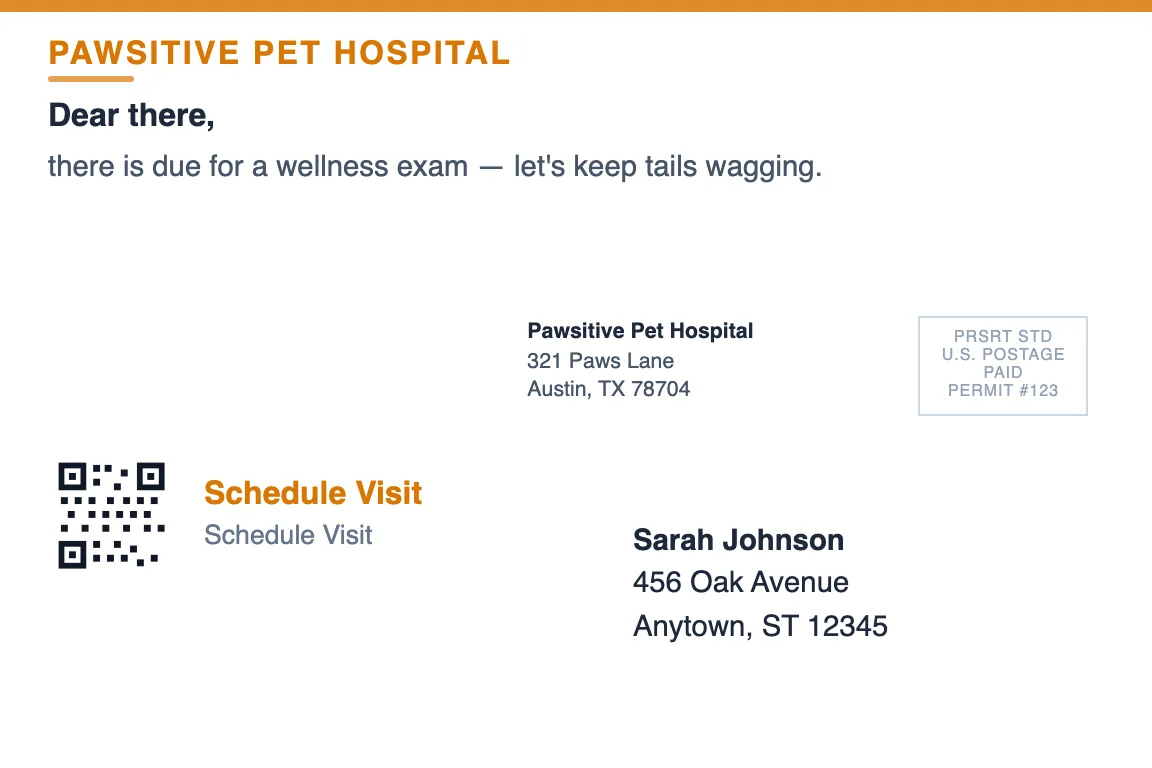
Available in 4×6, 6×9, and 6×11. All-in pricing includes printing and USPS First-Class postage.
In AVImark, Cornerstone, ezyVet, Covetrus Pulse, Vetspire, Shepherd — or any system — run a report for patients with no visit in 12+ months (or overdue vaccines past their due date) and export it as a CSV. PostKnock doesn't connect to your PMS; you export the file, then import it.
Drop in the export and the import wizard auto-maps owner name, address, phone, and last-visit columns. Segment overdue wellness vs. lapsed vaccines vs. unscheduled dental if you want a different offer per group.
Choose the wave sequence, set your vet offer, and design the postcard in the Design Studio. Add a QR code that points to your online scheduler so clients can self-book.
Cards print and ship via USPS First-Class automatically. A few days after delivery, every client who hasn't rebooked drops into the Call Queue. Non-responders advance to the next wave on their own.
Staff calls down the queue with the pre-loaded script and logs each outcome. QR scans are tracked so you can see which cards drove online bookings versus calls.
Say a clinic pulls 500 lapsed clients (no visit in 12+ months) and runs a 3-wave reactivation sequence with call follow-up. Here's the transparent math — the inputs are illustrative, not a guarantee:
Response and reactivation rates are industry-typical ranges, not PostKnock results. Per-client value depends on your fee schedule and case mix. Add a Pro subscription ($99/mo) on top of per-piece cost if you want the Call Queue and multi-wave sequencing.
Free to explore — you only pay when you're ready to send. Pay from your wallet per piece.
Single-wave postcard campaigns · Design Studio · QR tracking · From $1.05/piece
Everything in Free + Call Queue & multi-wave sequencing · From $0.79/piece
Per-piece pricing includes printing + USPS First-Class postage. Pro is $99/mo or $799/yr. No setup fees, no minimums, no contracts.
Your reactivation export only needs the owner's name, mailing address, contact details, and the pet's name. There's no need to upload medical records, lab results, or treatment notes — PostKnock prints and mails the postcard and queues the call, and the offer copy is yours to write. Always check your state veterinary board's advertising rules before you send. See how vets use PostKnock →
Most clinics treat a client as lapsed once a pet is overdue for its annual wellness visit — commonly 12+ months since the last exam — or once core vaccines are past their due date with no rebooked appointment. You set the cutoff when you pull the list from your practice management system; PostKnock just mails to whoever is on your CSV.
Vaccine reminders are usually emails or texts the owner may have already tuned out. A reactivation postcard physically arrives in the mailbox with a specific offer, and on Pro the client then drops into your Call Queue so the front desk follows up by phone. It's the postcard-plus-call one-two punch, not another notification.
Yes. AVImark, Cornerstone, ezyVet, Covetrus Pulse, Vetspire, Shepherd and most other systems let you run an inactive-patient or overdue-reminder report and export it as a CSV. Filter by last visit date or vaccine due date, then import the CSV into PostKnock — the wizard auto-maps owner name, address, phone, and last-visit columns. PostKnock does not integrate directly with your PMS; you export the file and import it.
One clear offer with a reason to act now works best: a discounted wellness exam, a "catch up on vaccines" bundle, a free first dose of heartworm or flea/tick prevention, or a February dental-cleaning offer. Long-lapsed clients (2+ years) tend to respond better to a higher-value "welcome back" offer than a generic "we miss you." Always check your state veterinary board's advertising rules — you write the offer copy, PostKnock prints and mails it.
Most clinics run 3 to 4 waves over several weeks, mixing postcards with one or two call attempts for non-responders. PostKnock supports multi-touch wave sequences of up to 5 waves; you control the timing and which waves are postcards versus calls. A single touch rarely rebooks — the follow-up is what closes it.
You can mail postcards on the Free plan with no calls at all. The built-in Call Queue — which puts each lapsed client in front of your front desk with a pre-loaded script after the card lands — is a Pro feature. For reactivation specifically, the call is usually what turns interest into a booked appointment, so most clinics use it.
Tie waves to natural seasonal hooks: February for Pet Dental Health Month, spring for heartworm-test and flea/tick prevention season, and back-to-school or year-end lulls when the schedule has room. You can also run an evergreen overdue-wellness sequence year-round — the seasonal angle just gives the second-wave postcard a fresh reason to call back.
Long-lapsed clients respond best to a specific, high-value offer — like a discounted "welcome back" wellness exam or a senior-pet panel — rather than a vague greeting. Pair it with a wave sequence and a follow-up call. Industry studies typically report direct-mail response in the low-single-digit-percent range on a house list, so expect a meaningful but modest share of a long-dormant list to come back.
You pay per piece from your wallet: from $1.05 per 4×6 card on the Free plan, dropping to $0.79 on Pro, with printing and USPS First-Class postage included. Pro is $99/mo (or $799/yr) and adds the Call Queue and multi-wave sequencing. No setup fees, no minimums, no contracts — you only pay for what you send.
Postcards that get attention. Callbacks that close the deal. Start free — you only pay when you send.
Start Free — No Credit Card1 Response and reactivation figures are industry-typical ranges, not PostKnock results. House-list direct-mail response is commonly reported in the low-single-digit-to-high-single-digit percent range — e.g. ANA (Association of National Advertisers), Response Rate Report. Your results depend on your list, offer, and follow-up.
2 PostKnock supports three postcard sizes (4×6, 6×9, 6×11) and multi-touch wave sequences of up to 5 waves.