Every empty exam slot is unsold frames, lenses, and contacts. PostKnock mails acquisition postcards to the households around your practice — then puts callers in your front desk's call queue so a real person books the comprehensive exam.
Start Free — No Credit CardFree plan from $1.05/card · Pro from $0.79/card · No contracts
Eye care buys on routine and proximity. People put off the exam until something forces it, then book whoever is closest, in-network, and top of mind. New-patient postcards plus a call are how you get in front of those households before the chain optical or the online glasses site does.
A household that just moved into your area needs a new eye doctor and hasn't picked one yet. A postcard that lands in the first weeks gets you considered before they default to a big-box optical.
National retail optical chains outspend you on ads. Saturation mail to the streets right around your office is one channel where a local independent can win on convenience and being a real neighbor.
Patients buy frames and contacts online and skip the exam. A timed offer for a comprehensive eye exam — the thing only you can do — gives them a reason to come in and see your optical.
Back-to-school is when parents finally book the kids' vision checks — and often their own. One acquisition card to a family address can fill multiple chairs in a single visit.
Plenty of households have a VSP, EyeMed, or employer vision benefit they forget to use. A "your vision benefits may cover this" angle turns a routine exam into a use-it-or-lose-it nudge.
A new patient isn't one exam — it's annual exams, glasses, contacts, and dry-eye or medical eye care for years. The acquisition cost is small against the lifetime optical value if the patient sticks.
Acquisition mail makes the phone ring — but only if someone catches the people who scanned the QR or thought "I should call." A new-patient postcard lands in the mailbox; then your front desk follows up on the warm ones from a single queue. That one-two punch is what PostKnock is built for.
A multi-touch wave sequence built for acquiring new optical patients. Postcards mail on schedule; people who call or scan flow into the Call Queue, and the same area gets a second touch automatically.
An introduction card to new movers and nearby households. One offer (a comprehensive exam at a clear price, a free frames credit with an exam, or "we accept your vision plan"). QR code to online booking.
For anyone who called in or scanned but didn't finish booking, the patient appears in your Call Queue with a pre-loaded script: "Thanks for your interest — we have a couple of exam openings this week, would mornings or afternoons be better?" Staff logs the outcome in one click.
A different design to the same neighborhood that hasn't booked. Lead with the optical (designer frames, kids' eyewear), a seasonal hook (back-to-school, year-end benefits), or a limited-time exam offer with a real deadline.
A last call attempt for warm leads, paired with a low-key reminder card to the area. Then the segment rests before you mail the neighborhood again next cycle.
Wave count, timing, and call cadence are yours to set — PostKnock supports up to 5 waves. The phone-call waves use the built-in Call Queue, a Pro feature.
Acquisition mail isn't about your existing patient list — it's about households that aren't patients yet. You can run either approach, or both, through PostKnock.
Mail every address on the carrier routes around your office — no list to buy, no names needed. Best for a brand-new location, a grand opening, or just owning the few square miles patients will actually drive from.
Source a prospect or new-mover list from your own data provider, then import it as a CSV. The import wizard auto-maps name, address, and phone columns. PostKnock doesn't sell or broker lists — you bring the file, we print and mail it.
PostKnock supports EDDM-style saturation mailing and CSV import of a list you supply. We do not provide or resell mailing lists.
An acquisition card needs a reason to book now. These are common, eye-care-appropriate angles you can drop into the postcard offer field — pick what fits your optical and your state's optometric advertising rules.
Offers are illustrative. You set the offer copy; PostKnock prints and mails the card and queues the follow-up call.
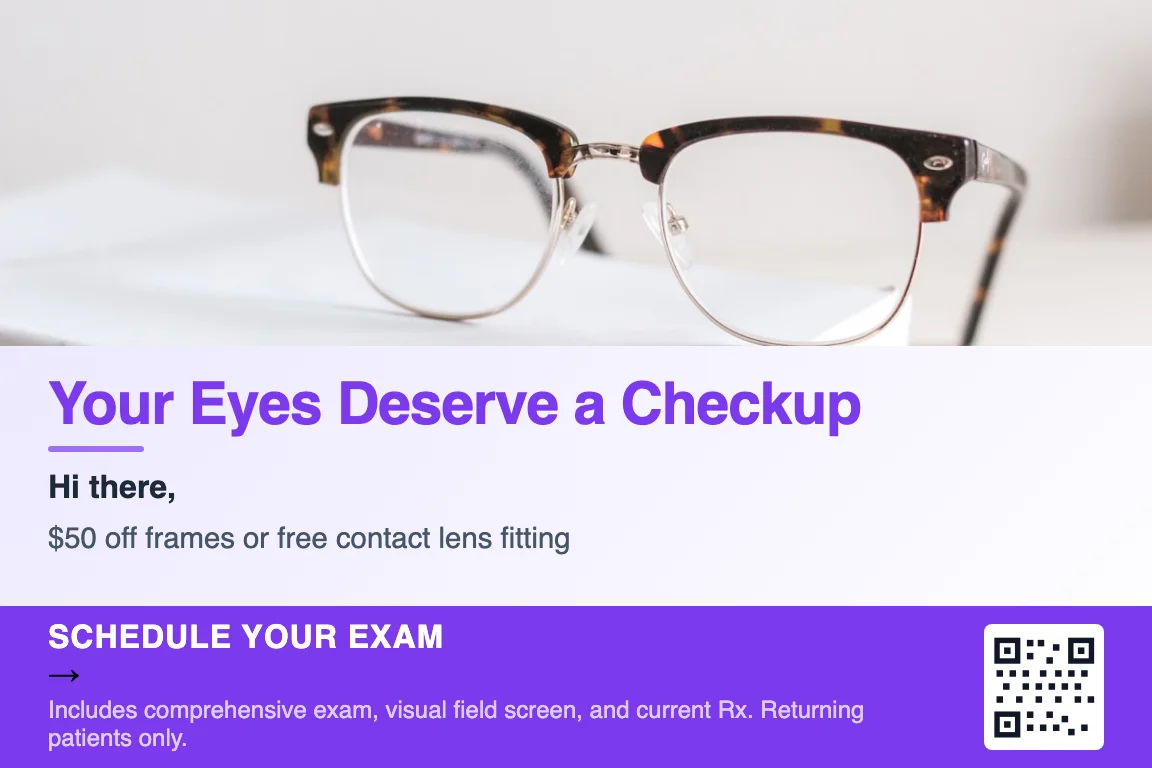
Design it in the in-app Design Studio in your practice's colors. Four starting styles — same offer and same call follow-up behind each, so pick the look that fits your brand.
Bold
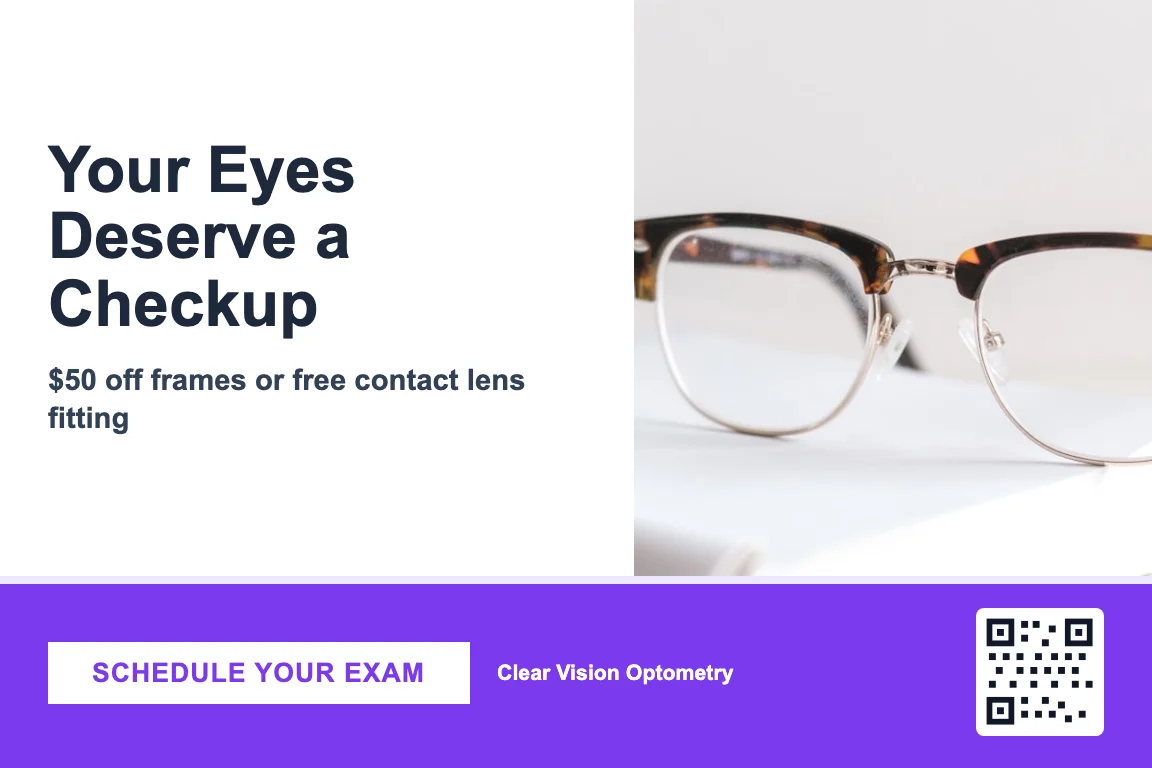
Photo
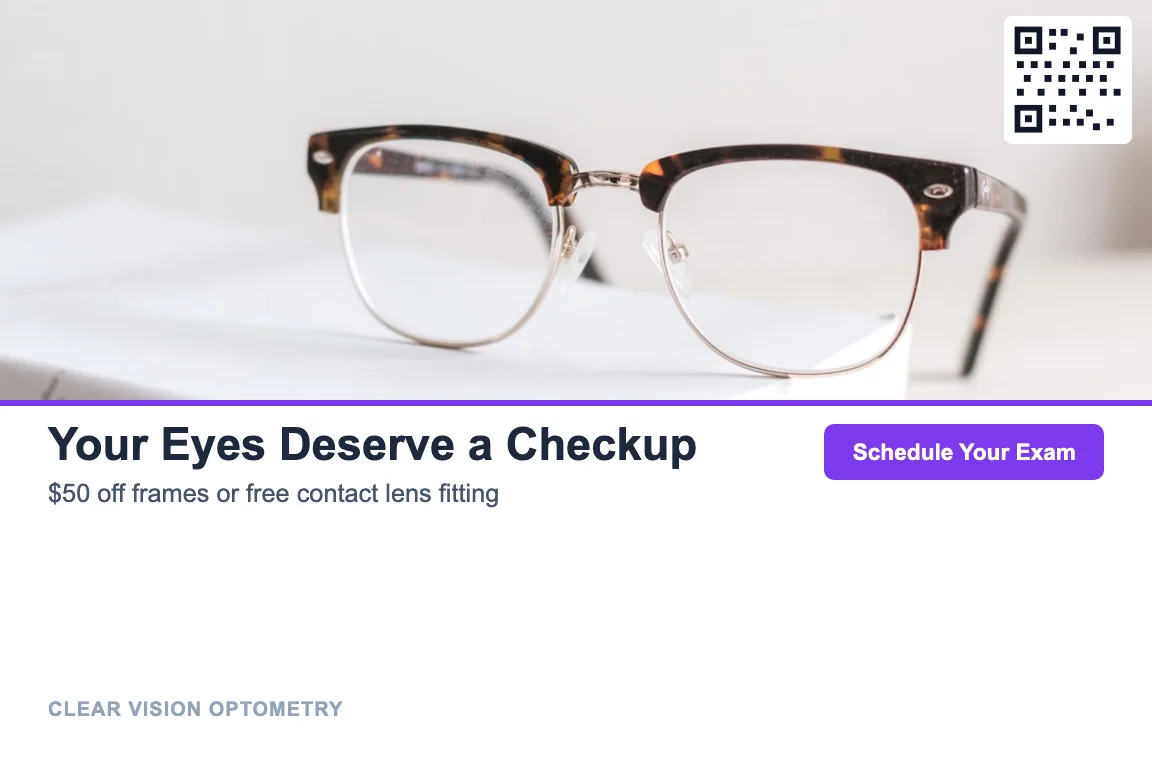
Minimal
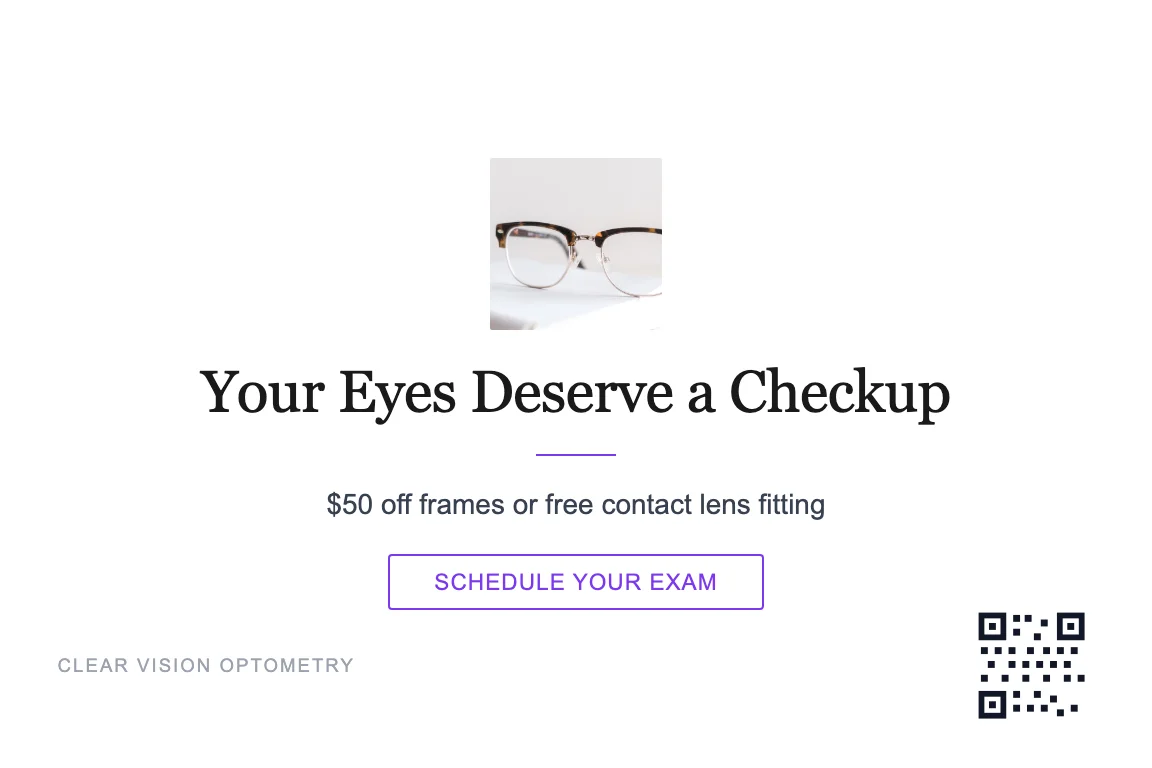
Gradient
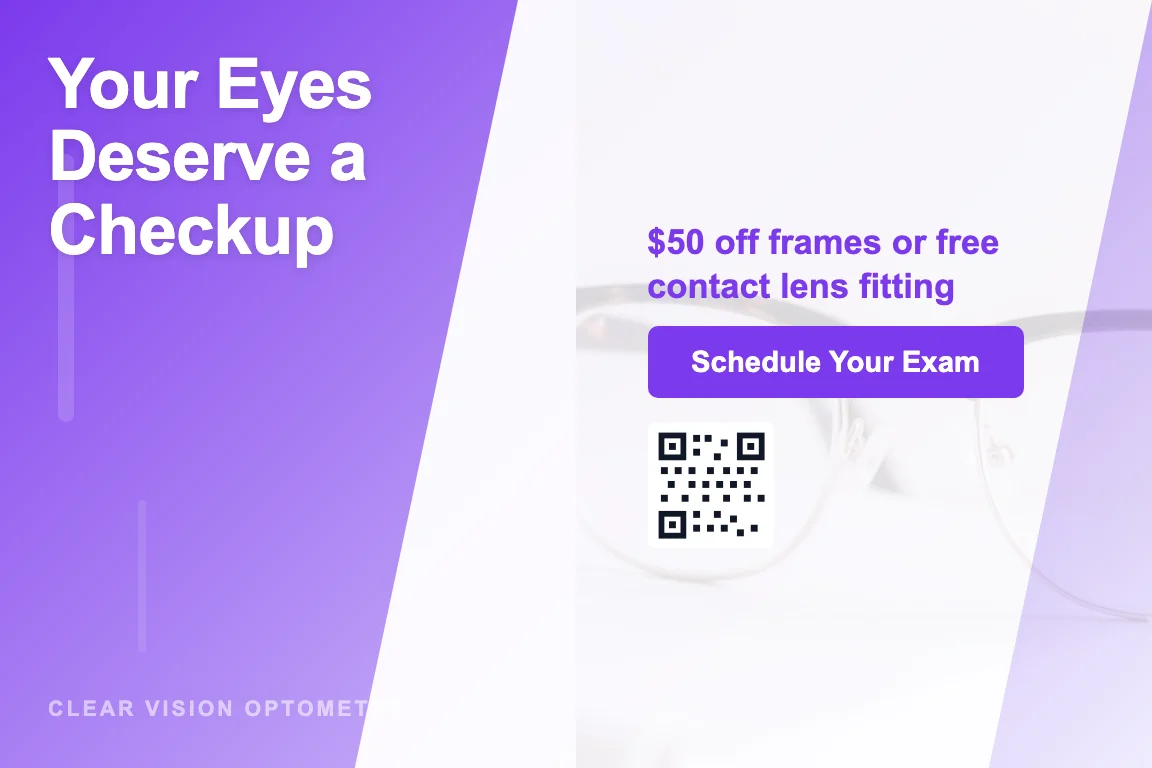
Front Detail
Back (Address Side)
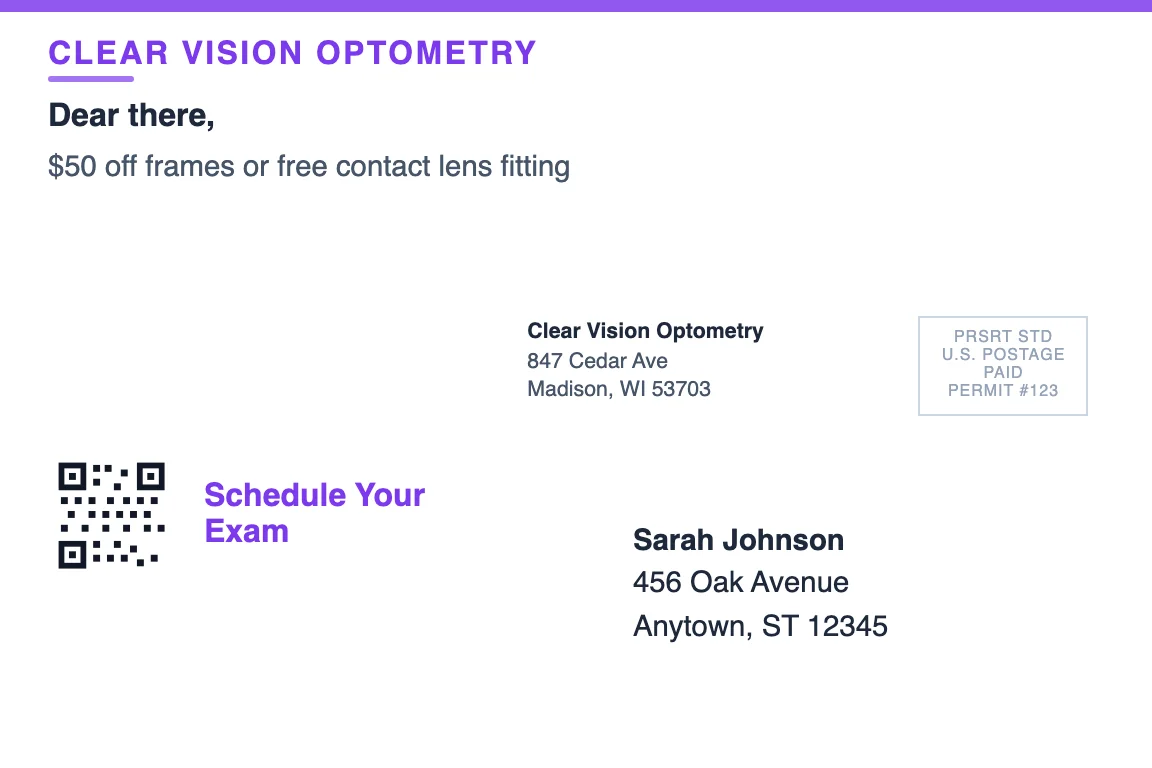
Available in 4×6, 6×9, and 6×11. All-in pricing includes printing and USPS First-Class postage.
Choose EDDM-style saturation of the carrier routes around your office (no list needed), or import a new-mover / prospect list as a CSV that you sourced yourself. PostKnock doesn't connect to your practice management system or sell lists — for any list you bring, you export the file, then import it.
If you're mailing a list, drop in the file and the import wizard auto-maps name, address, and phone columns. Include phone numbers if you want non-bookers to flow into the Call Queue for front-desk follow-up.
Choose the wave sequence, set your exam or optical offer, and design the postcard in the Design Studio. Add a QR code that points to your online scheduler so prospects can self-book.
Cards print and ship via USPS First-Class automatically. A few days after delivery, callers and scanners who didn't finish booking drop into the Call Queue. The same area advances to the next wave on its own.
Staff calls down the queue with the pre-loaded script and logs each outcome. QR scans are tracked so you can see which neighborhoods and designs drove online bookings versus calls.
Say a practice mails 2,000 nearby households a new-patient offer across a 2-wave sequence with call follow-up. Here's the transparent math — the inputs are illustrative, not a guarantee:
Response rates to a cold/prospect audience run lower than to a house list. These are industry-typical ranges, not PostKnock results. Per-patient value depends on your fees, optical mix, and retention. Add a Pro subscription ($99/mo) on top of per-piece cost if you want the Call Queue and multi-wave sequencing.
Free to explore — you only pay when you're ready to send. Pay from your wallet per piece.
Single-wave postcard campaigns · Design Studio · QR tracking · From $1.05/piece
Everything in Free + Call Queue & multi-wave sequencing · From $0.79/piece
Per-piece pricing includes printing + USPS First-Class postage. Pro is $99/mo or $799/yr. No setup fees, no minimums, no contracts.
New-patient acquisition mail goes to prospects, not your patients, so PHI usually isn't in play at all. PostKnock keeps PHI off the postcard by default — we don't sign Business Associate Agreements and we don't ask you to upload PHI. Any list you import only needs name, address, and contact details. Read our healthcare compliance approach →
Two ways. EDDM-style saturation mailing lets you mail every household on the carrier routes around your office with no list at all — ideal for proximity and new movers. Or you source a new-mover / prospect list from your own data provider and import it as a CSV. PostKnock supports both; it does not sell or broker mailing lists, so for a targeted list you bring the file.
Recall postcards go to your existing patients who are due for an exam. New-patient acquisition postcards go to households that aren't your patients yet — new movers and nearby neighbors — to win them away from the chain optical and online glasses sellers. Many practices run both: recall to fill chairs with known patients, acquisition to grow the list.
One clear offer with a reason to act now works best: a clearly-priced new-patient comprehensive exam, an exam fee credited toward glasses, a frames credit with a complete pair, or "we accept your vision plan." Lead with the exam — the thing online sellers can't do — and let the optical follow. Always check your state optometry board's advertising rules; you write the offer copy, PostKnock prints and mails it.
Yes, if your imported list includes phone numbers. The built-in Call Queue — a Pro feature — puts each warm prospect (someone who called in or scanned the QR but didn't finish booking) in front of your front desk with a pre-loaded script after the card lands. Staff works the queue and logs each outcome in one click. For pure EDDM saturation mail you won't have phone numbers, so that audience is postcard-and-QR only.
Most practices run 2 to 4 waves to the same neighborhood over several weeks, sometimes mixing in call follow-up for warm leads. PostKnock supports multi-touch wave sequences of up to 5 waves; you control the timing and which waves are postcards versus calls. A single drop rarely fills the schedule — repetition to the same area is what builds recognition.
Back-to-school (mid-summer into early fall) is strong for children's and family exams, and Q4 works well for "use your vision benefits before they reset." New-mover mailings can run year-round since people relocate every month. You can also time a saturation drop to a grand opening or a new associate doctor joining the practice.
Plan conservatively. Direct mail to a cold or prospect audience typically responds at a lower rate than mail to your own house list — industry studies generally report low-single-digit-percent ranges, and a fresh prospect audience often lands at the low end. Your offer, the design, repeating to the same area, and follow-up calls all move the number. Use the QR scans and call outcomes PostKnock tracks to see what's actually working for you.
You pay per piece from your wallet: from $1.05 per 4×6 card on the Free plan, dropping to $0.79 on Pro, with printing and USPS First-Class postage included. Pro is $99/mo (or $799/yr) and adds the Call Queue and multi-wave sequencing. No setup fees, no minimums, no contracts — you only pay for what you send.
No. PostKnock does not integrate with, sync with, or connect to any EHR, practice management, or optical system — and it doesn't send email or use AI. If you want to mail a list you already have, you export a CSV from your system or data provider and import it; the wizard auto-maps your columns. For new-patient acquisition specifically, many practices skip lists entirely and use EDDM-style saturation of the area around the office.
Postcards that get attention. Callbacks that close the deal. Start free — you only pay when you send.
Start Free — No Credit Card1 Response figures are industry-typical ranges, not PostKnock results. Direct-mail response is commonly reported in the low-single-digit percent range, with prospect/cold lists typically lower than house lists — e.g. ANA (Association of National Advertisers), Response Rate Report. Your results depend on your audience, offer, design, and follow-up.
2 PostKnock supports three postcard sizes (4×6, 6×9, 6×11) and multi-touch wave sequences of up to 5 waves.