For Veterinary Clinics

New-Mover Postcards for
Veterinary Clinics

A family that just moved to town is picking a new vet right now — usually in their first few weeks. PostKnock mails a welcome postcard to recent movers near your clinic, then drops each household into your front desk's call queue so a real person invites them in.

Start Free — No Credit Card

Free plan from $1.05/card · Pro from $0.79/card · No contracts

4–9%
Estimated direct-mail response
range to a targeted list1
First
weeks
When most movers choose
their new local vet2
<30 min
Typical sign-up to
first campaign launched

Why New Movers Matter So Much to a Vet Clinic

A relocated pet owner is making dozens of "who do I use here now?" decisions at once — and the vet is one of the urgent ones. Whoever reaches them first, with a warm welcome and an easy way to book, usually wins a client for the life of the pet.

🚚

They have no vet here yet

Their old clinic is in another town. Until they pick a new one, a single sick pet or a lost rabies certificate sends them Googling — or driving to the nearest sign they remember.

🐶

Records need to transfer

Vaccines, flea/tick and heartworm history, prescriptions, chronic conditions — all of it has to move to a new clinic. A welcome card that mentions "we'll request your records for you" removes the biggest hassle.

The window is short

Decisions about local providers cluster in the first weeks after a move. Get the postcard in their hands while they're still choosing, not after a competitor's already booked the first exam.

🏠

They don't know the area

A new mover doesn't know which clinic does emergencies, which takes their pet insurance, or who's a quick drive away. A clear "you're two minutes from us" map cue answers the question they're asking.

💊

Prescriptions are about to run out

Heartworm, flea/tick, and chronic-condition meds need refills — and most pharmacies want a local vet relationship first. That deadline is a natural reason to book a first exam now.

🐾

A new pet often comes with a new home

Moves and first-time adoptions go together. New-mover mailing reaches both the relocated pet owner and the new household that's about to bring home a puppy or kitten and needs a first wellness visit.

A Welcome Card Gets You Noticed. The Call Gets the Exam Booked.

A new mover doesn't have your number saved and won't search for you. A welcome postcard physically lands in the mailbox while they're still choosing — then, a few days later, a friendly voice from your front desk offers to set up their first wellness visit. That one-two punch is what PostKnock is built for.

What loses the new client

  • × Waiting for movers to find you online (they pick the first vet who reaches out)
  • × A generic "welcome to the neighborhood" card with no offer or pet angle
  • × Mailing the whole ZIP every month instead of just the households that just moved
  • × A card that lands but nobody ever follows up by phone

What books the first visit

  • ✓ A warm, pet-specific welcome card with one clear first-visit offer
  • ✓ A QR code that drops straight onto your online scheduler
  • ✓ A front-desk call 3–5 days after the card lands, with a pre-loaded script
  • ✓ A second wave for everyone who hasn't booked yet

The Veterinary New-Mover Playbook

A multi-touch wave sequence built for pet owners who just moved into your area. Postcards mail on schedule; households that haven't booked flow into the Call Queue and roll forward to the next wave automatically.

W1

Wave 1 — "Welcome to the neighborhood" postcard

A friendly intro to the clinic with one first-visit offer (a complimentary new-patient exam, a wellness-visit discount, or "first nail trim on us"). QR code to online booking and a line about how close you are.

W2

Wave 2 — Front-desk welcome call (Pro Call Queue)

3–5 days after the card lands, the household appears in your Call Queue with a pre-loaded script: "Welcome to the area — we'd love to meet your pet and get your records transferred for you. We have openings this week." Staff logs the outcome in one click.

W3

Wave 3 — Second postcard, new angle

A different design for everyone who hasn't booked. Lead with the practical hooks: "Don't let heartworm or flea/tick prevention lapse," "we'll request your pet's records," or a limited-time first-visit offer with a real deadline.

W4

Wave 4 — Final call + "we're here when you need us" card

Last call attempt for non-responders, paired with a low-key reminder card carrying your address, hours, and emergency info — so you're top of mind the moment something comes up. Then the segment rests.

Wave count, timing, and call cadence are yours to set — PostKnock supports up to 5 waves. The phone-call waves use the built-in Call Queue, a Pro feature.

How You Reach the People Who Just Moved In

PostKnock doesn't sell you a new-mover list — you bring the addresses. There are two honest, common ways to do it. Either way, you import a CSV and PostKnock prints, mails, and queues the follow-up.

Bring a new-mover address list

Many clinics buy a monthly "new movers" list (households that recently relocated into chosen ZIP codes) from a list provider, then export it as a CSV. Import that file into PostKnock — the wizard auto-maps name, address, and any phone columns — and set the welcome sequence to run on it each month.

PostKnock doesn't broker lists or integrate with list vendors; you export the file and import it.

Saturate the new developments near you

No mover list? Use EDDM-style saturation mailing to blanket the carrier routes around a new subdivision or apartment complex where pet-owning families are settling in. It's address-free by route — a simple way to greet a whole new neighborhood at once.

EDDM is route-based, not name-personalized; pair it with the welcome offer and QR code so movers can self-book.

Either approach runs on the same wave sequence and the same per-piece pricing. A purchased mover list lets you add a follow-up call; EDDM routes are mailed without per-recipient names or calls.

Welcome Offers That Fit a Veterinary Clinic

A new-mover card needs a friendly reason to call you first. These are common, client-appropriate angles you can drop into the postcard offer field — pick what fits your services and your state's veterinary advertising rules.

For the first wellness visit

  • • Complimentary new-patient exam for your pet
  • • "Welcome to the area" discount on the first wellness visit
  • • Free nail trim or wellness add-on with a booked exam

For the move itself

  • • "We'll transfer your pet's records for you"
  • • New-client microchip-registration update help
  • • Refill bridge for heartworm / flea & tick prevention

For new pets & families

  • • New-puppy / new-kitten first-visit package
  • • Vaccination-series welcome offer
  • • Multi-pet household discount on the first visit

For peace of mind

  • • Clear hours + 24/7 emergency / after-hours info
  • • "Two minutes from your new home" location cue
  • • A wellness-plan intro for ongoing preventive care

Offers are illustrative. You set the offer copy; PostKnock prints and mails the card and queues the follow-up call.

When New-Mover Mailing Pays Off Most

Movers arrive all year, but the volume isn't flat. Lean in when relocations peak in your area — and tie the welcome offer to what pets need that season.

Late spring & summer

The heaviest moving season — families relocate around the school calendar. It's also peak flea, tick, and heartworm season, so "don't let prevention lapse after your move" is a timely welcome hook.

End of summer / back-to-school

A second relocation bump as leases turn over before the school year. New routines are a good moment to nudge a first wellness exam and get records transferred before fall.

Year-round to new developments

When a subdivision or apartment community opens nearby, EDDM-style saturation to those carrier routes greets a whole wave of pet-owning households as they settle — whatever the season.

Run new-mover mailing as a standing monthly campaign so you greet each batch of movers while their first-vet decision is still open.

What Your Welcome Card Looks Like

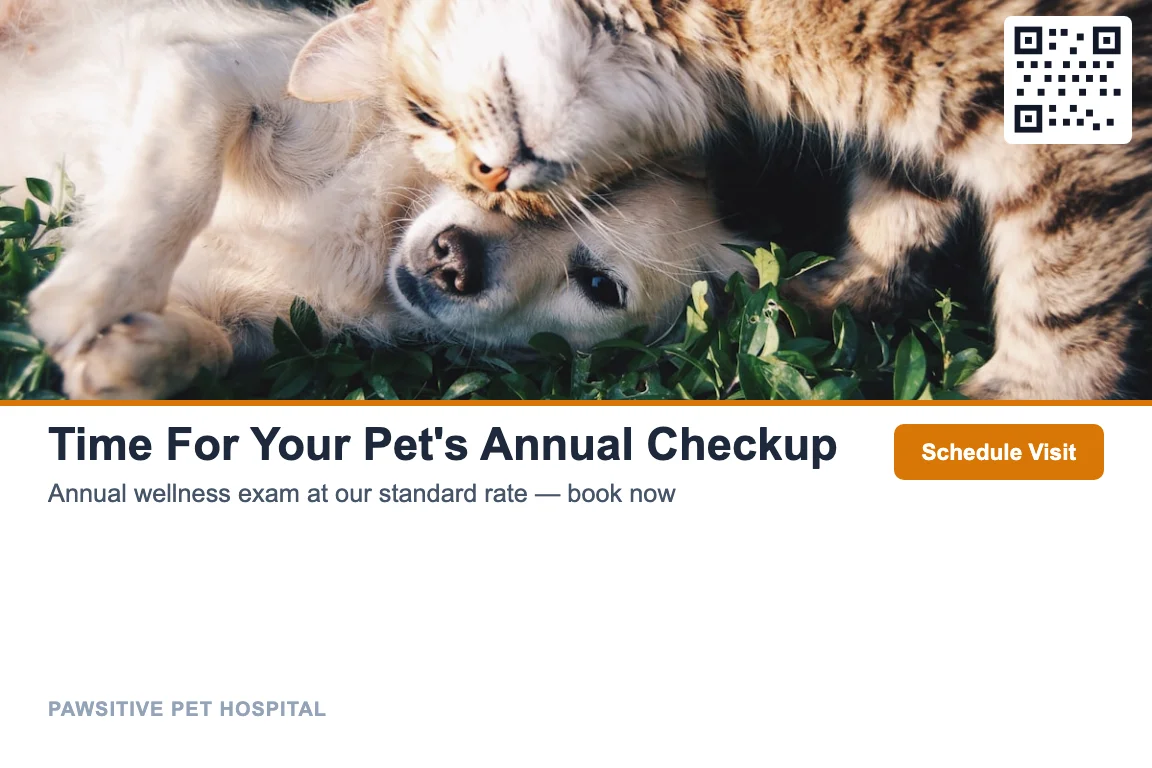
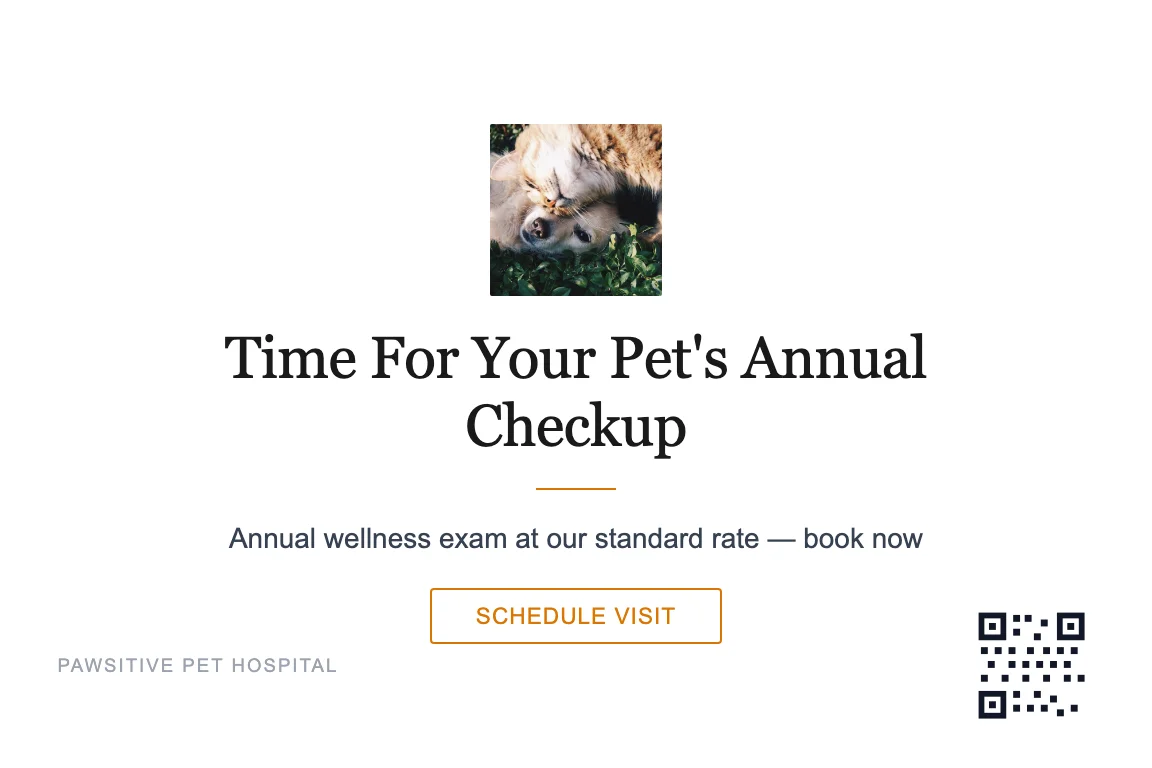
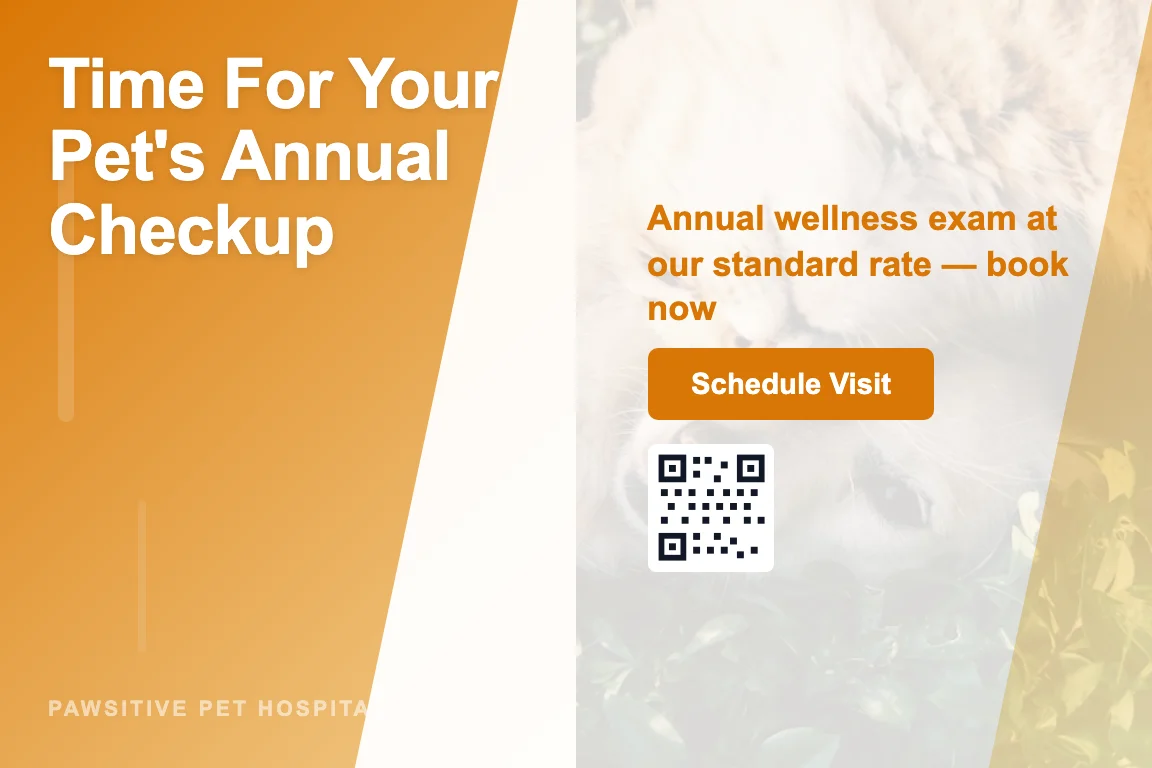
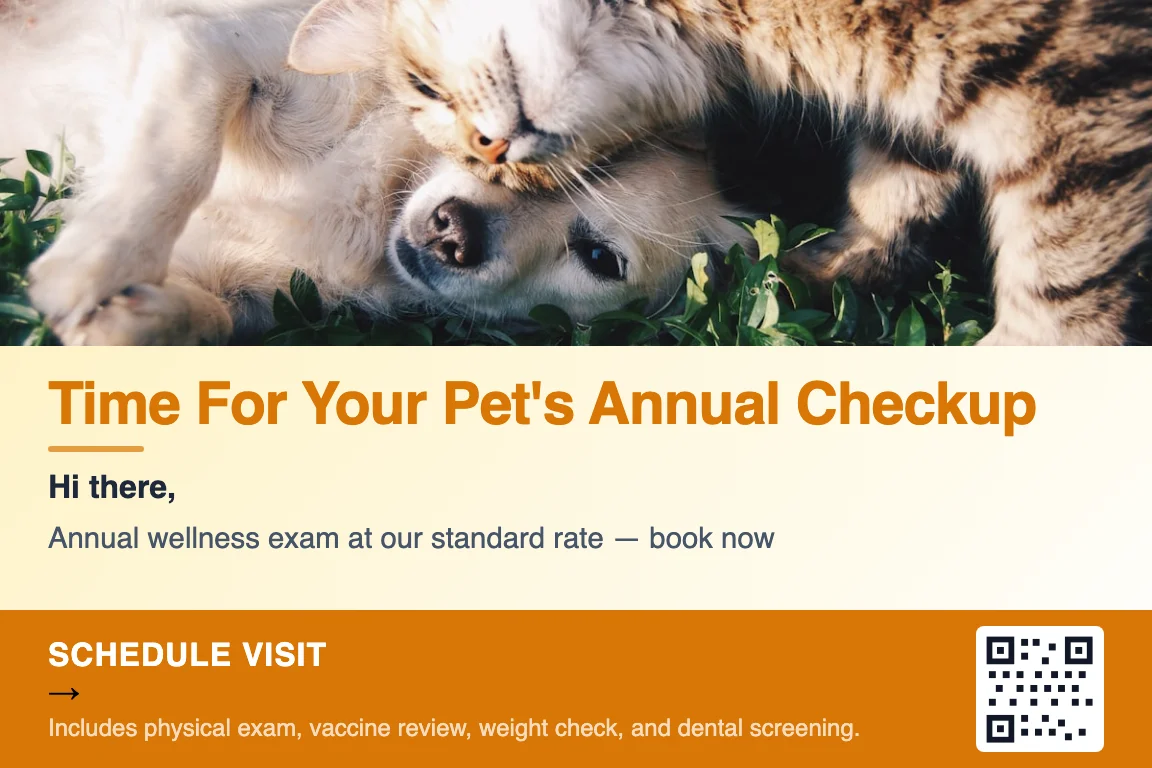
Design it in the in-app Design Studio in your clinic's colors. Four starting styles — same welcome offer and same call follow-up behind each, so pick the look that fits your brand.

Bold
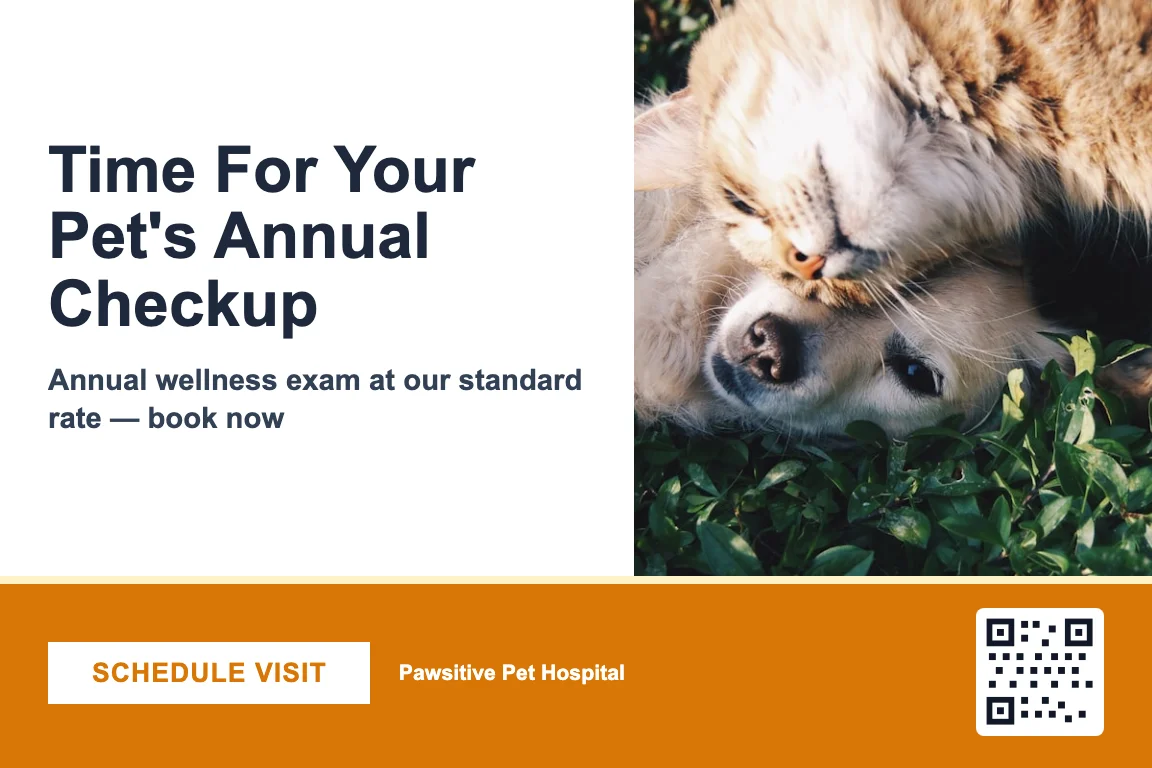
Bold veterinary new-mover welcome postcard design front

Photo

Photo-led veterinary new-mover welcome postcard design front

Minimal

Minimal veterinary new-mover welcome postcard design front

Gradient

Gradient veterinary new-mover welcome postcard design front

Front Detail

Detailed view of a veterinary welcome postcard front

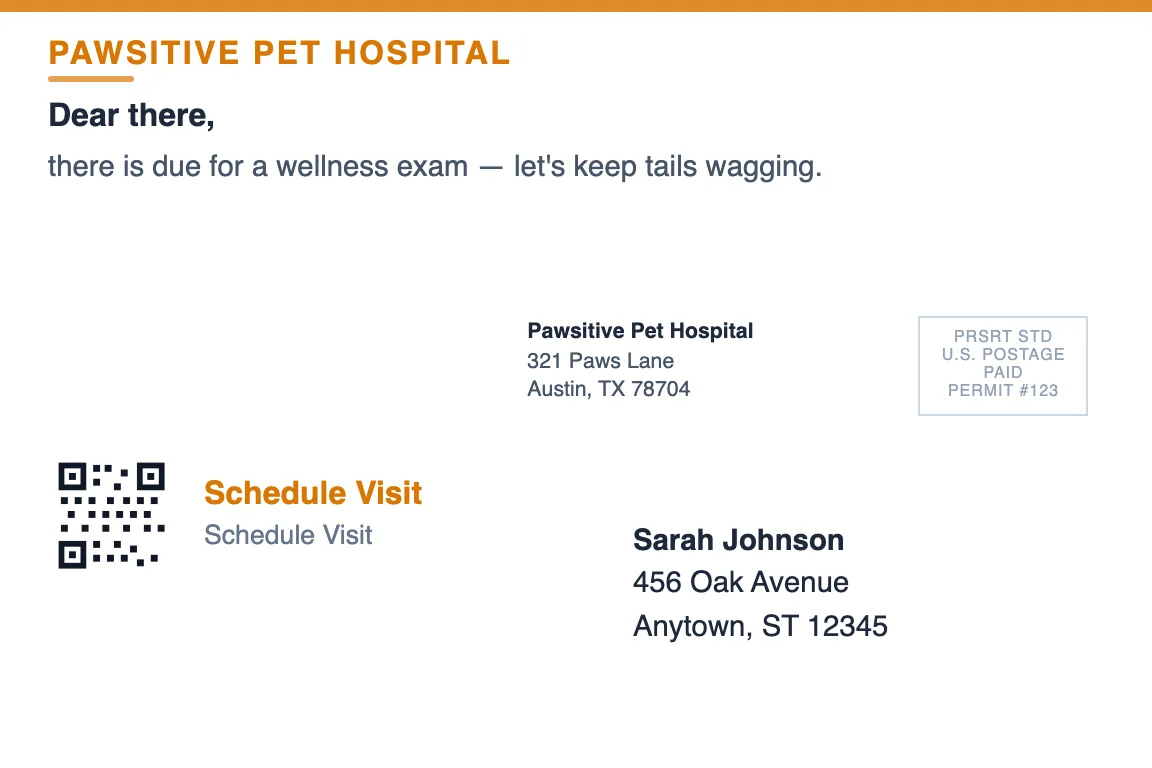
Back (Address Side)

Veterinary postcard back showing return address and recipient zone

Available in 4×6, 6×9, and 6×11. All-in pricing includes printing and USPS First-Class postage.

How PostKnock Runs It, End to End

1

Bring your new-mover addresses

Export your purchased new-mover list as a CSV, or pick the carrier routes around new developments for EDDM-style saturation. PostKnock doesn't broker lists or connect to a list vendor — you bring the addresses (or the routes) and import them.

2

Import the CSV — the wizard maps your columns

Drop in the export and the import wizard auto-maps name, address, and any phone columns. Set it up as a standing monthly campaign so each fresh batch of movers flows into the welcome sequence on its own.

3

Pick the new-mover playbook & your card

Choose the wave sequence, set your first-visit offer, and design the welcome postcard in the Design Studio. Add a QR code that points to your online scheduler so movers can self-book.

4

Launch — postcards mail, the queue fills

Cards print and ship via USPS First-Class automatically. A few days after delivery, every household that hasn't booked drops into the Call Queue (for named-list campaigns). Non-responders advance to the next wave on their own.

5

Front desk works the queue & you track scans

Staff calls down the queue with the pre-loaded welcome script and logs each outcome. QR scans are tracked so you can see which cards drove online bookings versus calls.

A Worked Example (Your Numbers Will Vary)

Say a clinic mails to 400 new-mover households a month and runs a 2-wave welcome sequence with a call follow-up. Here's the transparent math — the inputs are illustrative, not a guarantee:

  • 400 households × 2 waves = 800 cards × $0.79/card (Pro 4×6) = ~$632 in postage + print
  • At an estimated 2–5% response rate1 → roughly 8–20 new clients booked
  • If a new client is worth, say, $300–$600/year in wellness, prevention, and visits — and stays for the life of the pet…
  • …that first-year value alone can outrun the spend, before you count years 2, 3, and beyond. Plug in your own per-client value to see yours.

Response rates are industry-typical ranges, not PostKnock results. Per-client value depends on your services and case mix. Add a Pro subscription ($99/mo) on top of per-piece cost if you want the Call Queue and multi-wave sequencing.

Simple, Transparent Pricing

Free to explore — you only pay when you're ready to send. Pay from your wallet per piece.

Free

$0/forever

Single-wave postcard campaigns · Design Studio · QR tracking · From $1.05/piece

Most Popular

Pro

$99/mo

Everything in Free + Call Queue & multi-wave sequencing · From $0.79/piece

Per-piece pricing includes printing + USPS First-Class postage. Pro is $99/mo or $799/yr. No setup fees, no minimums, no contracts.

Frequently Asked Questions

Where do I get the list of people who just moved in?

You bring the addresses — PostKnock doesn't sell or broker new-mover lists. Most clinics buy a monthly new-mover list (recently relocated households in chosen ZIP codes) from a list provider and export it as a CSV, then import it into PostKnock. If you'd rather not buy a list, you can use EDDM-style saturation mailing to blanket the carrier routes around new developments near your clinic.

Does PostKnock connect to my practice software or a list vendor?

No. PostKnock does not integrate with veterinary practice management systems (like AVImark, Cornerstone, ezyVet, or Provet Cloud) or with list vendors. The supported flow is simple: export a CSV from wherever your addresses live — a purchased mover list or your own records — and import it into PostKnock. The import wizard auto-maps the name, address, and phone columns for you.

What offer should a veterinary new-mover postcard make?

One warm, clear offer with a reason to come in now works best: a complimentary new-patient exam, a welcome discount on the first wellness visit, or a practical hook like "we'll transfer your pet's records for you." New movers also respond to peace-of-mind cues — your hours, how close you are, and emergency info. Always check your state veterinary board's advertising rules; you write the offer copy, PostKnock prints and mails it.

How fast do I need to reach a new mover?

Quickly. Decisions about local providers tend to cluster in the first weeks after a move, and whoever reaches a pet owner first — with a warm welcome and an easy way to book — usually wins the client. Running new-mover mailing as a standing monthly campaign means each fresh batch of movers gets a welcome card while their first-vet decision is still open, instead of after a competitor has booked them.

Can I add a phone call, or is it postcards only?

You can mail postcards on the Free plan with no calls at all. The built-in Call Queue — which puts each new-mover household in front of your front desk with a pre-loaded welcome script after the card lands — is a Pro feature, and it works for named-list campaigns. EDDM-style saturation routes are mailed without per-recipient names, so those run postcard-only. For a purchased mover list, the welcome call is usually what turns a curious mover into a booked first exam.

What's the difference between a mover list and EDDM saturation?

A purchased mover list is name-and-address specific — you mail the actual households that recently relocated, and you can add a follow-up call because you know who they are. EDDM-style saturation mails by carrier route instead, blanketing every address on the routes you pick (great for new subdivisions or apartment communities) but without per-recipient names, so it's postcard-only. Many clinics use a mover list as the core and add EDDM when a new development opens nearby.

How many waves should a new-mover campaign have?

Most clinics run 2 to 4 waves over a few weeks: a welcome card, a follow-up call for non-responders, and a second card with a new angle. PostKnock supports multi-touch wave sequences of up to 5 waves; you control the timing and which waves are postcards versus calls. A single touch rarely books the first exam — the follow-up is what closes it.

What does a new-mover campaign cost?

You pay per piece from your wallet: from $1.05 per 4×6 card on the Free plan, dropping to $0.79 on Pro, with printing and USPS First-Class postage included. Pro is $99/mo (or $799/yr) and adds the Call Queue and multi-wave sequencing. No setup fees, no minimums, no contracts — you only pay for what you send. (A purchased new-mover list, if you use one, is bought separately from your list provider.)

Keep exploring

Greet the New Pet Owners Down the Street

Postcards that get attention. Callbacks that close the deal. Start free — you only pay when you send.

Start Free — No Credit Card

1 Response figures are industry-typical ranges, not PostKnock results. Direct-mail response to a targeted list is commonly reported in the low-single-digit-to-high-single-digit percent range — e.g. ANA (Association of National Advertisers), Response Rate Report. Your results depend on your list, offer, timing, and follow-up.

2 The "first weeks" framing reflects the general direct-marketing observation that newly relocated households make local-provider decisions soon after moving. Treat it as a directional rule of thumb, not a precise statistic. PostKnock supports three postcard sizes (4×6, 6×9, 6×11) and multi-touch wave sequences of up to 5 waves.