Announce a new location to the whole neighborhood, then follow up with a phone call. PostKnock pairs a saturation mailing with a working call list — using pre-built playbooks for 50+ industries.
Start Free — No Credit CardA grand opening postcard is a physical mail piece sent to the homes and businesses around your new location — with one job: get first-time customers in the door before and during launch week. It pairs the news ("we're open") with a specific reason to visit now (a launch offer, an opening-week deadline, a "first 50 customers" hook).
Any business opening a new location, relocating, rebranding, or launching a new service line — a clinic, a gym, a salon, a restaurant, a shop. If you can pick the streets you want to reach, you can announce to them.
A new business has no email list and no existing customers yet — so you can't email your way to a launch. A postcard reaches the whole neighborhood directly, with the message visible the moment it lands. It's the one channel that works when nobody knows you exist.
A grand opening is the one moment you have zero first-party data — no email list, no followers, no past customers. Mail is the channel that reaches strangers in your trade area, and a phone call to anyone who responds turns curiosity into a first booking.
Industry studies typically report direct-mail response rates to a cold, prospecting audience in the low single digits (often cited around 1–5%),1 usually lower than mailing to an existing customer list, and varying widely by offer, list quality, and follow-up. Treat any number as an estimate, not a promise — your offer and trade area drive the outcome.
Postcards that get attention. Callbacks that close the deal. Here's the whole launch loop — four steps, no agency.
Choose a pre-built multi-touch wave sequence for your industry (50+ verticals). Wave timing, message direction, UTMs, and call scripts come pre-configured — up to 5 waves, so you can run a "save the date," an "open now," and a "last chance" touch. For a launch you typically mail an EDDM-style saturation list of nearby addresses; if you already have a prospect or interest list, you can import it by exporting a CSV from your existing system — the import wizard auto-maps the name, address, and phone columns.
Start from an industry template and edit it in the in-app Design Studio — your logo, your launch offer, your colors, your address and opening date. Choose 4×6, 6×9, or 6×11. Add a QR code that links to your booking page, menu, or grand-opening landing page.
Postcards print and ship via USPS First-Class automatically — printing and postage are included in the per-piece price. Run an EDDM-style saturation mailing to the streets around your new location, or send to a targeted list you already have. You pay from your wallet, per piece, only for what you send.
When you're working from a list with phone numbers, the built-in Call Queue (a Pro feature) fills up so your front desk can call interested prospects with the wave's pre-loaded launch script and log each outcome — book the appointment, answer questions, confirm the offer. Non-responders roll forward into the next wave. This postcard-then-phone one-two punch is the part most "just mail it" tools leave out.
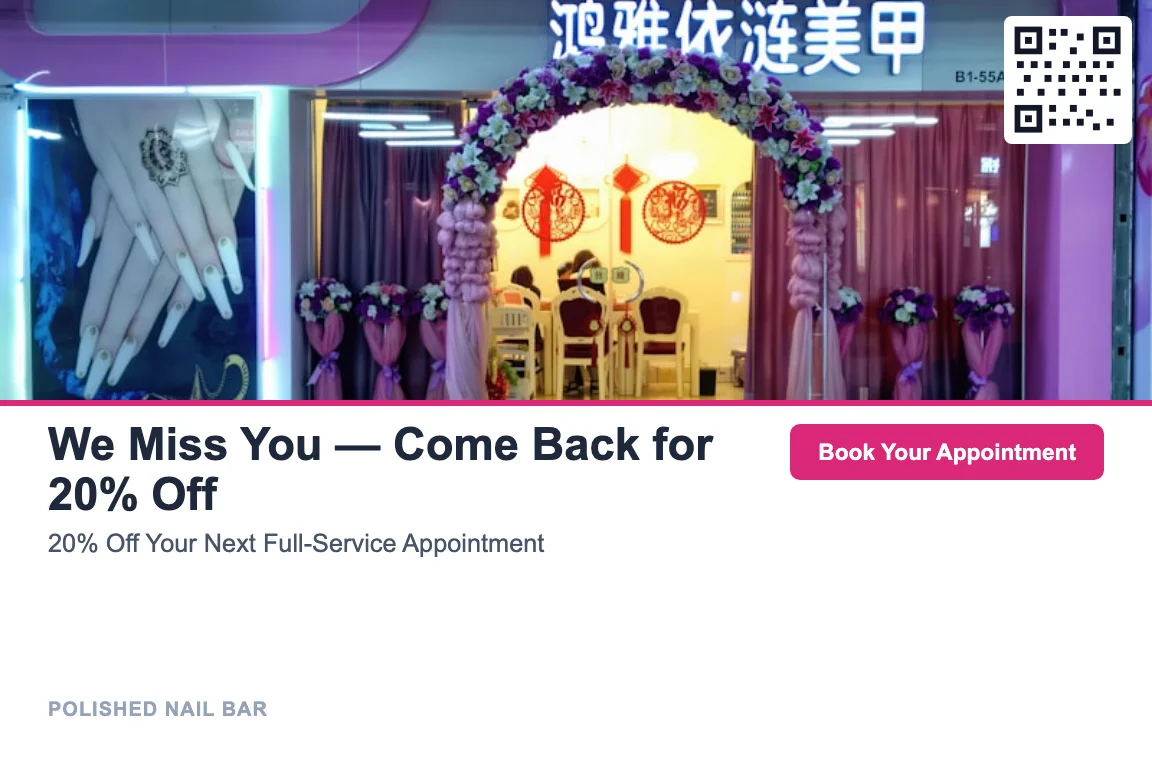
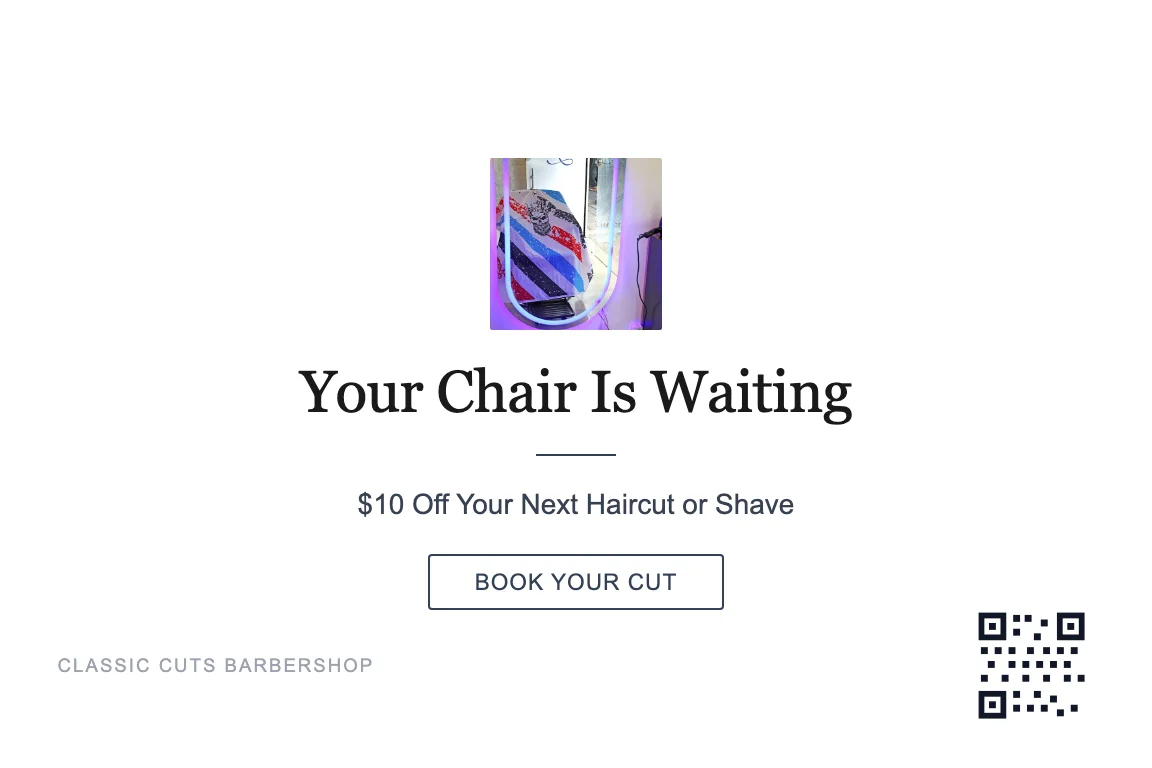
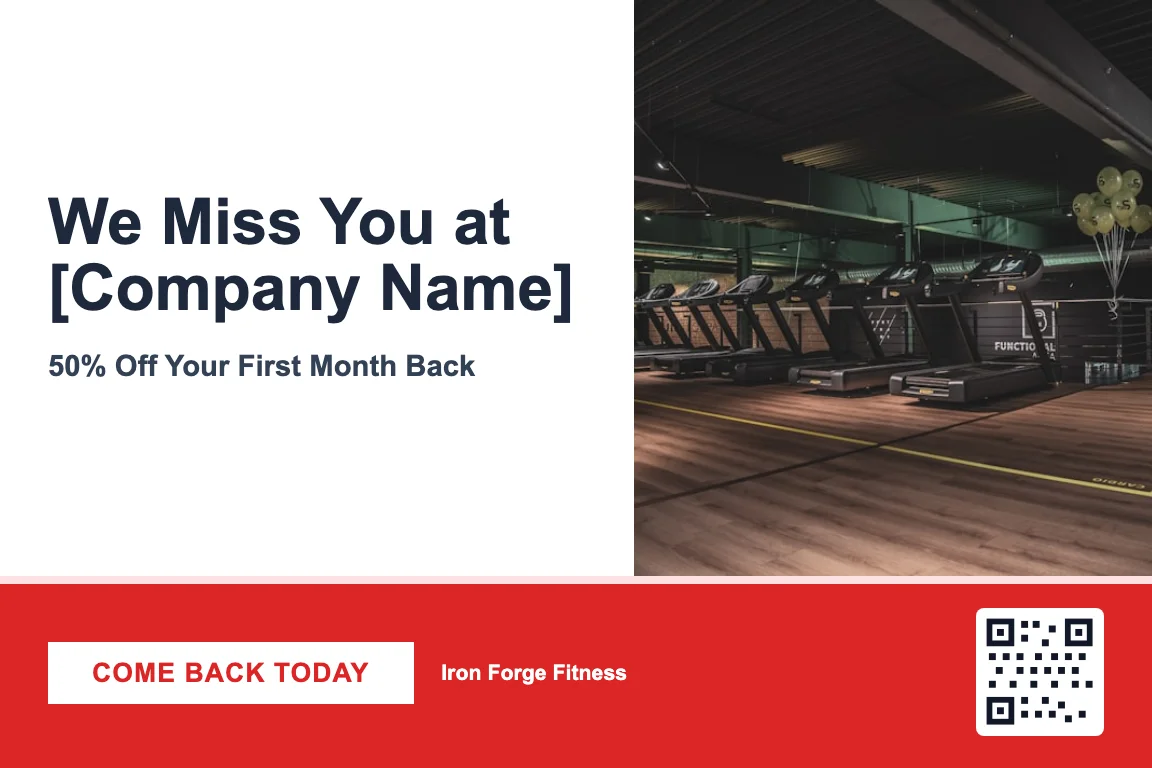
Real postcard designs, themed per industry and ready to customize in the Design Studio. Here are a few across different verticals — the same launch sequence works for all of them.
Gym
Med Spa
Nail Salon
Barbershop
A launch mailing doesn't have to be a black box. Add a QR code to any grand opening postcard and you can see scans roll in.
Each card carries a QR code linking to your booking page, menu, or launch offer, so a scan is a measurable signal that the card got noticed.
Playbooks set UTM parameters on the destination URL, so the launch traffic shows up labeled in your own web analytics — separate from your other channels.
For lists with phone numbers, the Call Queue gives your team a second, human touch — and a logged outcome either way.
No credit card, no minimum, no time limit. You only pay when you send — from your wallet, per card. Print your first launch card before you ever subscribe.
Single-wave postcard campaigns · Unlimited contacts · From $1.05/piece
Everything in Free + the Call Queue & multi-wave sequences · From $0.79/piece
Per-piece pricing includes printing + USPS First-Class postage. Pro is $99/mo or $799/yr. See full pricing →
The same postcard + call playbook, tuned for your world. A couple of the verticals that launch new locations with PostKnock:
It's a postcard sent to the homes and businesses around a new location to announce that you're open and get first-time customers in the door. It usually pairs the news with a specific launch offer and a clear way to respond — like a QR code to your booking page or menu. With a list that includes phone numbers, PostKnock can follow the card with a phone call so the outreach isn't a single touch.
A common approach is a short multi-wave sequence: a "save the date" piece a couple of weeks before opening, an "open now" piece around launch, and a "last chance" piece as the offer expires. PostKnock playbooks support up to 5 waves with the timing pre-configured, so you can schedule the whole launch run up front rather than mailing one card and hoping.
Results vary a lot by offer and trade area, so treat any figure as an estimate. Industry studies typically report direct-mail response rates to a cold, prospecting audience in the low single digits, often cited around 1 to 5 percent and usually lower than mailing to existing customers. A strong, time-limited launch offer and a phone follow-up for anyone who responds tend to help more than the channel alone.
PostKnock supports EDDM-style saturation mailing, which sends a postcard to addresses in the area you choose around your location — no list to buy or build. If you already have a list of prospects or interested leads, you can use that instead by exporting a CSV and importing it; the import wizard auto-maps name, address, and phone columns.
When you mail to a list that includes phone numbers, PostKnock's built-in Call Queue (a Pro feature) populates so your team can follow up. They work the queue using the playbook's pre-loaded launch script and log each outcome, and anyone who doesn't respond rolls forward into the next wave. The calls are made by your own staff — PostKnock organizes the queue and scripts. A saturation EDDM mailing has no phone numbers attached, so the follow-up applies to list-based sends.
They start at $1.05 per 4x6 postcard on the Free plan and drop to $0.79 on Pro, with printing and USPS First-Class postage included in that per-piece price. You pay from your wallet only for what you send — no setup fees, no minimums, no contracts. Pro is $99/mo or $799/yr and adds the Call Queue and multi-wave sequences.
Any business opening or relocating a physical location. PostKnock ships pre-built playbooks for 50+ industries — gyms and studios, med spas, salons and barbershops, dental and optometry, home services, and more. The postcard-plus-call sequence is the same; the timing, messaging direction, and call scripts are tuned per vertical.
Yes. Each postcard can carry a QR code linking to your booking page, menu, or launch offer, so scans give you a measurable response signal, and playbooks add UTM parameters so the launch traffic shows up labeled in your own web analytics. For list-based sends, logged call outcomes from the Call Queue tell you how the human follow-up went.
Three sizes: 4x6, 6x9, and 6x11. A bigger card like 6x11 stands out for a launch announcement. You design any of them in the in-app Design Studio, starting from an industry template and editing the copy, offer, colors, logo, and your opening date and address.
Pick a playbook, design a card, mail the neighborhood, and work the Call Queue. Start free — you only pay when you send.
Start Free — No Credit Card1 Direct-mail response-rate ranges are drawn from general industry benchmarks (e.g. ANA / DMA Response Rate Report coverage). Prospecting (cold) audiences typically respond at lower rates than an existing house list. Figures are estimates that vary widely by list, offer, and follow-up — presented here as a range, not a guarantee.